
Banner
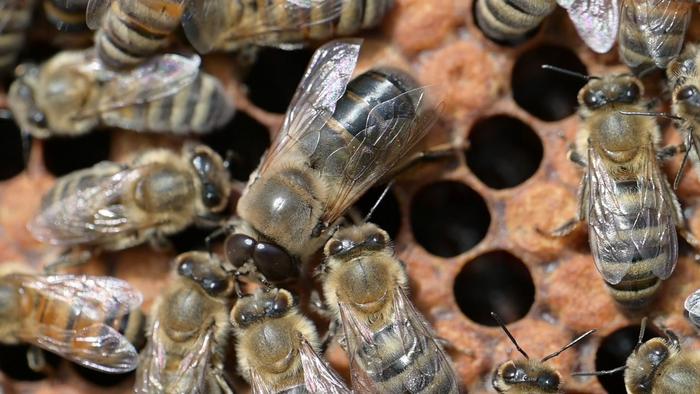
Males Are Genetically Wired To Beg Females For Food

Bees have the reputation of being incredibly organized and spending their days making sure our...

The Scorched Cherry Twig And Other Christmas Miracles Get A Science Look

Bleeding hosts and stigmatizations are the best-known medieval miracles but less known ones, like ...

$0.50 Pantoprazole For Stomach Bleeding In ICU Patients Could Save Families Thousands Of Dollars

The inexpensive medication pantoprazole prevents potentially serious stomach bleeding in critically...

Metformin Diabetes Drug Used Off-Label Also Reduces Irregular Heartbeats

Adults with atrial fibrillation (AFib) who are not diabetic but are overweight and took the diabetes...

User picture.
News StaffRSS Feed of this column.

News Releases From All Over The World, Right To You... Read More »

Blogroll

Both drug-eluting stents (DES) with biocompatible polymers and DES with biodegradable polymers were associated with low major adverse coronary events, demonstrating the non-inferiority of the biocompatible polymer stents in patients undergoing percutaneous coronary intervention (PCI).

The findings of the SORT-OUT VI trial were presented today at the 25th annual Transcatheter Cardiovascular Therapeutics (TCT) scientific symposium. Sponsored by the Cardiovascular Research Foundation (CRF), TCT is the world's premier educational meeting specializing in interventional cardiovascular medicine.

Glioblastoma multiforme (GBM) is a brain cancer that kills approximately 13,000 Americans a year. It is aggressive and incurable.

A research team has demonstrated delivery of a therapeutic delivered using nanotechnology that turns off a critical gene in this complex cancer, increasing survival rates significantly - in animals.

The drug is designed to target a specific cancer-causing gene in cells. The drug simply flips the switch of the troublesome oncogene to "off," silencing the gene, which knocks out the proteins that keep cancer cells immortal. 

Kepler-78b is a planet that shouldn't exist because the blazing hot lava world circles its star every 8.5 hours at a distance of less than one million miles - one of the tightest known orbits. According to current beliefs about planet formation, it couldn't have formed so close to its star, nor could it have moved there.

Kepler-78b a mystery world. And it is doomed. 

A newly discovered planet, Kepler-78b, is in the constellation of Cygnus but it's a lot like Earth. If Earth were 2,000 degrees hotter and orbited the sun every 8 hours. 

But otherwise it is a lot like our planet, about 20% larger and 169% of our mass, and that makes it the smallest exoplanet to-date that has a confirmed mass and radius. The size is about the same, the density is about the same - and that's part of the mystery. How did it form so close to its star?

The sun emitted another significant solar flare, peaking at 5:54 p.m. on Oct. 29th, 2013  – the fourth X-class flare in the last week.

Solar flares are powerful bursts of radiation and while the radiation from a flare cannot pass through Earth's atmosphere to physically affect humans on the ground, when intense enough they can disturb the atmosphere in the layer where GPS and communications signals travel. The disruption to radio signals occurs for as long as the flare is ongoing, anywhere from minutes to hours.

This flare is classified as an X2.3 class flare. "X-class" denotes the most intense flares, while the number provides more information about its strength. An X2 is twice as intense as an X1, an X3 is three times as intense, etc.

A new collection featuring research on the complex evolutionary cascade theory that made the unique gigantism of sauropod dinosaurs possible has now been published in PLOS ONE.

Sauropod dinosaurs were the largest terrestrial animals to roam the Earth, exceeding all other land-dwelling vertebrates in both mean and maximal body size. While convergently evolving many features seen in large terrestrial mammals, such as upright, columnar limbs and barrel-shaped trunks, sauropods evolved some unique features, such as the extremely long necks and diminutive heads they are famous for.




