
Banner
The Scorched Cherry Twig And Other Christmas Miracles Get A Science Look

Bleeding hosts and stigmatizations are the best-known medieval miracles but less known ones, like ...

$0.50 Pantoprazole For Stomach Bleeding In ICU Patients Could Save Families Thousands Of Dollars

The inexpensive medication pantoprazole prevents potentially serious stomach bleeding in critically...
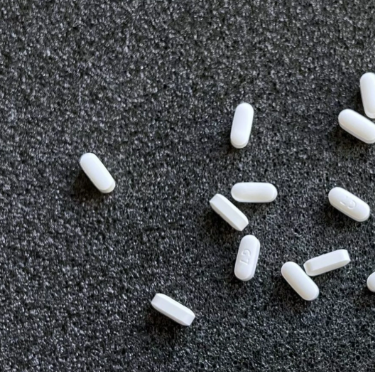
Metformin Diabetes Drug Used Off-Label Also Reduces Irregular Heartbeats

Adults with atrial fibrillation (AFib) who are not diabetic but are overweight and took the diabetes...

Your Predator: Badlands Future - Optical Camouflage, Now Made By Bacteria

In the various 'Predator' films, the alien hunter can see across various spectra while enabling...

User picture.
News StaffRSS Feed of this column.

News Releases From All Over The World, Right To You... Read More »

Blogroll

A high school student is credited with finding the youngest, smallest and most complete fossil skeleton yet known from the iconic tube-crested dinosaur Parasaurolophus, in Grand Staircase-Escalante National Monument in southern Utah. 

The discovery shows that the prehistoric plant-eater sprouted its strange headgear before it celebrated its first birthday. Three-dimensional scans of nearly the entire fossil make this the most digitally accessible dinosaur to date.

Female edible dormice (Glis glis) have a pleasant taste and have long been viewed as a special delicacy. The Romans even kept them in captivity to fatten them up for eating, which explains the "edible" part of their name. 

The reason is because after summer ends, and they are done caring for their young, they start to replenish their fat stores to cope with the upcoming winter. Later in the year, when outside temperatures drop, dormice move to their hibernation quarters where they will spend months without food. During hibernation, dormice enter phases of 'torpor': they drastically reduce their metabolic rate and lower their body temperature to that of the surrounding environment.

During a space shuttle mission on October 30th, 2007, astronauts set out to install two solar panels on the truss of the International Space Station (ISS). The first panel deployed successfully but they noticed a two-foot-wide tear in the second panel. 

To repair it, they had to send someone on a spacewalk while tethered to the shuttle’s inspection arm. Mercury astronauts wouldn't have blinked at the idea but modern NASA has a zero risk tolerance so not only was it dangerous - the robotic arm hadn't been used in such a way, a wrong move could have electrocuted the astronaut - but it also had political implications if an accident happened. 

If you want your daughter to do better in science, get her exercising, says a paper in the British Journal of Sports Medicine. All teens benefit, girls more. The improvements were sustained over the long term, with the findings pointing to a dose-response effect—the more intensive exercise was taken, the greater the impact on test results.

They base their findings on a representative sample of almost 5,000 children who were all part of the Children of the 90s study, also known as the Avon Longitudinal Study of Parents and Children (ALSPAC). This is tracking the long term health of around 14,000 children born in the U.K. between 1991 and 1992 in the South West of England.

Active camouflage update. In a Harvard School of Engineering laboratory test, a team of applied physicists placed a device  with a new coating that intrinsically conceals its own temperature to thermal cameras on a hot plate and watched it through an infrared camera as the temperature rose.

Initially, it behaved as expected, giving off more infrared light as the sample was heated: at 60 degrees Celsius it appeared blue-green to the camera; by 70 degrees it was red and yellow. At 74 degrees it turned a deep red—and then something strange happened. The thermal radiation plummeted. At 80 degrees it looked blue, as if it could be 60 degrees, and at 85 it looked even colder. Moreover, the effect was reversible and repeatable, many times over.

Herpes simplex virus type 1 (HSV-1) is a common human virus, you get a cold sore near the mouth, but a study of the full genetic code of HSV-1 shows a dramatic confirmation of the "out-of-Africa" pattern of human migration., according to their paper.

Geneticists explore how organisms are related by studying changes in the sequence of bases, or "letters" on their genes. From knowledge of how quickly a particular genome changes, they can construct a "family tree" that shows when particular variants had their last common ancestor.

Studies of human genomes have shown that our ancestors emerged from Africa roughly 150,000 to 200,000 years ago, and then spread eastward toward Asia, and westward toward Europe.



