Banner
The Scorched Cherry Twig And Other Christmas Miracles Get A Science Look

Bleeding hosts and stigmatizations are the best-known medieval miracles but less known ones, like ...

$0.50 Pantoprazole For Stomach Bleeding In ICU Patients Could Save Families Thousands Of Dollars

The inexpensive medication pantoprazole prevents potentially serious stomach bleeding in critically...

Metformin Diabetes Drug Used Off-Label Also Reduces Irregular Heartbeats

Adults with atrial fibrillation (AFib) who are not diabetic but are overweight and took the diabetes...

Your Predator: Badlands Future - Optical Camouflage, Now Made By Bacteria

In the various 'Predator' films, the alien hunter can see across various spectra while enabling...

User picture.
News StaffRSS Feed of this column.

News Releases From All Over The World, Right To You... Read More »

Blogroll

Phones are terrific today. They can play games and watch videos and check email - they are just terrible at making calls.

And during a natural disaster, when too many people take to their mobile phones at once, cellular networks easily overload.   Mai Hassan, a PhD student in the Department of Electrical and Computer Engineering at the University of British Columbia, has developed a solution to ensure that calls don't get dropped and texts make it to their destination.

Hassan found a way to opportunistically use television and radio channels to transmit cellular signals when systems are pushed beyond capacity.

Thermonuclear fusion can be achieved through a controlled reaction between two light variants of hydrogen, called deuterium and tritium - that sounds simple enough but improving the ignition stage of fusion reaction isn't trivial.

Theoretical calculations described in a paper published in EPJ D involve increasing the uniformity of irradiation using high-power laser beams on the external shell of a spherical capsule containing a mix of deuterium and tritium. 

Kissing helps us size up potential partners and, once in a relationship, may be a way of getting a partner to stick around, according to psychologists in a new paper.

The scholars set up an online questionnaire in which over 900 adults answered questions about the importance of kissing in both short-term and long-term relationships. 

The survey responses were that women rated kissing as generally more important in relationships than men. Furthermore, men and women who rated themselves as being attractive, or who tended to have more short-term relationships and casual encounters, also rated kissing as being more important.

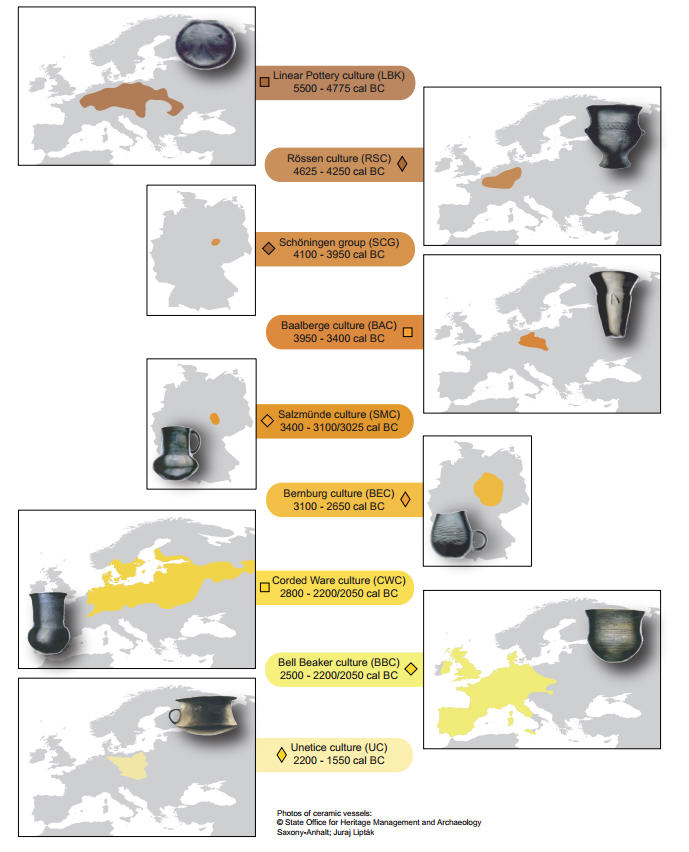
Research using DNA to map the history of human migration is helping unravel the timing and source of human settlement in Central Europe.

One of the great debates in archaeological research for the past century has been the degree to which cultures or people move. When you see a pronounced cultural shift in the archaeological record, for instance, is it because of a new people appearing on the scene, or is it simply the diffusion of a new culture? This new Genographic study shows definitively that, for Germany over a four-millennia-long time span from 5500 B.C. to 1500 B.C., it was people who were on the move, carrying their genes with them.

Children who stutter have less grey matter in key regions of the brain responsible for speech production than children who do not stutter, according to brain scans of 28 children ranging from five to 12 years old. Half the children were diagnosed with stuttering; the other half served as a control. 

Results showed that the inferior frontal gyrus region of the brain develops abnormally in children who stutter. This is important because that part of the brain is thought to control articulatory coding—taking information our brain understands about language and sounds and coding it into speech movements.

One of the more controversial issues from the recent first part of Intergovernmental Panel on Climate Change (IPCC) Fifth Assessment Report (AR5) is the failure of global climate models to predict a hiatus in warming of global surface temperatures since 1998.

Several ideas have been put forward to explain this hiatus, including what the IPCC refers to as 'unpredictable climate variability' that is associated with large-scale circulation regimes in the atmosphere and ocean.