Banner
The Scorched Cherry Twig And Other Christmas Miracles Get A Science Look

Bleeding hosts and stigmatizations are the best-known medieval miracles but less known ones, like ...
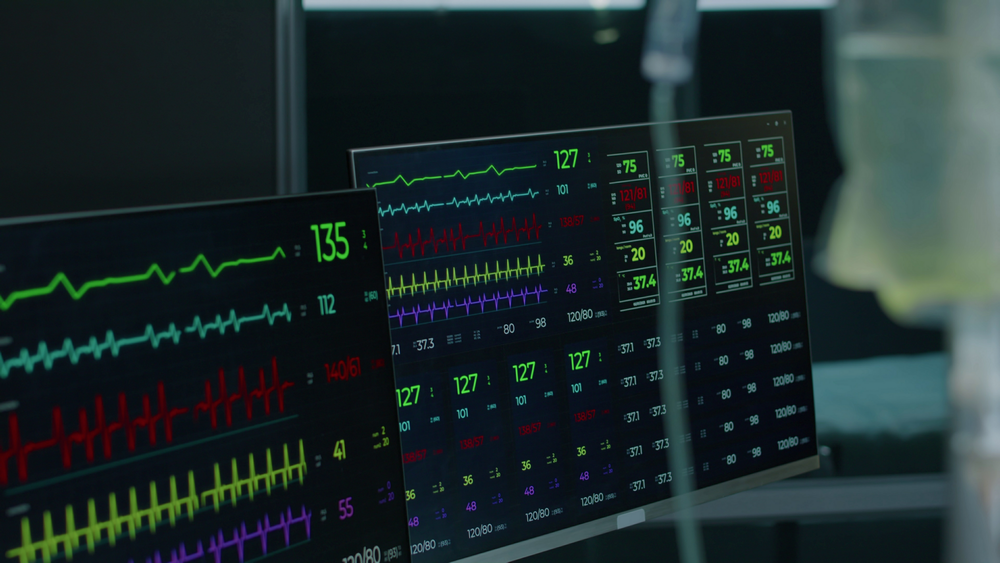
$0.50 Pantoprazole For Stomach Bleeding In ICU Patients Could Save Families Thousands Of Dollars

The inexpensive medication pantoprazole prevents potentially serious stomach bleeding in critically...

Metformin Diabetes Drug Used Off-Label Also Reduces Irregular Heartbeats

Adults with atrial fibrillation (AFib) who are not diabetic but are overweight and took the diabetes...

Your Predator: Badlands Future - Optical Camouflage, Now Made By Bacteria

In the various 'Predator' films, the alien hunter can see across various spectra while enabling...

User picture.
News StaffRSS Feed of this column.

News Releases From All Over The World, Right To You... Read More »

Blogroll

The Moon landing in 1969 was the culmination of a decade of event-driven technology and it lent momentum to a generation of belief in the promise of a space-faring future. By 1975, the premise of the television show "Space:1999" had a believable manned base on Luna - and why not, if we had gone to the Moon after 10 years of trying, why wouldn't we have a permanent station there 30 years after the first landing and subsequent technological improvement? "Lost In Space" a decade earlier had been clearly fiction, "Space:1999" was the future.

The left and right hemispheres of Albert Einstein's brain were unusually well connected to each other, according to a paper, which then determines that may have contributed to his brilliance.

The study says it is the first to detail Einstein's corpus callosum, the brain's largest bundle of fibers that connects the two cerebral hemispheres and facilitates interhemispheric communication.  Lead author Weiwei Men of East China Normal University's Department of Physics measured and color-coded the varying thicknesses of subdivisions of the corpus callosum along its length, where nerves cross from one side of the brain to the other, using  high-resolution photographs (from 2012) of the inside surfaces of the two halves of Einstein's brain.

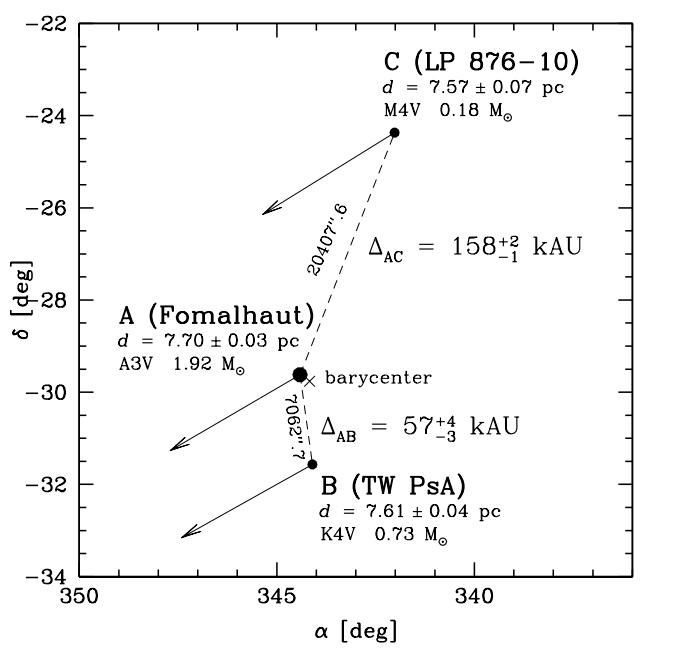
The nearby star system Fomalhaut has been discovered to be not just a double star, as astronomers had thought, but a really wide triple star -   a previously known smaller star in its vicinity is also part of the Fomalhaut system. 

There's little quantifiable value to arts and literature but they hold a great deal more prestige in culture than science does. If you attend a Manhattan dinner party and are unfamiliar with some obscure performance artist, they will be horrified - but they won't know anything at all about adaptive radiation. 

A new social psychology paper attempt to change that quantifiability; it says that highbrow literature enhances a set of skills and thought processes fundamental to complex social relationships—and functional societies. Sorry, Fifty Shades of Grey readers, that didn't help you read minds at all.

The biggest threat to vaccine acceptance is not distrust of science, misinformation campaigns or deficit thinking among the public, but rather the failure of government and institutions to use evidence-based strategies, says a new paper.

If you want to enjoy your food, stop taking pictures of it and putting them on the Internet, say marketing scholars.

They mean you, foodies on Instagram and Pinterest. It could be ruining your appetite by making you feel like you've already experienced eating that food.

Marketing experts at Brigham Young and University of Minnesota have concluded that what happens is the over-exposure to food imagery increases people's satiation. Satiation is defined as the drop in enjoyment with repeated consumption. Or, in other words, the fifth bite of cake or the fourth hour of playing a video game are both less enjoyable than the first.