
Banner
The Scorched Cherry Twig And Other Christmas Miracles Get A Science Look

Bleeding hosts and stigmatizations are the best-known medieval miracles but less known ones, like ...
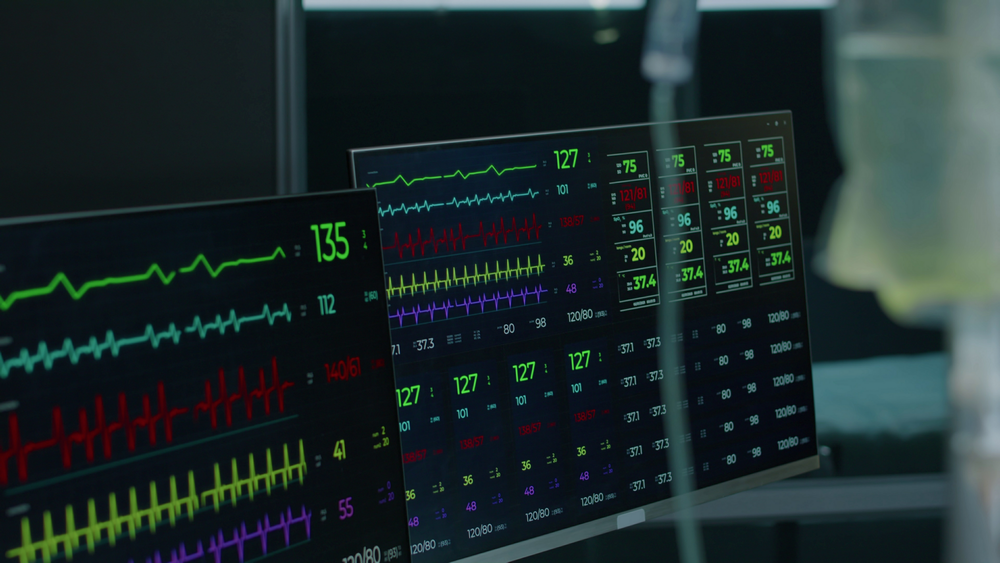
$0.50 Pantoprazole For Stomach Bleeding In ICU Patients Could Save Families Thousands Of Dollars

The inexpensive medication pantoprazole prevents potentially serious stomach bleeding in critically...

Metformin Diabetes Drug Used Off-Label Also Reduces Irregular Heartbeats

Adults with atrial fibrillation (AFib) who are not diabetic but are overweight and took the diabetes...

Your Predator: Badlands Future - Optical Camouflage, Now Made By Bacteria

In the various 'Predator' films, the alien hunter can see across various spectra while enabling...

User picture.
News StaffRSS Feed of this column.

News Releases From All Over The World, Right To You... Read More »

Blogroll

Screening for colorectal cancer (CRC) in European countries is highly effective in reducing mortality from the disease. Some of the resources currently being devoted to breast and prostate screening programmes, where the evidence of effectiveness is much less clear-cut, should be reallocated to the early detection of CRC, the 2013 European Cancer Congress (ECC2013) [1] will hear today (Sunday).

The first Phase II study to investigate the use of the anti-cancer drug, everolimus, for the initial treatment of advanced papillary kidney cancer has shown that it is successful in slowing or preventing the spread of the disease, according to research to be presented today (Sunday) at the 2013 European Cancer Congress (ECC2013) [1].

 An old star, IRAS 15445-5449, is "blooming" in the southern sky — it has begun to push out a jet of charged particles that glow with radio waves. And astronomers are on the hunt to determine why 

Researchers recently used a laser to accelerate electrons at a rate 10 times higher than conventional technology in a nanostructured glass chip smaller than a grain of rice, an advance that could dramatically shrink particle accelerators for science and medicine.

 Because it employs commercial lasers and low-cost, mass-production techniques, the researchers believe it will set the stage for new generations of "tabletop" accelerators.

At its full potential, the new "accelerator on a chip" could match the accelerating power of SLAC's 2-mile-long linear accelerator in just 100 feet, and deliver a million more electron pulses per second.

Instead of letting them mess around on the Wii or, worse, watching a "Baby Einstein" video, the way to make kids of all ages and incomes smarter could be as simple as handing them a few blocks.

Playing with blocks may help preschoolers develop the kinds of skills that support later learning in science, technology, engineering, and math (STEM), according to a new study.

More than a hundred 3-year-olds of various socioeconomic levels took part in the study. Children who were better at copying block structures were also better at early math, the study found. Among the skills tested were whether children could figure out that a block belongs above or below another block and whether they aligned the pieces.

Streamers may be great for decorating a child's party, but in dielectrics they are the primary origin of electric breakdown and can cause catastrophic damage to electrical equipment, harm the surrounding environment, and lead to large-scale power outages. 

Understanding streamers and the mechanisms behind their initiation, acceleration and branching is necessary to devise better solutions to avoid them. A team of researchers at MIT have developed an accurate 3-D model of streamer propagation that qualitatively and quantitatively describes the streamer development, an advance that may impact applications such as medical imaging, aerospace engineering, power transmission, atmospheric sensing, natural sciences, sensing technologies and large-scale industry.