Banner
The Scorched Cherry Twig And Other Christmas Miracles Get A Science Look

Bleeding hosts and stigmatizations are the best-known medieval miracles but less known ones, like ...
$0.50 Pantoprazole For Stomach Bleeding In ICU Patients Could Save Families Thousands Of Dollars

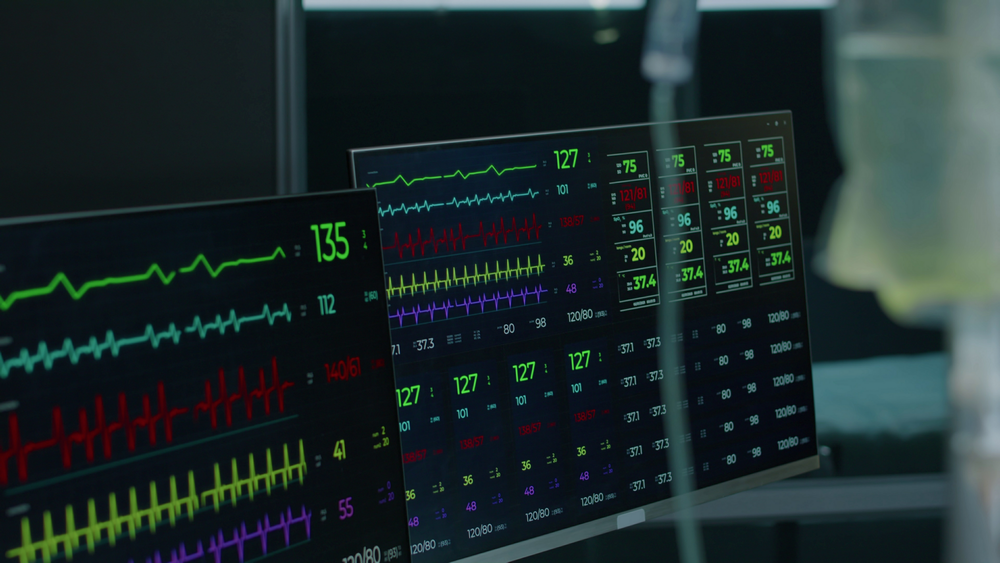
The inexpensive medication pantoprazole prevents potentially serious stomach bleeding in critically...

Metformin Diabetes Drug Used Off-Label Also Reduces Irregular Heartbeats

Adults with atrial fibrillation (AFib) who are not diabetic but are overweight and took the diabetes...

Your Predator: Badlands Future - Optical Camouflage, Now Made By Bacteria

In the various 'Predator' films, the alien hunter can see across various spectra while enabling...

User picture.
News StaffRSS Feed of this column.

News Releases From All Over The World, Right To You... Read More »

Blogroll

If you have confidence in the future of science, you might be inclined to believe that a technology solution decades from now could make CO2 clean-up cheaper and more effective than what is available right now.

A group of economists argue just the opposite, they say that costs will be higher and that would make it less likely for decision-makers to ever push for a low-carbon economy. Global economic growth would be cut back by up to 7 percent within the first decade after climate policy implementation if the current international stalemate is continued until 2030, compared to 2 percent if a climate agreement is reached by 2015.

Astronomers have provided the best three-dimensional map yet of the central parts of the Milky Way. It shows that the inner regions take on a peanut-like appearance from some angles. This odd shape was mapped by using public data from ESO’s VISTA survey telescope along with measurements of the motions of hundreds of very faint stars in the central bulge.

One of the most important and massive parts of the galaxy is the galactic bulge. This huge central cloud of about 10 000 million stars spans thousands of light-years, but its structure and origin were not well understood.

Cilantro, a favorite ingredient in spicy cuisine, may also be an inexpensive new way of purifying drinking water, according to research done by undergraduate students at Ivy Tech Community College.

Douglas Schauer, Ph.D., reporting on the work at the American Chemical Society meeting, said that cilantro, also known as coriander and Thai parsley, shows promise as a "biosorbent" for removing lead and other potentially toxic heavy metals from contaminated water. 

Anorexia nervosa is a multifactorial neuropsychiatric condition that affects as many as one percent of women in the Western world, and has an estimated mortality as high as 10 percent, making it perhaps the deadliest of mental illnesses. Anorexics severely restrict eating and become emaciated, yet consider themselves overweight. Individuals with anorexia tend to be perfectionistic, anxious or depressed, and obsessive.

A team of researchers have published new data that could prove vital for advances in care for women who suffer from recurrent miscarriage.

The recurrent loss of pregnancy through miscarriage causes significant distress to couples, often exacerbated by there being so few treatments available to clinicians.

The search for an effective treatment has been the cause of significant controversy in the field of medical research, centering on the role of natural killer cells (or NK cells) and the ability of steroids to prevent miscarriage.

Scientists have been uncertain about how these NK cells could contribute to a miscarriage and this has raised doubt over their importance in causing pregnancy loss.

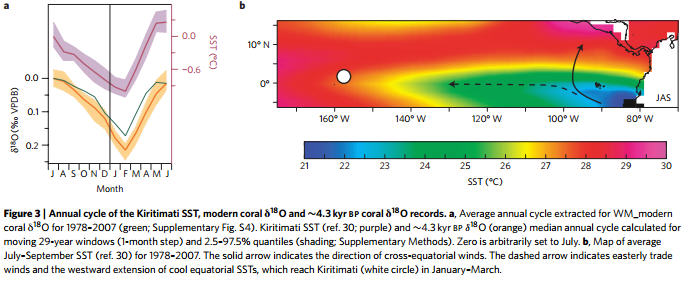
20 years ago, El Niño had an uncorrected impact on the data that went into global warming models, causing puzzling results. Now, those results have been corrected and instead of El Niño impacting global warming, global warming could be impacting El Niño.

Using coral samples from Kiribati, researchers have outlined how El Niño Southern Oscillation (ENSO) cycle has changed over the past 4,300 years - altering the cycles of El Niño and La Niña events that bring extreme drought and flooding to Australia and many other Pacific-rim countries. The new paper suggests that external changes have an impact on the strength and timing of El Niño events.