Banner
The Scorched Cherry Twig And Other Christmas Miracles Get A Science Look

Bleeding hosts and stigmatizations are the best-known medieval miracles but less known ones, like ...

$0.50 Pantoprazole For Stomach Bleeding In ICU Patients Could Save Families Thousands Of Dollars

The inexpensive medication pantoprazole prevents potentially serious stomach bleeding in critically...

Metformin Diabetes Drug Used Off-Label Also Reduces Irregular Heartbeats

Adults with atrial fibrillation (AFib) who are not diabetic but are overweight and took the diabetes...

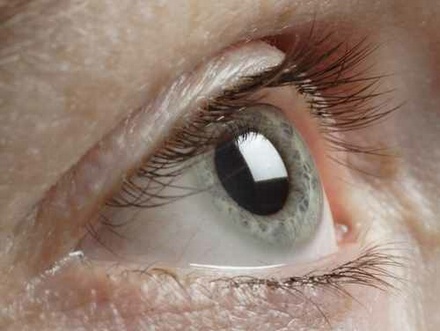
Your Predator: Badlands Future - Optical Camouflage, Now Made By Bacteria

In the various 'Predator' films, the alien hunter can see across various spectra while enabling...

User picture.
News StaffRSS Feed of this column.

News Releases From All Over The World, Right To You... Read More »

Blogroll

Video games have beem widely available to the home market for 40 years, which means there have been 40 years of concern about what impact, negative or positive, they may have.

Soon after the first video games such as Pong and Space Invaders hit the market in the 1970s, psychologists and neuroscientists began to investigate whether playing video games might be beneficial to the brain.  Proponents speak of the neuroscience benefit of time-pressured deployment, flexible allocation, of attention as well as precise bi-manual movements while detractors worry about the time spent away from doing other things and that video games may inspire violent behavior. 

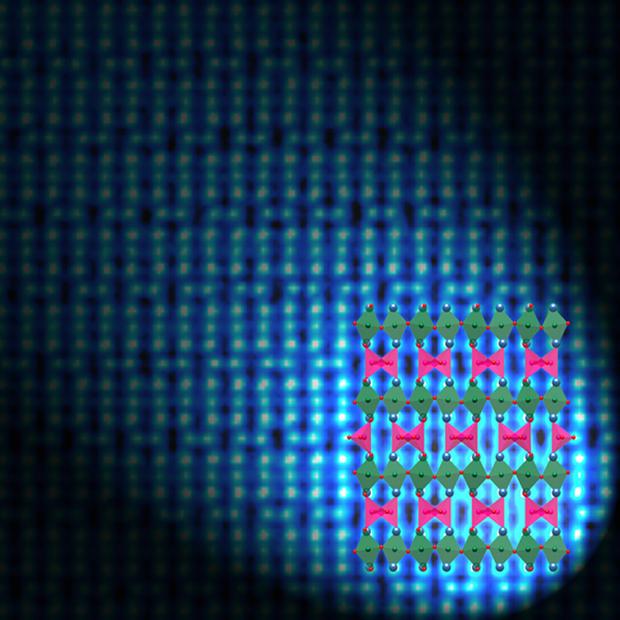
Oak Ridge National Laboratory researchers have developed a new oxygen “sponge” that can easily absorb or shed oxygen atoms at low temperatures.  Materials containing atoms that can switch back and forth between multiple oxidation states  are very rare in nature but useful in devices such as rechargeable batteries, sensors, gas converters and fuel cells.

In the zeal to promote carbon dioxide emissions as a magic bullet to stave off climate change, a lot of other factors were minimized. Soot was a big one, but a new study in PNAS suggests that the abrupt retreat of mountain glaciers in the European Alps in the 1860s was due to absorption of sunlight in snow by soot. A rapidly industrializing Europe still gets the blame, but for a different reason.

New findings from an archaeological excavation prove that copper mines in Israel thought to have been built by the ancient Egyptians in the 13th century BC actually originated three centuries later, during the reign of the legendary King Solomon, according to the dig lead.

Based on the radiocarbon dating of material unearthed at a new site in Timna Valley in Israel's Aravah Desert, the findings overturn the archaeological consensus of the last several decades. Scholarly work and materials found in the area suggest the mines were operated by the Edomites, a semi-nomadic tribal confederation that according to the Bible warred constantly with Israel.

A new hard metal recently developed can be used to replace tungsten carbide (WC), the hard metal widely used in industry today and whose global availability is becoming critical.

The new material, developed over the past three years by Finnish-based Exote Ltd and the VTT Technical Research Centre of Finland, also possesses excellent bullet-proofing qualities.  Ballistic tests have show it has an un-equalled ability to stop armor-piercing bullets.
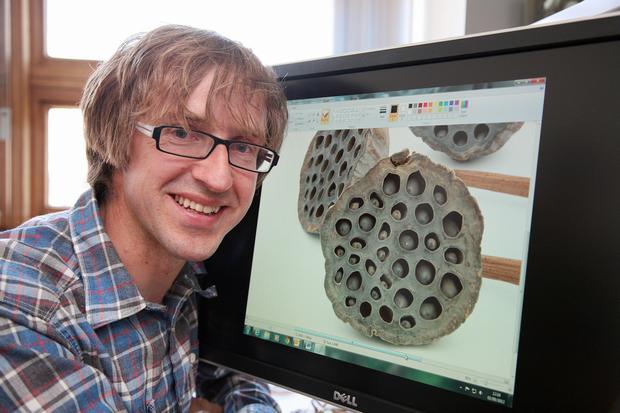
A new paper says there may be a biological reason why you are afraid of soap bubbles. An ancient evolutionary part of the brain, say psychologists Dr. Geoff Cole and Professor Arnold Wilkins  from the Centre for Brain Science at the University of Essex, is worried about poisonous animals.

If  the sight of aerated chocolate or a lotus flower seed pod bring you out in a cold sweat and make you feel panicky, you could be one of many on the Internet claiming to have one of the most common phobias you have never heard of; trypophobia, the fear of holes. For trypophobes, the sight of clusters of holes in various formations can cause intensely unpleasant reactions, from serious migraines and panic attacks to hot sweats and increased heart rate.