Banner
The Scorched Cherry Twig And Other Christmas Miracles Get A Science Look

Bleeding hosts and stigmatizations are the best-known medieval miracles but less known ones, like ...

$0.50 Pantoprazole For Stomach Bleeding In ICU Patients Could Save Families Thousands Of Dollars

The inexpensive medication pantoprazole prevents potentially serious stomach bleeding in critically...

Metformin Diabetes Drug Used Off-Label Also Reduces Irregular Heartbeats

Adults with atrial fibrillation (AFib) who are not diabetic but are overweight and took the diabetes...

Your Predator: Badlands Future - Optical Camouflage, Now Made By Bacteria

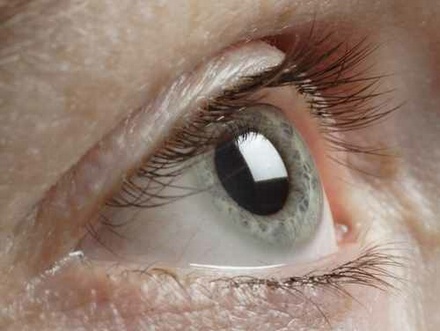
In the various 'Predator' films, the alien hunter can see across various spectra while enabling...

User picture.
News StaffRSS Feed of this column.

News Releases From All Over The World, Right To You... Read More »

Blogroll

It is generally accepted that Parkinson's disease is aggravated when a specific protein is transformed by an enzyme but a new study found instead that this transformation tends to protect against the progression of the disease. 

Parkinson's disease is characterized by the accumulation of a protein known as alpha-synuclein in the brain. If too much of it is produced or if it's not eliminated properly, it then aggregates into small clumps inside the neurons, eventually killing them. Several years ago scientists discovered that these aggregated proteins in the brain had undergone a transformation known as "phosphorylation" -- a process in which an enzyme adds an extra chemical element to a protein, thus modifying its properties. 

A new paper says that words can play a powerful role in what we perceive.What we see is a function not only of incoming visual information, but also how that information is interpreted in light of other visual experiences, and may even be influenced by language.

"Perceptual systems do the best they can with inherently ambiguous inputs by putting them in context of what we know, what we expect," says lead author and University of Wisconsin–Madison psychology professor Gary Lupyan. "Studies like this are helping us show that language is a powerful tool for shaping perceptual systems, acting as a top-down signal to perceptual processes. In the case of vision, what we consciously perceive seems to be deeply shaped by our knowledge and expectations."

A neuropeptide named natalisin regulates the sexual activity and reproductive ability of insects, according to a new study in which the neuropeptide is observed and named Natalisin is composed of short chains of amino acids in the brain of insects and arthropods and the finding may open new possibilities for environmentally friendly pest management.

Worries about the amount of salt you consume may be misplaced.

A new study documents in humans what neuroscientists have reported for some time: animals’ sodium (salt) intake is controlled by networks in the brain and not by the salt in one’s food. The findings have important implications for future U.S. nutrition policy directed at sodium intake.

Manganese, the second-most common metal in the earth's crust, rapidly changes between oxidation states while reacting with other elements in the environment. It is an element critical to many life processes and helps plants produce oxygen during photosynthesis. 

Manganese is present in the environment in three forms — manganese(II), manganese(III) and manganese(IV) — the difference related to the oxidation state, or number of electrons present. When elements lose or gain an electron, the oxidation state changes in a "redox reaction," like when iron turns into rust by losing electrons to oxygen in air.

Tracking a fish is not as easy as you might think. The radio signals that are the backbone of traditional GPS cannot pass through seawater.

But sound travels remarkably well and scientists often use acoustic telemetry to estimate an individual fish’s location. That means attaching an acoustic transmitter to a fish and then using a network of stationary underwater listening stations to monitor for the short clicking sounds that these tags emit. When a fish swims near to a receiver, its click is heard, and its individual code number is recorded.