
Banner
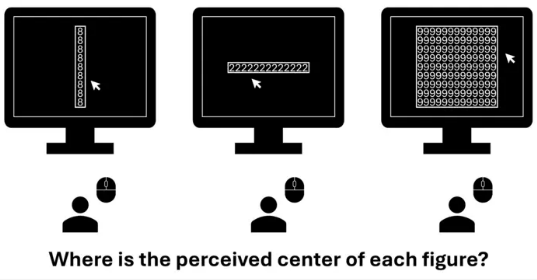
Object-Based Processing: Numbers Confuse How We Perceive Spaces

Researchers recently studied the relationship between numerical information in our vision, and...
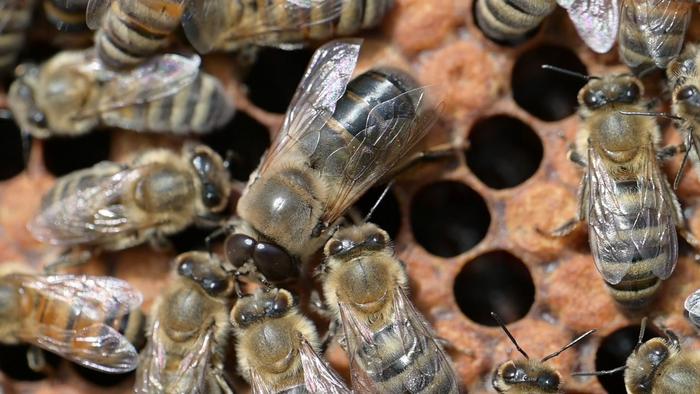
Males Are Genetically Wired To Beg Females For Food

Bees have the reputation of being incredibly organized and spending their days making sure our...

The Scorched Cherry Twig And Other Christmas Miracles Get A Science Look

Bleeding hosts and stigmatizations are the best-known medieval miracles but less known ones, like ...

$0.50 Pantoprazole For Stomach Bleeding In ICU Patients Could Save Families Thousands Of Dollars

The inexpensive medication pantoprazole prevents potentially serious stomach bleeding in critically...

User picture.
News StaffRSS Feed of this column.

News Releases From All Over The World, Right To You... Read More »

Blogroll

As we have seen, penis size matters to female mice and sword size matters to female swordfish but brain size in humans barely gets noticed at all. It's what you do with it that counts.

The ability to hit a baseball or play a piano well is part practice and part innate talent. One side of the equation required for skilled performances has its roots in the architecture of the brain genetically determined before birth, say scientists at the Salk Institute for Biological Studies.

While humans can survive large temperature fluctuations, such species as corals are only comfortable within a 12-degree temperature range. And rising global temperatures appear to be threatening their survival, according to Drew Harvell, Cornell professor of ecology and evolutionary biology.

However, she noted in presenting a paper at the annual meeting of the American Association for the Advancement of Science in San Francisco, Feb. 18, Caribbean gorgonian sea fan corals show surprising warm-weather tenacity -- they not only are somewhat temperature resilient but can also boost their cellular and enzymatic defenses to fight lethal microorganisms as temperatures rise. These abilities may someday be harnessed to help protect other fragile coral reefs, Harvell said.

It's essential to all life, and numerous research papers are published about it every year. Yet there are still secrets to reveal about water, that seemingly simple compound we know as H2O.

Equipped with high-speed computers and the laws of physics, scientists from the University of Delaware and Radboud University in the Netherlands have developed a new method to "flush out" the hidden properties of water--and without the need for painstaking laboratory experiments.


The secrets of water revealed: UD's computer simulation of water molecules is based exclusively on quantum physics laws. Credit: Figure by Omololu Akin-Ojo and David Barczak, University of Delaware.

A new genus of millipede was recently discovered by a Northern Arizona University doctoral student and a Bureau of Land Management researcher.

J. Judson Wynne, with the Department of Biological Sciences at NAU and cave research scientist with the U.S. Geological Survey's Southwest Biological Center, and Kyle Voyles, Arizona State Cave Coordinator for the Bureau of Land Management (BLM), collected specimens leading to the discovery of two new millipede species in caves on opposite sides of the Grand Canyon.

Wynne and Voyles, known for their cave research, also discovered a new genus of cricket last spring.

"We knew the millipedes likely represented two distinct species because the two populations were separated by the Grand Canyon," Wynne said.

The French Intergovernmental Panel on Climate Change (IPPC, or GIEC in French) has just announced the conclusions of its 4th report, which restates that global warming has increased the average temperature by 0.74°C over the last century. However, there is very little information about some parts of the planet, such as central Asia.

Researchers from MIT, Georgia Institute of Technology and Ohio State University have developed a new computer modeling approach to study how materials behave under stress at the atomic level, offering insights that could help engineers design materials with an ideal balance between strength and resistance to failure.

When designing materials, there is often a tradeoff between strength and ductility (resistance to breaking)-properties that are critically important to the performance of materials.


This three-dimensional atomic simulation shows the absorption of a line defect (caused by an impinging screw) by an existing twin boundary (green spheres) in nano-twinned copper.




