Banner
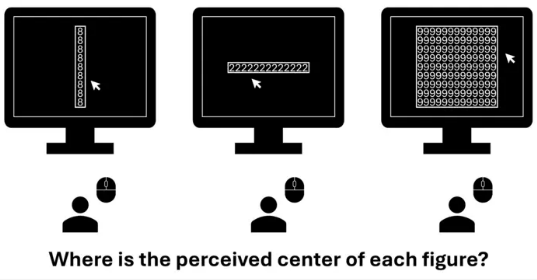
Object-Based Processing: Numbers Confuse How We Perceive Spaces

Researchers recently studied the relationship between numerical information in our vision, and...
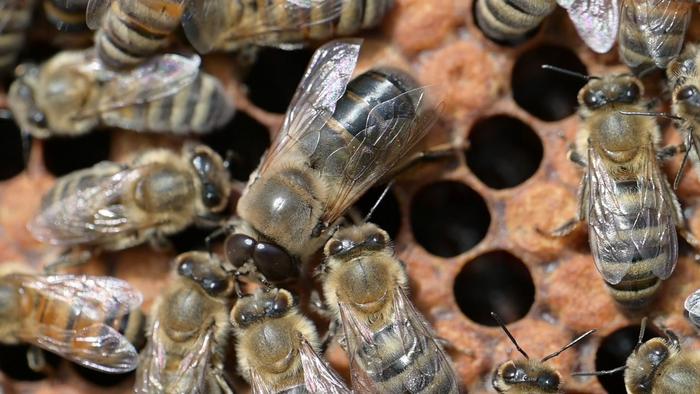
Males Are Genetically Wired To Beg Females For Food

Bees have the reputation of being incredibly organized and spending their days making sure our...

The Scorched Cherry Twig And Other Christmas Miracles Get A Science Look

Bleeding hosts and stigmatizations are the best-known medieval miracles but less known ones, like ...

$0.50 Pantoprazole For Stomach Bleeding In ICU Patients Could Save Families Thousands Of Dollars

The inexpensive medication pantoprazole prevents potentially serious stomach bleeding in critically...

User picture.
News StaffRSS Feed of this column.

News Releases From All Over The World, Right To You... Read More »

Blogroll

Researchers at Yale have identified multiple pathogenic "alien islands" in the genome of the A. baumannii, bacteria that has been responsible for new and highly drug-resistant infections in combat troops in the Middle East, according to a report in the March 1 issue of Genes and Development.

"Drug resistant bacterial infections are a rapidly growing problem in hospital settings, and now in difficult conditions of combat. We targeted A. baumannii as a growing threat for our troops in Iraq," said s principal investigator Michael Snyder, the Lewis B Cullman Professor of Molecular Cellular & Developmental Biology.

During Rosetta's recent Mars swingby, the OSIRIS cameras captured a series of images of Mars and of Phobos transiting Mars' disk. The OSIRIS team have produced a cool animated sequence and a 3D view of the Red Planet.

The animated sequences (one faster, one slower) show the shadow of Phobos transiting Mars' disk on 24 February; the images were captured around 22:08 CET, a few hours prior to Rosetta's successful Mars swingby on 25 February.


The animated sequence shows the shadow of Phobos transiting Mars' disk on 24 February; the sequence was captured around 22:08 CET, a few hours prior to Rosetta's successful Mars swingby on 25 February. The movie was produced by combining a series of separate images.

Researchers have used the world's thinnest material to create the world's smallest transistor – a breakthrough that could spark the development of a new type of super-fast computer chip.

Professor Andre Geim and Dr Kostya Novoselov from The School of Physics and Astronomy at The University of Manchester, reveal details of transistors that are only one atom thick and less than 50 atoms wide, in the March issue of Nature Materials.

They believe this innovation will allow the rapid miniaturisation of electronics to continue when the current silicon-based technology runs out of steam.

In recent decades, manufacturers have crammed more and more components onto integrated circuits.

Among the central mysteries of neurobiology is what properties of the young brain enable it to so adeptly wire itself to adapt to experience—a quality known as plasticity. The extraordinary plasticity of the young brain occurs only during a narrow window of time known as the critical period.

Scientists of the US CMS collaboration joined colleagues around the world in announcing today (February 28) that the heaviest piece of the Compact Muon Solenoid particle detector has begun the momentous journey into its experimental cavern 100 meters underground. A huge gantry crane is slowly lowering the CMS detector's preassembled central section into place in the Large Hadron Collider accelerator at CERN in Geneva, Switzerland. At 1,950 metric tons, the section, which contains the detector's solenoid magnet, weighs as much as five jumbo jets and is 16 meters tall, 17 meters wide and 13 meters long.

Atmospheric scientists have uncovered fresh evidence to support the hotly debated theory that global warming has contributed to the emergence of stronger hurricanes in the Atlantic Ocean.

The unsettling trend is confined to the Atlantic, however, and does not hold up in any of the world's other oceans, researchers have also found.

Scientists at the University of Wisconsin-Madison and the National Climatic Data Center (NCDC) of the National Oceanic and Atmospheric Administration reported the finding in the journal Geophysical Research Letters. The work should help resolve some of the controversy that has swirled around two prominent studies that drew connections last year between global warming and the onset of increasingly intense hurricanes.