Banner
The Scorched Cherry Twig And Other Christmas Miracles Get A Science Look

Bleeding hosts and stigmatizations are the best-known medieval miracles but less known ones, like ...

$0.50 Pantoprazole For Stomach Bleeding In ICU Patients Could Save Families Thousands Of Dollars

The inexpensive medication pantoprazole prevents potentially serious stomach bleeding in critically...
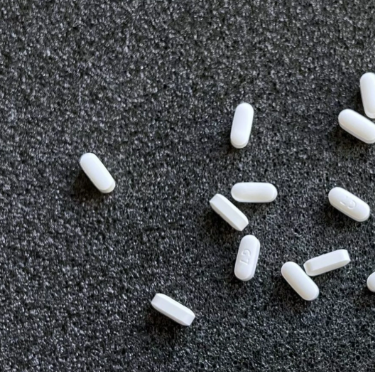
Metformin Diabetes Drug Used Off-Label Also Reduces Irregular Heartbeats

Adults with atrial fibrillation (AFib) who are not diabetic but are overweight and took the diabetes...

Your Predator: Badlands Future - Optical Camouflage, Now Made By Bacteria

In the various 'Predator' films, the alien hunter can see across various spectra while enabling...

User picture.
News StaffRSS Feed of this column.

News Releases From All Over The World, Right To You... Read More »

Blogroll
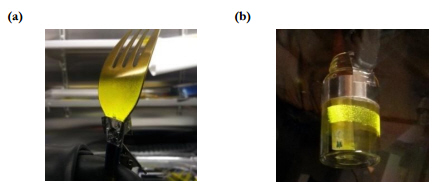
Light-emitting diodes are the future, and will quickly bypass government-mandated and subsidized compact fluorescent bulbs and the prospect of wearing a Haz-Mat suit if you break one. Why be limited to bulbs, though?

Why not a light-emitting fork? 

Physicist Amir Asadpoordarvish of Umeå University in Sweden did just that, using new light-emitting electrochemical cells (LECs) sprayed onto a substrate that emit light using the current from an ordinary battery. A LEC is a solid-state thin-film device, which comprises an active material sandwiched between a cathode and an anode as its key constituent parts. To-date they have been fabricated on heavy, rigid parts.
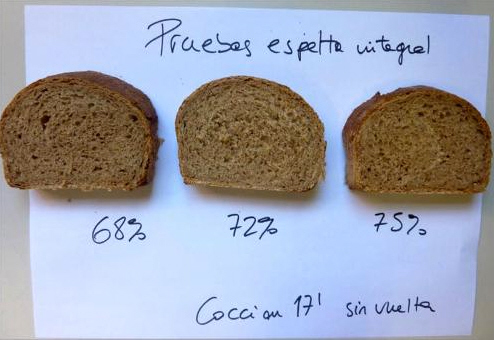
A new study suggests that bread from certain wheat varieties have differentiated sensory properties and that could mean customized breeding for more personalized food in the future.

A research group at Universidad Politécnica de Madrid (UPM) has developed the sensory profile of five different wheat varieties -three bread wheat (Triticum aestivum ssp. vulgare L.) and two spelt wheat (T. aestivum ssp. spelta) and has found significant differences among them. 

Investigators found that nearly half of the 50 chicken meat samples purchased from supermarkets, street markets, and butchers in Austria contained viruses that are capable of transferring antibiotic resistance genes from one bacterium to another - or from one species to another. 

"Our work suggests that such transfer could spread antibiotic resistance in environments such as food production units and hospitals and clinics," said corresponding author Friederike Hilbert, DVM.  

The United States remains mired in an economic downturn, with over 90 million unemployed and many of the employed making less than they made before 2009. The knock-on effects of the economic downturn have been explored in economy and psychology. Now researchers are examining the effects of unemployment on an even darker subject - cancer mortality.

One would think that dealing with unemployment was challenge enough. But according to the latest research published in ecancermedicalscience, rises in unemployment are associated with significant increases in prostate cancer mortality.

Other-orientated perfectionists are different than the kind who set a difficult standard for themselves; the other-oriented kind sometimes that can veer into narcissism, antisocial behavior and an aggressive sense of humor against others. They care little about social norms and do not readily fit into the bigger social picture.

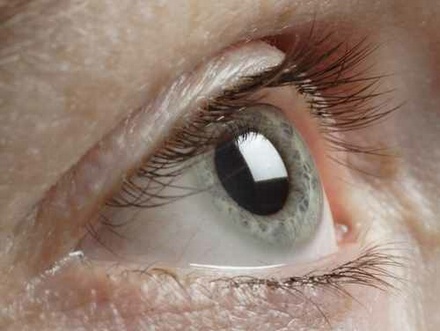
Myopia or short-sightedness is becoming more common across Europe, according to a new meta-analysis of findings from 15 studies by the European Eye Epidemiology Consortium which found that around a quarter of the European population is short-sighted but it is nearly twice as common in younger people, with almost half (47 per cent) of the group aged between 25 and 29 years affected.