Banner
Object-Based Processing: Numbers Confuse How We Perceive Spaces

Researchers recently studied the relationship between numerical information in our vision, and...

Males Are Genetically Wired To Beg Females For Food

Bees have the reputation of being incredibly organized and spending their days making sure our...

The Scorched Cherry Twig And Other Christmas Miracles Get A Science Look

Bleeding hosts and stigmatizations are the best-known medieval miracles but less known ones, like ...

$0.50 Pantoprazole For Stomach Bleeding In ICU Patients Could Save Families Thousands Of Dollars

The inexpensive medication pantoprazole prevents potentially serious stomach bleeding in critically...

User picture.
News StaffRSS Feed of this column.

News Releases From All Over The World, Right To You... Read More »

Blogroll

The vivid pigmentation of zebras, the massive jaws of sharks, the fight or flight instinct and the diverse beaks of Darwin's finches. These and other remarkable features of the world's vertebrates stem from a small group of powerful cells, called neural crest cells, but little is known about their origin.

Scientists have proposes a new model for how neural crest cells, and thus vertebrates, arose more than 500 million years ago. 

The researchers postulate that, unlike other early embryonic cells that have their potential progressively restricted as an embryo develops, neural crest cells retain the molecular underpinnings that control pluripotency -- the ability to give rise to all the cell types that make up the body. 

One of developmental biology's biggest mysteries is ontogeny and the signals that transform masses of undifferentiated cells into tremendously complex organisms. 

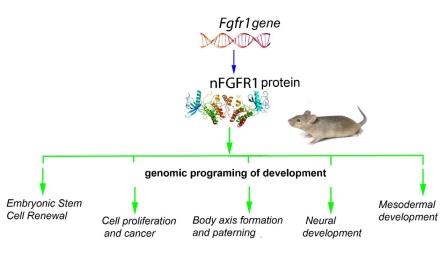
A new paper suggests that it all begins with a single "master" growth factor receptor,  nuclear Fibroblast Growth Factor Receptor 1 (nFGFR1), that regulates the entire genome.  The research using mouse embryonic stem cells hopes to challenge the supposition that specific types of growth factors only functioned at a cell's surface and that growth factors function from within the nucleus.

There is always interest in exploring new therapeutic uses for existing drugs, because existing medications are probably generic, and therefore less expensive because generic companies don't have to do any creative science or fund clinical trials, and popular drugs already have known side effect profiles.

Alzheimer's disease may affect as many as 5.5 million Americans and treatment costs are high with inconsistent benefits so one goal of science it to help stave off the disease or prevent it completely. 

A research paper has correlated a compound found in green tea and exercise with slowing the progression of the disease in mice. More speculative is that it may reverse its effects. 

When the chemotherapy drugs like cisplatin or oxaliplatin hit cancer cells, they damage DNA so that the cells can't replicate but those cells have ways to repair the DNA and so the cancer drugs aren't as effective as they could be.

When DNA is damaged, cells use many enzymes to cut the strand of DNA and excise the damaged fragment. Then, other enzymes repair the original DNA so that the cells can function properly. Previously, Sancar's lab used purified enzymes to discover how this process happens in DNA damaged by UV irradiation and by chemotherapeutic drugs such as cisplatin and oxaliplatin.

New research has brought us closer to understanding the health benefits of coffee.

Monash researchers, in collaboration with Italian coffee roasting company Illycaffè, have conducted the most comprehensive study to date on how free radicals and antioxidants behave during every stage of the coffee brewing process, from intact bean to coffee brew.