Banner
The Scorched Cherry Twig And Other Christmas Miracles Get A Science Look

Bleeding hosts and stigmatizations are the best-known medieval miracles but less known ones, like ...

$0.50 Pantoprazole For Stomach Bleeding In ICU Patients Could Save Families Thousands Of Dollars

The inexpensive medication pantoprazole prevents potentially serious stomach bleeding in critically...

Metformin Diabetes Drug Used Off-Label Also Reduces Irregular Heartbeats

Adults with atrial fibrillation (AFib) who are not diabetic but are overweight and took the diabetes...

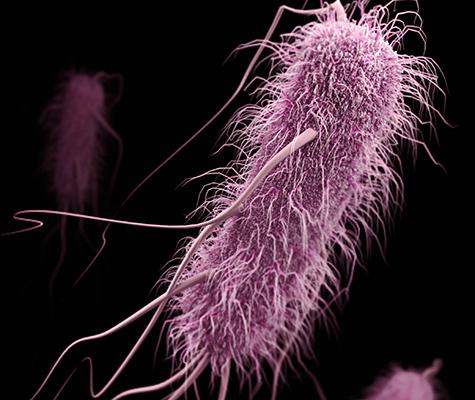
Your Predator: Badlands Future - Optical Camouflage, Now Made By Bacteria

In the various 'Predator' films, the alien hunter can see across various spectra while enabling...

User picture.
News StaffRSS Feed of this column.

News Releases From All Over The World, Right To You... Read More »

Blogroll

Research has shown that the health of immigrants is generally better than that of citizens of their host country, at least on their arrival and for some time afterwards. But a team of researchers in Montreal has found that this is not true of all groups of immigrants; children and older people, for example, may be exceptions. "Our analysis suggests that immigrant health policies should not be 'one size fits all' in type, and that they need to take account of immigrants' ages and the indicators of the health problems they are vulnerable to", according to Zoua Vang, Professor of Sociology at McGill University and Alain Gagnon, Director of the Demography Department at the University of Montreal.

In Latin America, consensual (common-law) unions are traditionally associated with poorer or indigenous populations. But recent research is turning this conventional wisdom on its head, finding that that in the past 30 years or so consensual unions have become increasingly popular throughout Latin America, including in higher-income groups. In certain countries, such as Panama, common-law partnerships are now as widespread as in Quebec.

Effective tuberculosis control in India needs political will and commitment. Unless this happens, TB will continue to be India's silent epidemic and a death sentence for poor people, warns consultant physician and public health specialist, Zarir Udwadia in BMJ.

20 years ago it was widely believed that India was successfully on its way to controlling its alarming tuberculosis (TB) epidemic yet India still has 2.2 million new cases and more than 300,000 deaths each year. Economic numbers are a guess at best but in the article he claims losses of $23 billion. At the heart of this crisis is the failure of India's Revised National Tuberculosis Control Program (RNTCP) to engage and monitor the country's large and unregulated private sector, argues Udwadia. 
A team that developed an algorithm capable of automating the analysis of plankton populations – a critical step in measuring ocean health - has won the inaugural National Data Science Bowl.
A 10 year project to observe and analyze regular data about ocean circulation and how it impacts on Britain’s climate has provided new insight into Atlantic Meridional Overturning Circulation (AMOC), a major system of currents in the North Atlantic.

10 years is too short a time to be meaningful but it is an important milestone. Since 2004, the project team has been monitoring the AMOC at 26.5N degrees, near where it carries its maximum heat, using instruments moored at 30 locations across the Atlantic between the Canary Islands and the Bahamas - so-called fixed arrays. The arrays’ instruments measure the temperature, salinity and pressure of the ocean, from which the AMOC’s strength and structure can be calculated.
We may have Jupiter to thank for our unusual solar system. 

Before the inner planets we now call  Mercury, Venus, Earth, and Mars formed, a great inward-and-then-outward journey that Jupiter made early in the solar system's history may have torn apart a number of super-Earths - planets larger than Earth but smaller than Neptune - and caused their giant remnants to fall into the sun billions of years ago.