The earliest known record of the genus Homo dates to between 2.8 and 2.75 million years ago, according to an international team.
From light-up shoes to smart watches, wearable electronics are gaining traction among consumers, but these gadgets' versatility is still held back by the stiff, short-lived batteries that are required. These limitations, however, could soon be overcome. In the journal ACS Nano, scientists report the first durable, flexible cloth that harnesses human motion to generate energy.
It can also self-charge batteries or supercapacitors without an external power source and make new commercial and medical applications possible.
Because of the broad nature of autism spectrum disorder and even broader range of autism traits, any number of genetic and environmental influences are associated with risk of it.
Twins studies are valuable in science because at least some of the factors are quantifiable. Though many papers claim genetic influences on the risk of autism and the fuzzy related traits diagnosis, they are drawn from samples of individuals which may miss people with more subtle manifestations and may not represent the broader population. A new paper using UK twins seeks to rectify that.
A review of 31 years of narcissism research using data from more than 475,000 participants finds that men, on average, are more narcissistic than women. Or at least they scored higher in narcissism across multiple generations and regardless of age. Psychology is overwhelmingly dominated by women so it's difficult to know what bias that may introduce into testing - and there is a difference between clinical narcissism and colloquial narcissism, which was not controlled for in the analysis.
The scholars examined more than 355 journal articles, dissertations, manuscripts and technical manuals, and studied gender differences in the three aspects of narcissism: leadership/authority, grandiose/exhibitionism and entitlement.
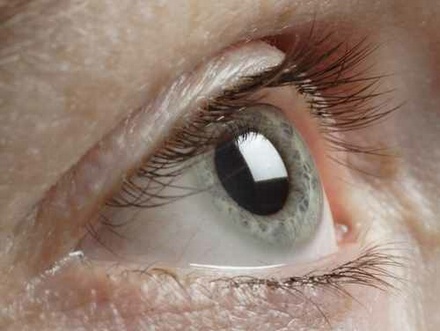
We have two eyes and each differ in their optical properties - you can easily tell by placing a hand over each and seeing the difference.
As a result of the fits and starts and do-overs in evolution that got us eyes, our vision system results in a blur projected in each retina and then the visual system calibrates itself to give us a clear picture. In the past, researchers had people where glasses where images were upside down. Eventually, our brains compensated and the images were correct - until people took off the glasses.
Medical marijuana usage has been proliferating across the United States, primarily due to claims about pain management, but the demographics are baffling. Though women have 60 percent of medical visits for pain, 80 percent of medical marijuana prescriptions for pain have been men.
Yet in instances where the prescriptions have been real, tolerance develops quickly, which means people are inhaling more and more carcinogens, and there are numerous other side effects.


 Why Antarctic Sea Ice Stopped Growing In 2015
 Wealth Correlated To Loneliness
 Ousiometrics Analysis Says All Human Language Is Biased
  Wavelengths Of Light Are Why CO2 Cools The Upper Atmosphere But Warms Earth