Banner
Why Antarctic Sea Ice Stopped Growing In 2015

Though numerical models and popular films like An Inconvenient Truth projected Arctic ice...

Wealth Correlated To Loneliness

You may have read that Asian cultures respect the elderly more than Europe but Asian senior citizens...

Ousiometrics Analysis Says All Human Language Is Biased

A new tool drawing on billions of uses of more than 20,000 words and diverse real-world texts claims...

Wavelengths Of Light Are Why CO2 Cools The Upper Atmosphere But Warms Earth

There are concerns about projected warming on the Earth’s surface and in the lower atmosphere...

User picture.
News StaffRSS Feed of this column.

News Releases From All Over The World, Right To You... Read More »

Blogroll
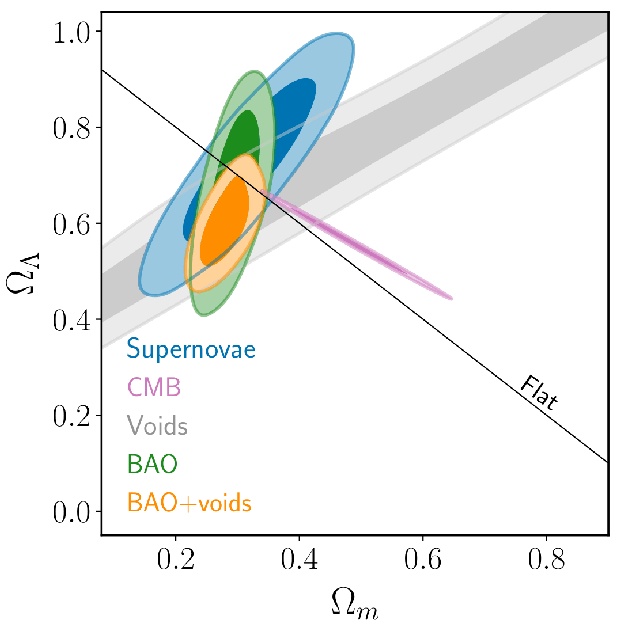
A new paper uses a combination of cosmic voids – large expanding bubbles of space containing very few galaxies – and the faint imprint of sound waves in the very early Universe, known as baryon acoustic oscillations, that can be seen in the distribution of galaxies, to show how large structures in the distribution of galaxies in the Universe can provide the most precise tests of dark energy and cosmic expansion yet.
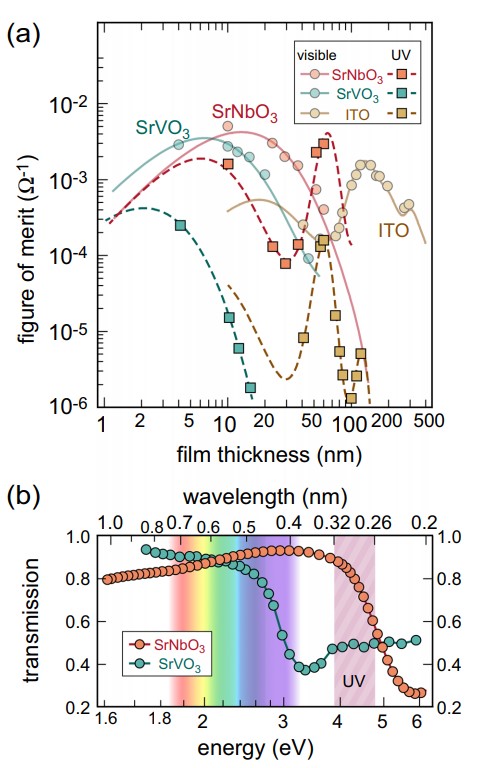
Though "energy medicine" and "oxygenated herbs" promoted by CNN's Chris Cuomo are woo, one notion ridiculed by journalists has merit; using light to disinfect areas and kill coronavirus.

Though chemicals are most common, they are not always practical or portable. Ultraviolet radiation in the 200 to 300 nanometer range will destroy the virus, it just requires UV radiation sources that emit sufficiently high doses of UV light. Current devices are things like expensive mercury-containing gas discharge lamps, which require high power, have a relatively short lifetime, and are bulky. 
A new paper posits that fluctuating estrogen levels may make alcohol more rewarding.

The giant caveat is that the study was in mice, and despite what you may read in corporate media, mice are not little people, so this research is firmly in the "exploratory" part of science. 
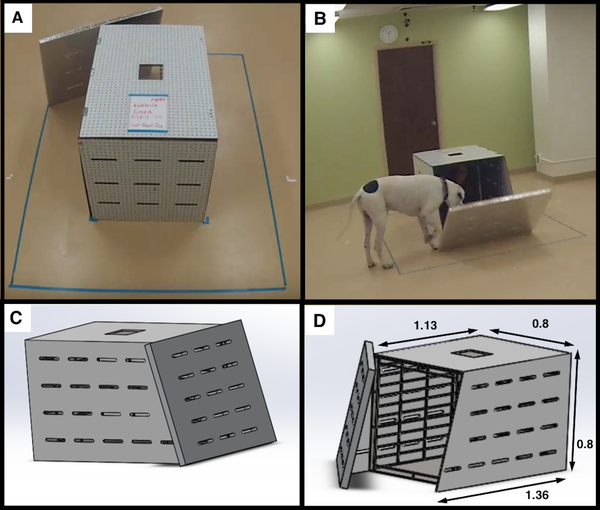
We know dogs will try to rescue humans, those Lassie stories were based on events that have happened for as long as humans and dogs have co-existed, but simply observing dogs rescuing someone doesn't tell you much about dogs' actual interest in rescuing humans

So psychologists at Arizona State University set up an experiment assessing 60 pet dogs' propensity to rescue their owners. None of the dogs had any kind of rescue training. 
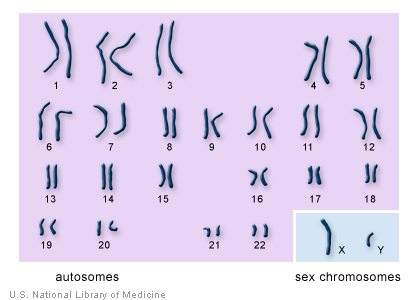
In high school biology you learned that in humans, a normal cell contains 23 pairs of chromosomes; 22 autosomes, which are the same in both males and females, while in the 23rd, the sex chromosomes, females have two copies of the X chromosome while males have one X and one Y.

Their differences don't stop there. Chromosome pairs are numbered according to size, pair 1 being largest and 23 the smallest. And the Y is tiny compared to the X. X contains thousands of genes critical for life while the Y provides the instructions for initiating male development and making sperm.

Exactly how they work together during meiosis, the form of cell division that creates sperm and egg, contains a science mystery.
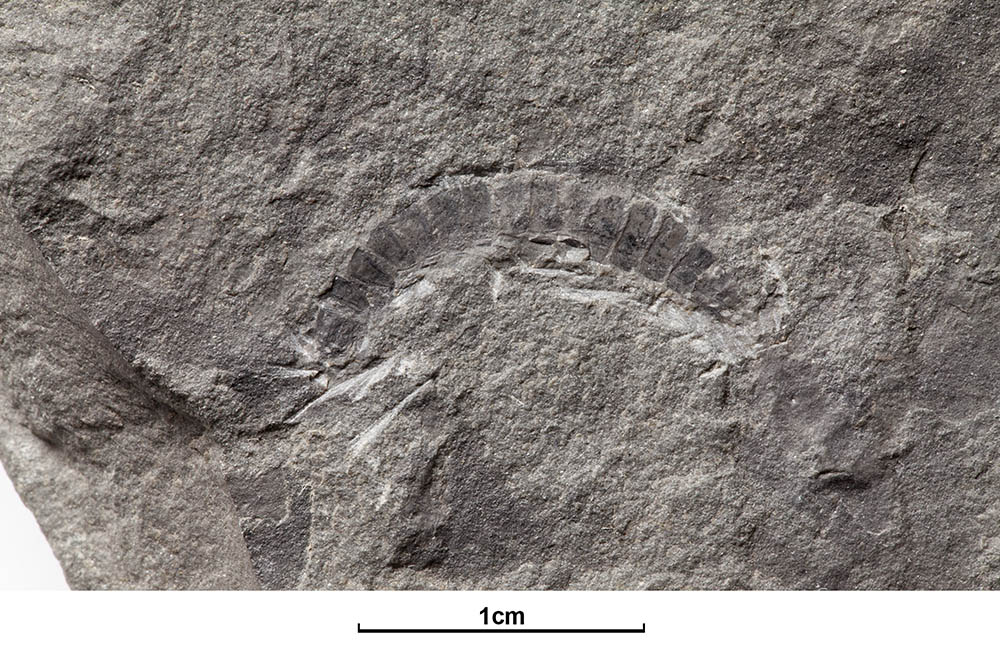
A 425-million-year-old Kampecaris obanensis millipede fossil is the world's oldest "bug." It is older than any known fossil of an insect, arachnid or other related creepy-crawly and it was found on the Scottish island of Kerrera.

It's about 75 million years younger than the age other scientists have estimated the oldest millipede to be using a technique known as molecular clock dating, which is based on DNA's mutation rate. Other research using fossil dating found that the oldest fossil of a land-dwelling, stemmed plant (also from Scotland) is 425 million years old and 75 million years younger than molecular clock estimates.