Banner
How To Overcome Leadership Battles

In times of social rancor and strife, most will fight each other, but societies are saved by those...
Thousands Of Unpublished Studies Show Why Conservation Efforts Miss The Mark

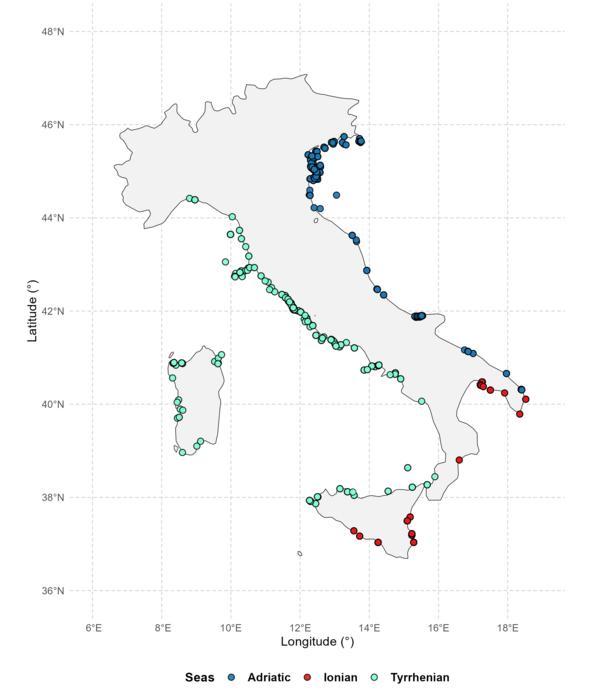
Europe alone has so much unpublished, un-catalogued biological data that it is challenging to take...

Why Antarctic Sea Ice Stopped Growing In 2015

Though numerical models and popular films like An Inconvenient Truth projected Arctic ice...

Wealth Correlated To Loneliness

You may have read that Asian cultures respect the elderly more than Europe but Asian senior citizens...

User picture.
News StaffRSS Feed of this column.

News Releases From All Over The World, Right To You... Read More »

Blogroll

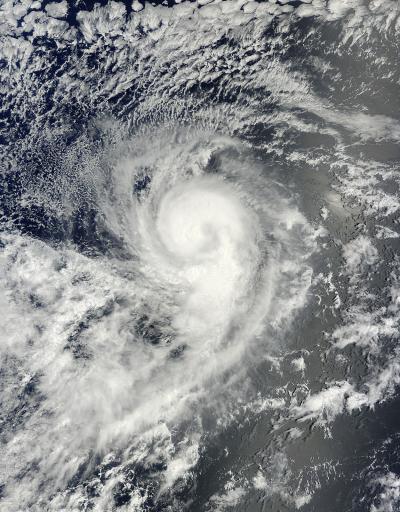
Tropical Storm Karina was weakening on August 20 when NASA's Terra satellite passed overhead. The Moderate Resolution Imaging Spectroradiometer or MODIS instrument aboard Terra snapped a visible image of Tropical Storm Karina on August 20 at 19:40 UTC (3:40 p.m. EDT). The MODIS image showed that a thick band of strong thunderstorms spiraled into Karina's center from the southeast. The band of thunderstorms wrapped around Karina's eastern and northern quadrants, spiraling into the center from the west, making the tropical cyclone look like the number nine.

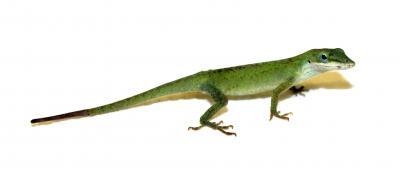
A team of researchers  is a step closer to solving the mystery of how lizards regenerate their tails. They have found the genetic "recipe", which involves genetic ingredients in just the right mixture and amounts.

The scientists used molecular and computer analysis tools to examine the genes turned on in tail regeneration. The team studied the regenerating tail of the green anole lizard (Anolis carolinensis), which when caught by a predator, can lose its tail and then grow it back. 

When salmon encounter turbulent, fast-moving water, such as rapids or areas downstream of dams, they must move upstream using a behavior known as "burst swimming" that is similar to sprinting for humans.

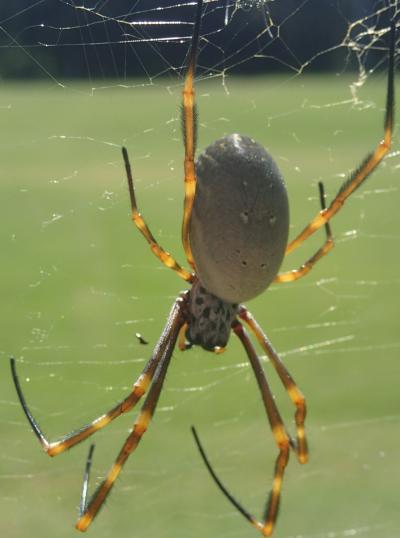
A common orb-weaving spider may grow larger and have an increased ability to reproduce when living in urban areas, according to ecologists from the University of Sydney.

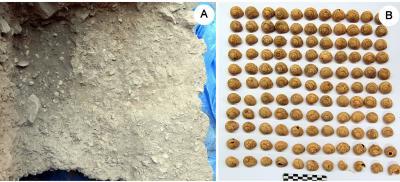
The Paleolithic inhabitants of modern-day Spain may have eaten snails 30,000 years ago - 10,000 years earlier than their Mediterranean neighbors, according to a recent paper.

Biofuels production has never lived up to the hype. It does something, so it is less hype than quantum computers have been for 15 years, but biofuels suffer from inefficiencies that have kept it from improving due to time and experience, some of which is that subsidies and mandates lead to less innovation rather than more, and then there is a chemistry problem.

There may be hope for the chemistry problem. A new paper
the Journal of the American Chemical Society finds that water in the conversion process helps form an impurity which slows down key chemical reactions.