Banner
How To Overcome Leadership Battles

In times of social rancor and strife, most will fight each other, but societies are saved by those...
Thousands Of Unpublished Studies Show Why Conservation Efforts Miss The Mark

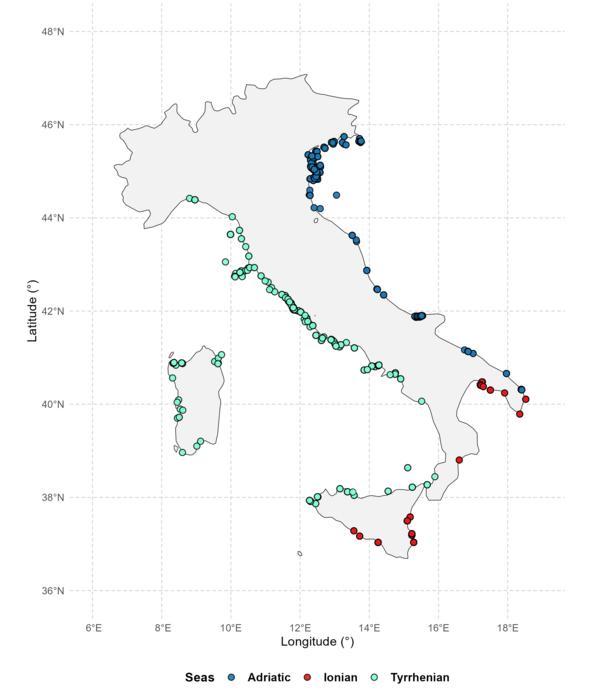
Europe alone has so much unpublished, un-catalogued biological data that it is challenging to take...

Why Antarctic Sea Ice Stopped Growing In 2015

Though numerical models and popular films like An Inconvenient Truth projected Arctic ice...
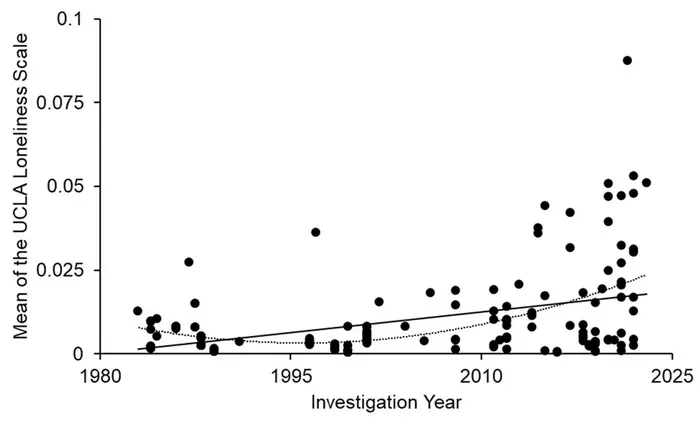
Wealth Correlated To Loneliness

You may have read that Asian cultures respect the elderly more than Europe but Asian senior citizens...

User picture.
News StaffRSS Feed of this column.

News Releases From All Over The World, Right To You... Read More »

Blogroll

Hospice is the name for palliative care, primarily of terminally ill patients. There are few examples of more gracious, compassionate people, so if a patient wants antibiotics they are going to get them - even though there is little evidence that such medications improve symptoms or quality of life, and the downside is they may cause unwanted side effects.

Antibiotics are ingrained in contemporary medicine - they have saved an unknown number of lives, but in the hundreds of millions. 21 percent of patients being discharged from hospitals directly to a hospice program leave with a prescription for antibiotics, even though more than one fourth of them don't have a documented infection during their hospital admission.

 In the most recent Diagnostic and Statistical Manual of Mental Disorders, DSM-5, the age of onset criterion for
attention-deficit/hyperactivity disorder (ADHD)
was changed from 7, where it was placed in DSM-IV, to 12.

The writers said they changed the age to reflect the importance of clinical presentation during childhood for accurate diagnosis, while also acknowledging the difficulties in establishing precise childhood onset retrospectively. A recent paper in the Journal of the American Academy of Child and Adolescent Psychiatry says it has validated that decision.

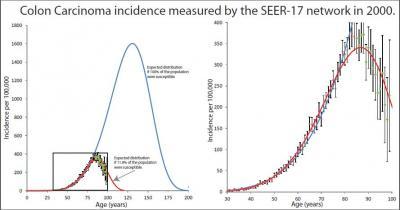
Cancer, it is said, is nature's way of telling us to 'get the hint'. At a certain age, we all have more friends who get cancer. The older we get, the more often it happens. Even if we somehow slow aging, we would end up with cancer eventually, just like Gilles-Eric Séralini's experimental rats were predestined to get cancer when he let them live long enough.

Cancer is inevitable.

Perhaps not all cancer. The risk of developing several common cancers decreases with age, which has been a mystery. Mystery or not, it is what it is and researchers want to be able to take advantage of what they know. 

The Centers for Disease Control and Prevention is rightfully concerned that the U.S. faces “potentially catastrophic consequences” from the growing threat of antibiotic-resistant infections, which kill about 23,000 Americans a year.

One solution is personalized antibiotic therapy, but that would require both rapid bacterial identification and narrow-spectrum antibiotics. Tailored antibiotic therapy would not only extend the clinical lifetime of new antibiotics by better managing resistance, it might also revive old antibiotics that have been abandoned due to resistance, toxicity, or their inability to penetrate bacterial membranes.

Cachexia is a profound wasting of fat and muscle occurring in about half of all cancer patients, raising their risk of death.

Many strategies have been tried to reverse the condition, which may cause such frailty that patients can't endure potentially life-saving treatments, but none have had great success.

Researchers recently demonstrated that, in mice bearing lung tumors, their symptoms of cachexia improved or were prevented when given an antibody that blocked the effects of a protein, PTHrP, secreted by the tumor cells. PTHrP stands for parathyroid hormone-related protein, and is known to be released from many types of cancer cells.

Biophysics researchers recently used short pulses of light to peer into the mechanics of photosynthesis to try and determine the role of molecule vibrations in the energy conversion process that powers life on earth.   

Through photosynthesis, plants and some bacteria turn sunlight, water and carbon dioxide into food for themselves and oxygen for animals to breathe. It's perhaps the most important biochemical process on Earth and scientists don't yet fully understand how it works.  New 'quantum biology' findings could potentially help engineers make more efficient solar cells and energy storage systems and provide evidence for exactly how photosynthesis manages to be so efficient.