




Understanding the impact of the ocean on sequestering carbon is important, because China builds two new coal plants each week and emits more pollution than the rest of the top 10 countries combined. Until they stop exempting themselves from pollution treaties it is important to understand what natural effects can help, since developed western countries have already sent their emissions per capita back 100 years and can't realistically get lower.
Cyclones have long been known to stir up stored CO2 but cooling temperatures on the surface offset some of that. The new estimate is still limited by sparse CO2 measurements so the confidence level remains lower than we'd like but their efforts synthesizing observations of varying quality still helped construct a daily estimate of global air-sea CO2 flux and if it is valid, a drastic change from 1993-1997 at 16 percent to 4.5 percent is cause for concern. Yet their time samples will bring criticism. The 1990s period included the highest El Niño event on record and led to dramatic warming while the 2010s estimates included the number three one. The correlation arrows implicating cyclones in net ocean carbon outgassing could be backwards; tropical storms may have been a symptom rather than the disease.
If China and other high-pollution nations don't curb their emissions, by 2035 tropical cyclones might switch from ocean carbon outgassing to carbon uptake and cause increased ocean acidification.
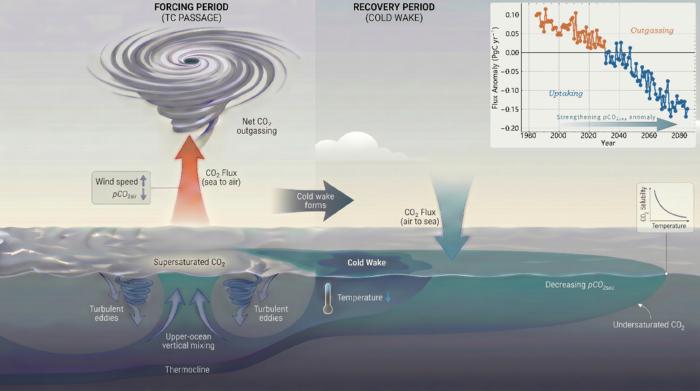
The U.S. and Europe have reduced emissions dramatically and continue to spend money on expensive alternatives but emissions continue to increase due to nations wrapping themselves in "developing" status. It is important that United Nations climate bodies and European governments turn the same critical eye on countries like China that they do their own.
Citation: Ye, H., Ma, Z., Fei, J. et al. Reduction of tropical cyclone-induced ocean carbon outgassing since 1993. Nat. Geosci. (2026). https://www.nature.com/articles/s41561-026-01985-4




Comments