Banner
How To Overcome Leadership Battles

In times of social rancor and strife, most will fight each other, but societies are saved by those...

Thousands Of Unpublished Studies Show Why Conservation Efforts Miss The Mark

Europe alone has so much unpublished, un-catalogued biological data that it is challenging to take...

Why Antarctic Sea Ice Stopped Growing In 2015

Though numerical models and popular films like An Inconvenient Truth projected Arctic ice...

Wealth Correlated To Loneliness

You may have read that Asian cultures respect the elderly more than Europe but Asian senior citizens...

User picture.
News StaffRSS Feed of this column.

News Releases From All Over The World, Right To You... Read More »

Blogroll

For good or bad, the Affordable Care Act - Obamacare - is making electronic health records ubiquitous.That means the sheer quantity of clinical data that will become available for research and analytic purposes will skyrocket. The possibility for clinical analytics to analyze large quantities of data for the purpose of gleaning insights has the potential to improve the value of patient care. Science knows all about such big data. It will be good to see if new approaches for health care can benefit research also.  

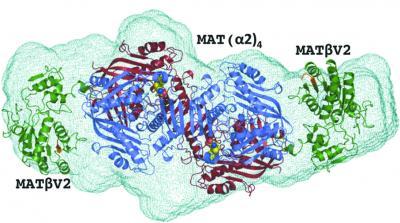
Researchers have revealed the structure of a protein complex,
MATα2 and MATβ,
that bind to each other and promote the reproduction of tumor cells in liver and colon cancers.

Both of these types of cancer are significant. In 2012 alone, liver cancer was responsible for the second highest mortality rate worldwide, with colon cancer appearing third in the list. 

This structural data discovery opens up additional research opportunities into drugs that can act on the binding of these proteins, thereby possibly inhibiting cancer cell growth.

Mice exposed to arsenic in drinking water developed lung cancer in a new study by researchers at the National Institutes of Health have found. 

In the study, researchers gave mice orders of magnitude acceptable limits of arsenic in water - 5X the EPA maximun, 50X and 500X. The reason they used so much is because mice need to be exposed to greater concentrations of arsenic in drinking water than humans to achieve the same biological dose and similar health effects.  Arsenic in public drinking water cannot exceed 10 parts per billion (ppb) by U.S. Environmental Protection Agency regulations. Private wells, from which millions of people get their drinking water, don't have a specified standard because arsenic is found in nature. 

The number of children with atopic dermatitis - eczema, a painful, itchy skin condition
- is on the rise. Some estimates are that one in five children in the U.S. now suffers from it and many children are prescribed powerful medications like immunosuppressants or topical steroids. 

To help find simpler treatment options, researchers at National Jewish Health evaluated an approach known as wet wrap therapy. First described in 1987, wet wrap therapy has rarely been studied and has never been used as a standardized treatment for children with eczema. 

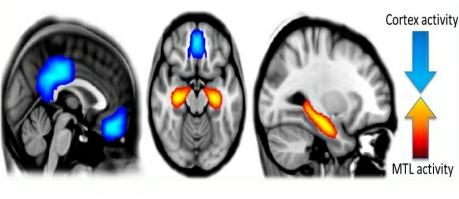
Hippies on LSD in the 1960s described it as a 'dream state' and a new study finds that is a pretty accurate description.

Researchers recently examined the brain effects of the psychedelic chemical in magic mushrooms, called psilocybin, using data from brain scans of volunteers who had been injected with the drug. The results were that brains display a similar pattern of activity during a mind-expanding drug trip as it does during dreams.

One way to scientifically optimize nature is to understand how soil moisture, the water contained within soil particles, behaves in Earth's water cycle.

Soil moisture is essential for plant life and influences weather and climate  and now researchers working with data from NASA's Aquarius instrument have created worldwide maps of soil moisture, showing how the wetness of the land fluctuates with the seasons and weather phenomena.