Banner
Pilot Study: Fibromyalgia Fatigue Improved By TENS Therapy

Fibromyalgia is the term for a poorly-understood condition where people experience pain and fatigue...

High Meat Consumption Linked To Lower Dementia Risk

Older people who eat large amounts of meat have a lower risk of dementia and cognitive decline...

Long Before The Inca Colonized Peru, Natives Had A Thriving Trade Network

A new DNA analysis reveals that long before the Incan Empire took over Peru, animals were...

Mesolithic People Had Meals With More Tradition Than You Thought

The common imagery of prehistoric people is either rooting through dirt for grubs and picking berries...

User picture.
News StaffRSS Feed of this column.

News Releases From All Over The World, Right To You... Read More »

Blogroll

New immigration research from Rice University, the University of North Carolina and the Centre for Population, Poverty and Public Policy Studies suggests the U.S. should re-evaluate its definition of skilled workers to include informal skills of migrant workers.

The study, "Identifying and Measuring the Lifelong Human Capital of 'Unskilled' Migrants in the Mexico-U.S. Migrator Circuit," draws on a binational multistage research project that involved interviews with 320 Mexican migrants and return migrants in North Carolina and Guanajuato, Mexico. The study identifies lifelong human capital – knowledge and technical and social skills – acquired and transferred throughout these migrants' careers.

Promiscuity means different things in different cultures, a one-size-fits-all approach rarely fits anyone, which is why western protesters do so poorly telling Africans how they need to change their behavioral ways. 

And in western society, female promiscuity is frowned on more than the male kind. Even in different countries it has different perceptions. The British show "Coupling" was hilarious to both Americans and British people but when a US network made an American version, it was a huge flop, even though it was taken almost verbatim from the British. The reason is because American audiences thought promiscuous British women were funny, but not American ones.

In rodent models, a drug that blocks the action of the enzyme Cdk5 could substantially reduce brain damage if administered shortly after a stroke, according to a new paper in the Journal of Neuroscience, because aberrant Cdk5 activity causes nerve cell death during stroke.

The land known as Israel today was once pretty bleak. Mark Twain spoke of the barren landscape and lack of people when it was owned by colonial European powers. Nothing much was there.

But then Jews began buying it up. They planted crops and modernized irrigation. After World War II, the United Nations made it a country and now the land is considered so valuable the Arab states insist they should own it instead.

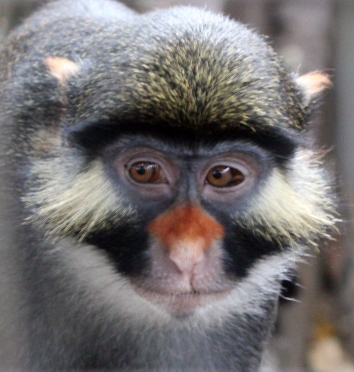
Old World monkeys have undergone a remarkable evolution in facial appearance as a way of avoiding interbreeding with closely related and geographically proximate species, according to a new paper which provides best evidence to-date for the role of visual cues as a barrier to breeding across species.

The researchers studied guenons—a group of more than two dozen species of monkeys indigenous to the forests of Central and West Africa. Many different species of guenons are often sympatric—they live in close proximity to each other, with multiple species often traveling, feeding, and sleeping side-by-side. Therefore interbreeding, which could result in afflicted infertile offspring, remains an unwelcome possibility. 

A blood testcould help predict the likelihood of a woman developing breast cancer, even in the absence of a high-risk BRCA1 gene mutation, according to researchers from University College London who identified an epigenetic signature in the blood of women predisposed for breast cancer owing to an inherited genetic mutation of the BRCA1 gene.

Epigenetic alterations are thought to be key molecular switches that are involved in the development of cancer. Strikingly, the same signature was discovered in the blood of women without a BRCA1 mutation but who went on to develop breast cancer, making it a potential early marker of women's cancer in the general population.