Banner
Pilot Study: Fibromyalgia Fatigue Improved By TENS Therapy

Fibromyalgia is the term for a poorly-understood condition where people experience pain and fatigue...

High Meat Consumption Linked To Lower Dementia Risk

Older people who eat large amounts of meat have a lower risk of dementia and cognitive decline...

Long Before The Inca Colonized Peru, Natives Had A Thriving Trade Network

A new DNA analysis reveals that long before the Incan Empire took over Peru, animals were...

Mesolithic People Had Meals With More Tradition Than You Thought

The common imagery of prehistoric people is either rooting through dirt for grubs and picking berries...

User picture.
News StaffRSS Feed of this column.

News Releases From All Over The World, Right To You... Read More »

Blogroll

On May 24th of 2013, a magnitude 8.3 earthquake hit deep beneath the Sea of Okhotsk, between Russia's Kamchatka Peninsula and Japan. The main shock of the earthquake was located at 610 kilometers (379 miles) depth, a rupture in the mantle far below the Earth's crust.

By inverting seismic waves that were observed during the earthquake, researchers have found that this initial shock triggered four subsequent shocks. These four shocks were magnitudes 7.8, 8.0, 7.9, and 7.9. A pressure front from the initial earthquake propagated at a speed of approximately 4.0 kilometers (2.5 miles) per second, setting off three subsequent earthquakes in a line south of the main shock. 

The crocodile is a pretty shrewd hunter - they even use lures to hunt their prey, according to Vladimir Dinets, assistant professor in the Department of Psychology at University of Tennessee, Knoxville, and colleagues, who say they have observed two crocodilian species, muggers and American alligators, using twigs and sticks to lure birds, particularly during nest-building time. 

The live vaccine Bacille Calmette-Guérin, used in some parts of the world to prevent tuberculosis, may help prevent multiple sclerosis (MS) in people who show the beginning signs of the disease, according to a new study in Neurology.  

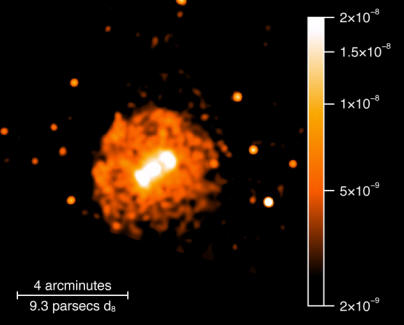
Astronomers have identified the glowing wreck of a star that exploded a mere 2,500 years ago — the blink of an eye in astronomical terms - and revealed an astrophysical novelty of the Milky Way.

Quantum entanglement, the phenomenon of quantum mechanics that Albert Einstein once referred to as "spooky action at a distance," could be even spookier - hypothetically.

Quantum entanglement occurs when a pair or a group of particles interact in ways that dictate that each particle's behavior is relative to the behavior of the others. In a pair of entangled particles, if one particle is observed to have a specific spin, for example, the other particle observed at the same time will have the opposite spin.

Loofahs, those exfoliating things for skin that men pretend they don't use in the shower, may be a new potential tool to advance sustainability efforts of both energy and waste, according to a paper in the journal Environmental Science&Technology.

The study describes the pairing of loofahs with bacteria to create a power-generating microbial fuel cell (MFC). Shungui Zhou and colleagues note that MFCs, which harness the ability of some bacteria to convert waste into electric power, could help address both the world's growing waste problem and its need for clean power. Current MFC devices can be expensive and complicated to make. In addition, the holes, or pores, in the cells' electrodes are often too small for bacteria to spread out in.