Banner
Pilot Study: Fibromyalgia Fatigue Improved By TENS Therapy

Fibromyalgia is the term for a poorly-understood condition where people experience pain and fatigue...

High Meat Consumption Linked To Lower Dementia Risk

Older people who eat large amounts of meat have a lower risk of dementia and cognitive decline...

Long Before The Inca Colonized Peru, Natives Had A Thriving Trade Network

A new DNA analysis reveals that long before the Incan Empire took over Peru, animals were...

Mesolithic People Had Meals With More Tradition Than You Thought

The common imagery of prehistoric people is either rooting through dirt for grubs and picking berries...

User picture.
News StaffRSS Feed of this column.

News Releases From All Over The World, Right To You... Read More »

Blogroll
At some point the exact number of particles in a group becomes irrelevant.

But does when a collection of elements forms a "heap" ?

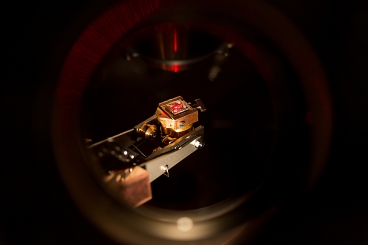
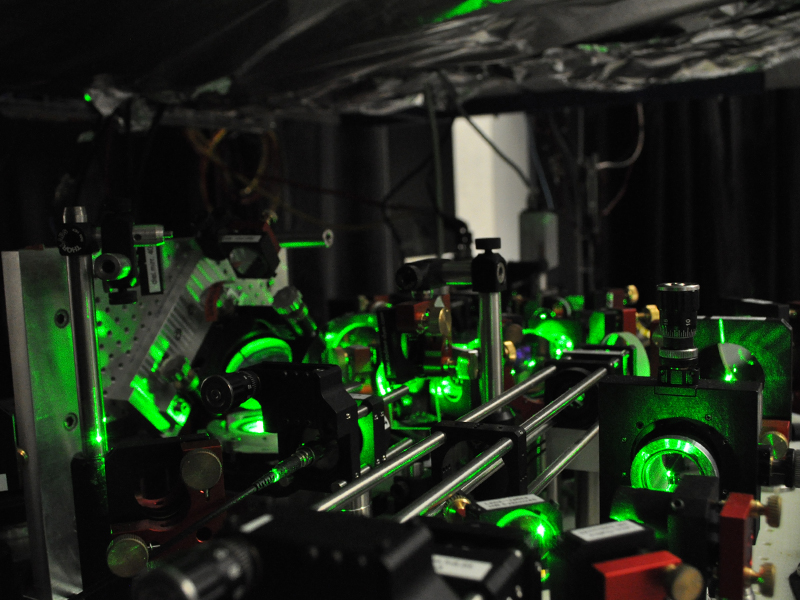
In recent experiments using ultracold atoms, Heidelberg physicists succeeded in observing the transition to a many-body system well described by an infinite number of particles - a problem philosophers call the sorites paradox. The essential question is when a collection of elements forms a "heap". 

On Oct. 23rd, 2013, the sun emitted a solar flare, classified as an M9.4 flare on a scale from M1 to M9.9 - near the very top of the scale for M class flares.

Solar flares are powerful bursts of radiation. Harmful radiation from a flare cannot pass through Earth's atmosphere to physically affect humans on the ground, but when they are intense enough they can disturb the atmosphere in the layer where GPS and communications signals travel. Such radiation can disrupt radio signals for as long as the flare is ongoing, anywhere from minutes to hours.

Crystals form the basis for the penetrating icy blue glare of car headlights - they could also be fundamental to the future in solar energy technology?

Manufactured alloy crystals, such as indium gallium nitride or InGaN, form the light emitting region of LEDs, for illumination in the visible range, and of laser diodes (LDs) in the blue-UV range.  

In an article recently published in the journal Applied Physics Letters, researchers revealed the fundamental aspect of a new approach to growing InGaN crystals for diodes, which promises to move photovoltaic solar cell technology toward record-breaking efficiencies.

3K3A-APC, an experimental drug, appears to reduce brain damage and eliminate brain hemorrhaging in older stroke-afflicted mice and stroke-afflicted rats with co-morbid conditions such as hypertension, according to a new study.

The paper finds that 3K3A-APC may be used as a therapy for stroke in humans, either alone or in combination with the FDA-approved clot-busting drug therapy tPA (tissue plasminogen activator). Clinical trials to test the drug's efficacy in people experiencing acute ischemic stroke are expected to begin recruiting patients in the U.S. in 2014.

Researchers have made a step toward the creation of materials that can be 'tuned' just by shining a light on them - they have succeeded in producing and measuring a coupling of photons and electrons on the surface of an unusual type of material called a topological insulator. This type of coupling had been predicted by theorists but never observed.

Their method involves shooting femtosecond (millionths of a billionth of a second) pulses of mid-infrared light at a sample of material and observing the results with an electron spectrometer, a specialized high-speed camera the team developed.

Thermoelectric materials were discovered in the 19th century and have the remarkable property that heating them creates a small electrical current - but adopting them to the 21st century has been a challenge.