Banner
Pilot Study: Fibromyalgia Fatigue Improved By TENS Therapy

Fibromyalgia is the term for a poorly-understood condition where people experience pain and fatigue...

High Meat Consumption Linked To Lower Dementia Risk

Older people who eat large amounts of meat have a lower risk of dementia and cognitive decline...

Long Before The Inca Colonized Peru, Natives Had A Thriving Trade Network

A new DNA analysis reveals that long before the Incan Empire took over Peru, animals were...

Mesolithic People Had Meals With More Tradition Than You Thought

The common imagery of prehistoric people is either rooting through dirt for grubs and picking berries...

User picture.
News StaffRSS Feed of this column.

News Releases From All Over The World, Right To You... Read More »

Blogroll

In soccer, football in the rest of the world, a team is most vulnerable right after they score. That is why goals often come in pairs. 

But there is also a more dangerous statistic relating to scoring. Players are at a greater risk of injury five minutes or after a goal has been scored and the frequency of player injuries also increases when their team has the lead, according to a paper that analyzed injuries over the last three World Cup tournaments. 

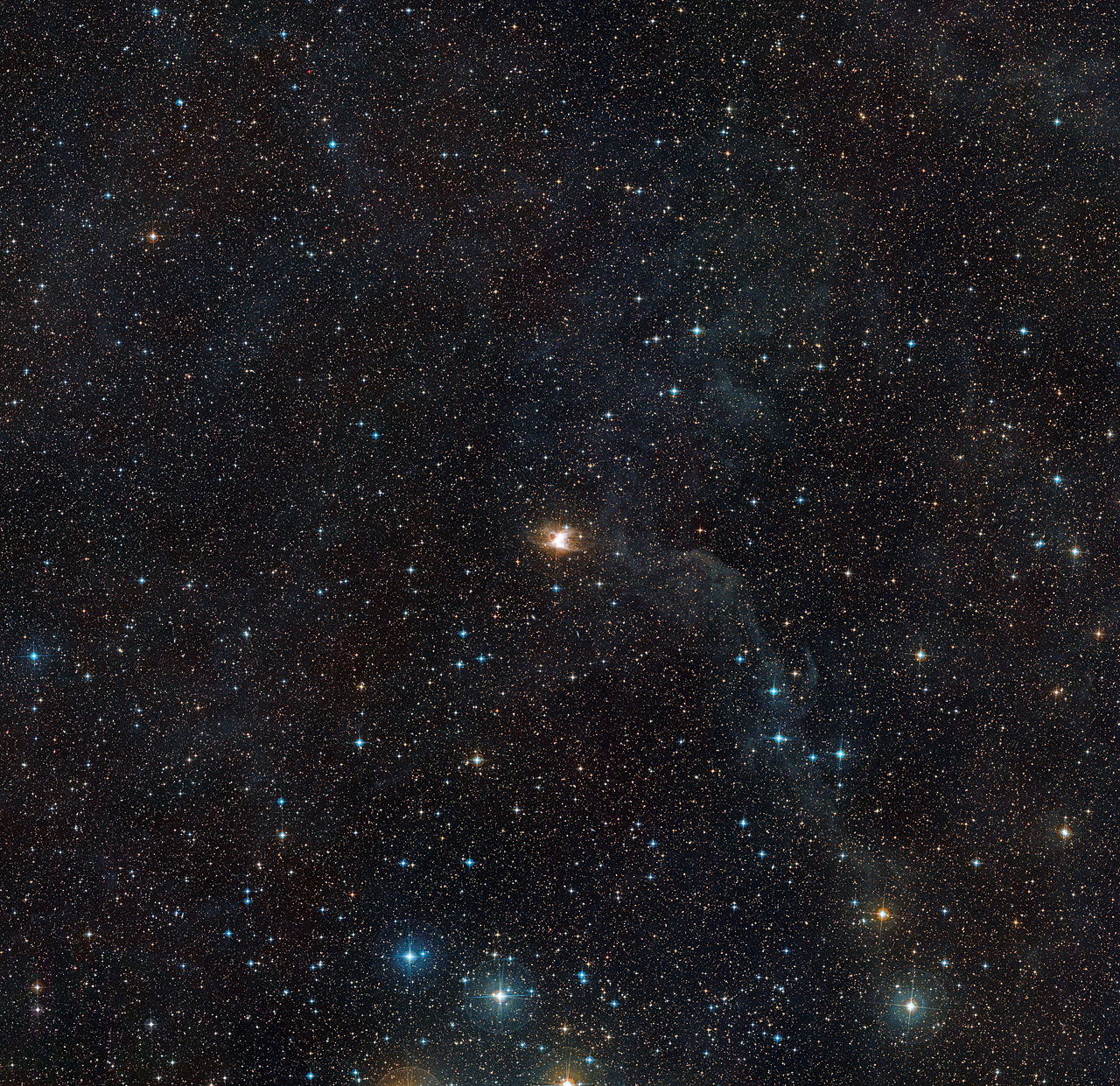
The Toby Jug Nebula, formally known as IC 2220, is an example of a reflection nebula - a cloud of gas and dust illuminated from within by a star called HD 65750. 

The Toby Jug Nebula is located 1,200 light-years from Earth in the southern constellation of Carina  - The Ship's Keel.

HD 65750, the driver of the nebula, is a red giant, has five times the mass of our Sun and is in a much more advanced stage of its life, despite its comparatively young age of around 50 million years. Stars with more mass run through their lives much more quickly than lighter ones such as the Sun, which have lives measured in billions, rather than millions, of years.

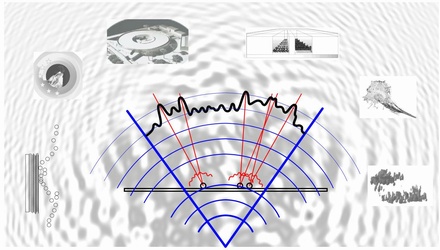
The Nobel Prize in Chemistry 2013 was awarded jointly to Martin Karplus, Michael Levitt and Arieh Warshel "for the development of multiscale models for complex chemical systems".

While today, chemical modeling is carried out in computers, in the early 1970s that was far more difficult. Chemical reactions occur at lightning speed. In a fraction of a millisecond, electrons jump from one atomic nucleus to the other. Classical chemistry has a hard time keeping up; it is virtually impossible to experimentally map every little step in a chemical process using physical models.

Grey literature in medicine has some valuable insight, according to a new paper. The authors say that clinical trial outcomes are more complete in unpublished reports than in publicly available information.

The results found that publicly available information contained less information about both the benefits and potential harms of an intervention than unpublished data. These findings highlight the importance of recent initiatives, such as the AllTrials initiative, that aim to make clinical trial outcome data publicly available, in order to provide complete and transparent information to help patients and clinicians reach decisions about clinical care.

Unusual impact craters formed on Mars feature a thin outer deposit that extends many times beyond the typical range of ejecta.

Nadine Barlow, professor of physics and astronomy at Northern Arizona University, calls these craters Low-Aspect-Ratio Layered Ejecta (LARLE) craters, since the ratio of the thickness to the length of the deposit (the aspect ratio) is so small. 

Barlow found the LARLE craters while poring over high-resolution images to update her highly popular catalog of Martian craters. These craters stood out since they displayed this extensive outer deposit beyond the normal ejecta blanket of the crater. "I had to ask, 'What is going on here?' " Barlow said.

Scientists should be good at judging the importance of the scientific work of others - it's a peer review culture - but a new paper instead says that scientists are unreliable judges of the importance of fellow researchers' published papers.

They're better at it than you. But still pretty bad at it, according to the authors.

Prof. Eyre-Walker and Dr. Nina Stoletzki analyzed three methods of assessing published studies, using two sets of peer-reviewed articles. The three assessment methods the researchers looked at were: