Banner
Pilot Study: Fibromyalgia Fatigue Improved By TENS Therapy

Fibromyalgia is the term for a poorly-understood condition where people experience pain and fatigue...

High Meat Consumption Linked To Lower Dementia Risk

Older people who eat large amounts of meat have a lower risk of dementia and cognitive decline...

Long Before The Inca Colonized Peru, Natives Had A Thriving Trade Network

A new DNA analysis reveals that long before the Incan Empire took over Peru, animals were...

Mesolithic People Had Meals With More Tradition Than You Thought

The common imagery of prehistoric people is either rooting through dirt for grubs and picking berries...

User picture.
News StaffRSS Feed of this column.

News Releases From All Over The World, Right To You... Read More »

Blogroll

If you began to travel to the star nearest to us after ol' Sol, named Alpha Centauri, it takes about four light years.  

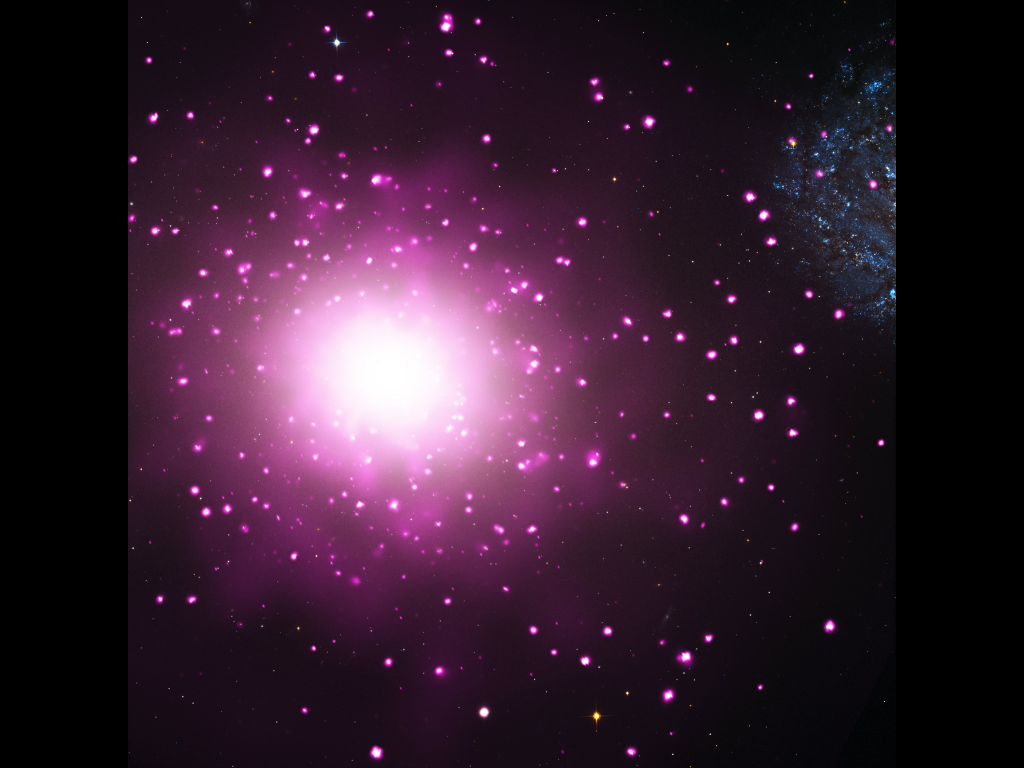
Now imagine there were instead 10,000 other stars crammed into that 25 trillion miles of space rather than none - that's the kind of density of a galaxy that was recently discovered.

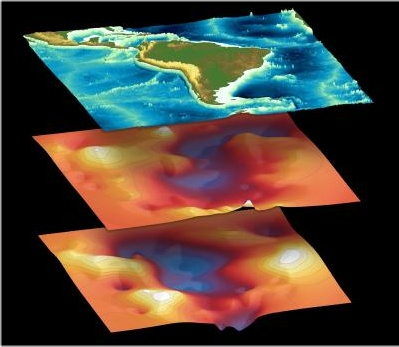
New evidence suggests than no continental ice sheet formed during the Late Cretaceous Period more than 90 million years ago, when the climate was much warmer than it is today, though it has been commonly believed to have happened that way. 

Psychopathy is a personality disorder characterized by a lack of empathy and remorse, shallow affect, glibness, manipulation and callousness. Though less than one percent of the general population meet the criteria, the rate of psychopathy in prisons is around 23%. 

As you might suspect, psychopaths don't much care when people are in pain. 

A new paper using functional magnetic resonance imaging (fMRI) on the brains of 121 inmates of a medium-security prison in the USA finds that in psychopaths, the brain areas necessary for feeling empathy and concern for others fail to become active and be connected to other important regions involved in affective processing and decision-making. 

A new study finds that a 'microbial clock' may help forensic scientists who are attempting to determine the time of death in cases involving human corpses. 

The 'clock' in this instance is essentially the lock-step succession of bacterial changes that occur postmortem as bodies move through the decay process, much like estimates used to be made involving knowledge of rigor mortis.

Currently, investigators use tools ranging from the timing of last text messages and corpse temperatures to insect infestations on bodies and "grave soil" analyses, with varying results. And the more days that elapse following a person's demise, the more difficult it becomes to determine the time of death with any significant accuracy. 

Deep earthquakes occur where the oceanic lithosphere, driven by tectonics, plunges under continental plates – examples are off the coasts of the western United States, Russia and Japan.

Some new research is a step toward replicating the full power of these earthquakes to learn what sets them off and how they unleash their violence and was made possible only by the construction of a one-of-a-kind X-ray facility that can replicate high-pressure and high-temperature while allowing scientists to peer deep into material to trace the propagation of cracks and shock waves.

Galaxy Zoo 2, the second phase of a crowdsourcing effort to categorize galaxies in our universe, has leveraged more than 83,000 citizen scientists to obtain over 16 million galaxy classifications and information on more than 300,000 galaxies.

That's what you get when you ask the public for help in learning more about our universe.  Computers are good at automatically measuring properties such as size and color of galaxies, but more challenging characteristics, such as shape and structure, can only be determined by the human eye.