Banner
Pilot Study: Fibromyalgia Fatigue Improved By TENS Therapy

Fibromyalgia is the term for a poorly-understood condition where people experience pain and fatigue...

High Meat Consumption Linked To Lower Dementia Risk

Older people who eat large amounts of meat have a lower risk of dementia and cognitive decline...

Long Before The Inca Colonized Peru, Natives Had A Thriving Trade Network

A new DNA analysis reveals that long before the Incan Empire took over Peru, animals were...

Mesolithic People Had Meals With More Tradition Than You Thought

The common imagery of prehistoric people is either rooting through dirt for grubs and picking berries...

User picture.
News StaffRSS Feed of this column.

News Releases From All Over The World, Right To You... Read More »

Blogroll

A RIKEN research team says that an enzyme called Rines regulates
Monoamine oxidase A (MAO-A), a major brain protein controlling emotion and mood, making it a potential drug target for treating depression.

Monoamine oxidase A is an enzyme that breaks down serotonin, norephinephrine and dopamine, neurotransmitters well-known for their influence on emotion and mood. Nicknamed the "warrior gene", a variant of the MAOA gene has been associated with increased risk of violent and anti-social behavior.

While evidence points to a link between MAO-A levels and various emotional patterns, however, the mechanism controlling MAO-A levels in the brain has remained unknown.

In a new study, researchers show that is possible to restore immune function in spinal injured mice.

People with spinal cord injury often are immune compromised, which makes them more susceptible to infections. Why spinal cord injury patients become immune-suppressed is not known, but the paper says that a disorder called autonomic dysreflexia,  a potentially dangerous complication of high-level spinal cord injury characterized by exaggerated activation of spinal autonomic (sympathetic) reflexes, can cause immune suppression. 

Autonomic dysreflexia can cause an abrupt onset of excessively high blood pressure that can cause pulmonary embolism, stroke and in severe cases, death.

If you have to have light at night, a new study suggests that the color can make a big difference in how (un)healthy it is - and the answer is counter-intuitive.

Though the color blue is believed to have a calming effect, a study involving hamsters found that blue light had the worst effects on mood-related measures, followed closely by white light. The best? Red.  

Hamsters exposed to red light at night had significantly less evidence of depressive-like symptoms and changes in the brain linked to depression, compared to those that experienced blue or white light. Total darkness is still best.

In the next few months, something big is going to happen - but don't worry if you miss it, in about 11 years, it will happen again.

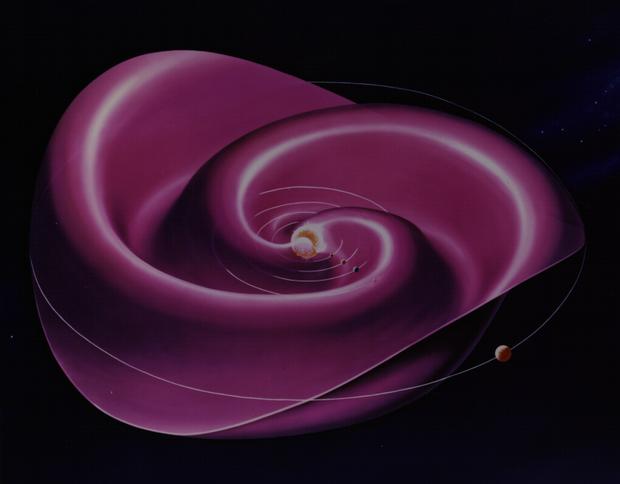
The sun's vast magnetic field is about to flip.

The sun's magnetic field changes polarity approximately every 11 years, at the peak of each solar cycle as the sun's inner magnetic dynamo re-organizes itself. The coming reversal will mark the midpoint of Solar Cycle 24, which means half of 'Solar Max' will be behind us, with half yet to come. 

Over 12 billion years ago, a star exploded and blasting its remains outward in twin jets at nearly the speed of light. Its glow was a million times brighter than its entire galaxy.

After traveling across space for 12.7 billion years, that flash was seen by astronomers on a planet that didn't even exist when the explosion happened - Earth. By analyzing this light, astronomers learned about a galaxy that was otherwise too small, faint and far away for even the Hubble Space Telescope to see.

Celiac disease who had persistent intestinal damage - identified with repeat biopsy - showed a higher risk of lymphoma than patients whose intestines healed, according to a new paper.

Celiac disease is an autoimmune disease that affects up to one percent of individuals in Western nations and is characterized by damage to the lining of the small intestine that, over time, reduces the body's ability to absorb components of common foods. The damage is due to a reaction to eating gluten, which is found in wheat, barley, and rye.