

Banner
Synchrotron Could Shed Light On Exotic Dark Photons

There are many hypothetical particles proposed to explain dark matter and one idea to explore how...

The Pain Scale Is Broken But This May Fix It

Chronic pain is reported by over 20 percent of the global population but there is no scientific...
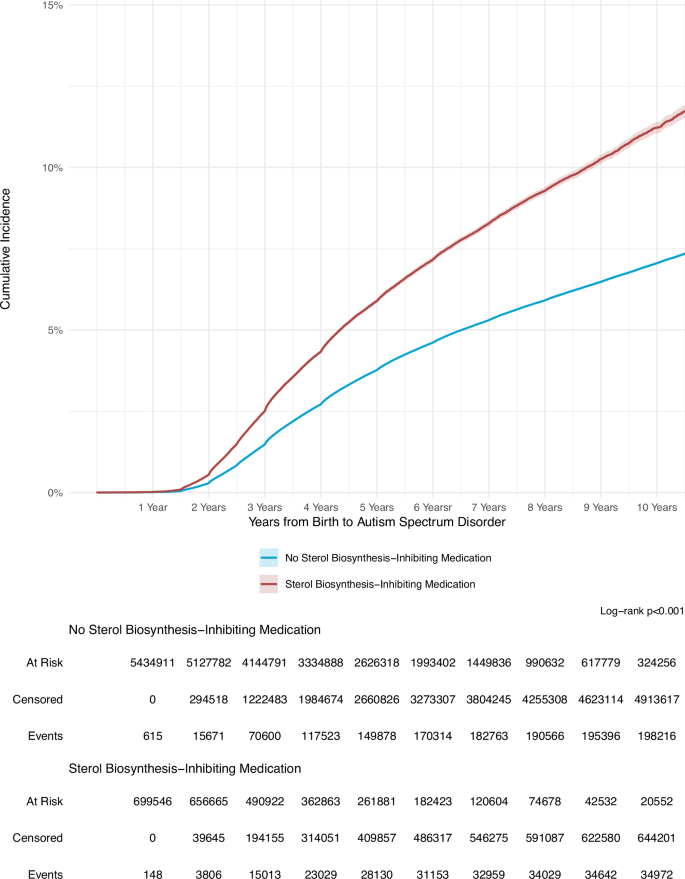
Study Links Antidepressants, Beta-blockers and Statins To Increased Autism Risk

An analysis of 6.14 million maternal-child health records  has linked prescription medications...

Pilot Study: Fibromyalgia Fatigue Improved By TENS Therapy

Fibromyalgia is the term for a poorly-understood condition where people experience pain and fatigue...

User picture.
News StaffRSS Feed of this column.

News Releases From All Over The World, Right To You... Read More »

Blogroll

Arctic sea ice has not only declined over the past decade but has also become distinctly thinner and younger - mainly thin, first-year ice floes which are extensively covered with melt ponds in the summer months where once meter-thick, multi-year ice used to float.

Researchers have now measured the light transmission through the Arctic sea ice for the first time on a large scale, enabling them to quantify consequences of this change. They come to the conclusion that in places where melt water collects on the ice, far more sunlight and therefore energy is able to penetrate the ice than is the case for white ice without ponds.

Cyanobacteria belong to the Earth's oldest organisms. They are still present today in oceans and waters and even in hot springs. By producing oxygen and evolving into multicellular forms, they played a key role in the emergence of organisms that breathe oxygen.

A team of scientists under the supervision and instruction of evolutionary biologists from the University of Zurich wrote a paper showing that cyanobacteria developed multicellularity around one billion years earlier than eukaryotes (cells with one true nucleus) and at almost the same time as multicellular cyanobacteria appeared, a process of oxygenation began in the oceans and in the Earth's atmosphere.  

A new view of 20,000-year old supernova remnant W50 provides more clues to the history of this giant cloud that resembles a beloved endangered species, the Florida Manatee. W50 is nearly 700 light years across,  so it covers two degrees on the sky - the span of four full Moons

The UK government needs to monitor surrogate pregnancy more carefully, says Eric Blyth, professor of social work at the University of Huddersfield. Couples seeking to build a family, and surrogate mothers overseas who help them, are in danger of emotional, physical and financial exploitation.

Wolves and dogs are genetically very similar, so why did dogs become "man's best friend" while wolves remain wild?

Kathryn Lord at the University of Massachusetts Amherst suggests the different behaviors are related to the animals' earliest sensory experiences and the critical period of socialization.  Not much is known about sensory development in wolf pups and assumptions are usually extrapolated from what is known for dogs - but there are significant differences in early development between wolf and dog pups, chief among them timing of the ability to walk. 

Most moons look ancient because their faces are pockmarked by thousands of craters but Titan, Saturn's largest moon, gets constant retouching because its craters are getting erased. Dunes of exotic, hydrocarbon sand are slowly but steadily filling in its craters, according to new research.

Titan is the only moon in the solar system with a thick atmosphere, and the only world besides Earth known to have lakes and seas on its surface. However, with a frigid surface temperature of around minus 290 degrees Fahrenheit (94 kelvins), the rain that falls from Titan's skies is not water but instead liquid methane and ethane, compounds that are normally gases on Earth.


