Banner
Synchrotron Could Shed Light On Exotic Dark Photons

There are many hypothetical particles proposed to explain dark matter and one idea to explore how...

The Pain Scale Is Broken But This May Fix It

Chronic pain is reported by over 20 percent of the global population but there is no scientific...
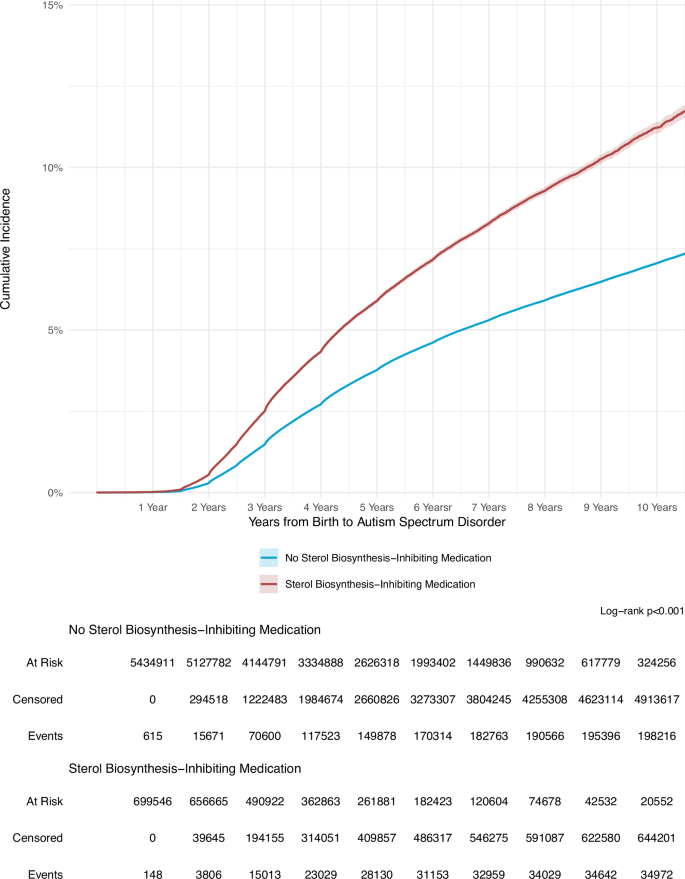
Study Links Antidepressants, Beta-blockers and Statins To Increased Autism Risk

An analysis of 6.14 million maternal-child health records  has linked prescription medications...

Pilot Study: Fibromyalgia Fatigue Improved By TENS Therapy

Fibromyalgia is the term for a poorly-understood condition where people experience pain and fatigue...

User picture.
News StaffRSS Feed of this column.

News Releases From All Over The World, Right To You... Read More »

Blogroll

Students everywhere, put down those highlighters and pick up some flashcards! Some of the most popular study strategies, like highlighting and even re-reading, don't show much promise for improving student learning, according to a new paper.

In the article, psychologist John Dunlosky of Kent State University and colleagues review ten learning techniques commonly used by students.

Based on the available evidence, they provide recommendations about the applicability and usefulness of each technique.

People view brown-eyed faces as more trustworthy than those with blue eyes- unless the blue eyes belong to a man with a broad face, according to a new paper in PLOS ONE

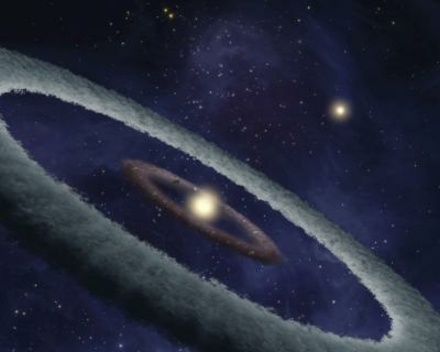
Vega is the second brightest star in northern night skies and astronomers using the Infrared Space Telescopes have discovered an asteroid belt much like that of our sun. 

Results showing an asteroid belt around Vega makes it more similar to its twin, the star called Fomalhaut. Both stars now are known to have inner, warm asteroid belts and outer, comet-filled belts, similar in architecture to the asteroid and Kuiper belts in our own solar system.

A popular hypothetical alternative to Albert Einstein's theory for the acceleration of the expansion of the universe does not fit newly obtained data on a fundamental constant, the proton to electron mass ratio, which may mean the need for a new direction in learning about accelerating expansion.

To explain the acceleration of the expansion of the universe, astrophysicists have invoked dark energy – a hypothetical form of energy that permeates all of space. A popular concept of dark energy does not fit new results on the value of the proton mass divided by the electron mass in the early universe. The predicted change in the ratio by the dark energy theory, generally referred to as rolling scalar fields, don't fit the new data.

The Tree of Life is what Charles Darwin first sketched in 1837 to show how species evolved by natural selection. The diagram started at a central point with a common ancestor, then the lines spread apart as organisms evolved and separated into distinct species. The letters represented species.

During an earthquake, waves emitted when the two sides of a fault move—or slip—rapidly past each other, create ground motion, with an average relative speed of about three feet per second.

Not all fault segments move so quickly. Some slip slowly, through a process called creep, and are considered to be "stable," or not capable of hosting rapid earthquake-producing slip. 

One common hypothesis suggests that such creeping fault behavior is persistent over time, with currently stable segments acting as barriers to fast-slipping, shake-producing earthquake ruptures.