

Banner
Synchrotron Could Shed Light On Exotic Dark Photons

There are many hypothetical particles proposed to explain dark matter and one idea to explore how...

The Pain Scale Is Broken But This May Fix It

Chronic pain is reported by over 20 percent of the global population but there is no scientific...
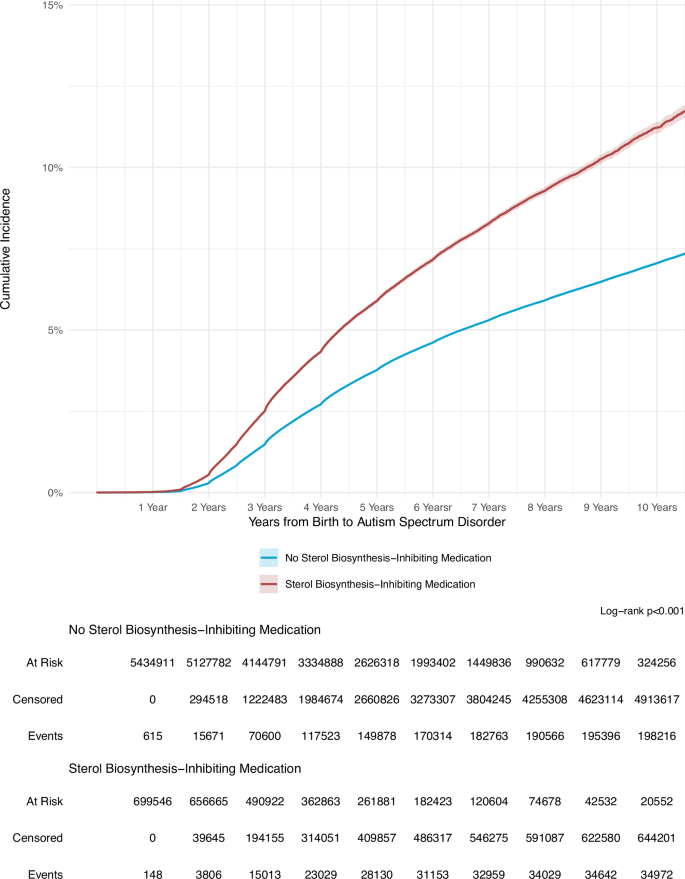
Study Links Antidepressants, Beta-blockers and Statins To Increased Autism Risk

An analysis of 6.14 million maternal-child health records  has linked prescription medications...

Pilot Study: Fibromyalgia Fatigue Improved By TENS Therapy

Fibromyalgia is the term for a poorly-understood condition where people experience pain and fatigue...

User picture.
News StaffRSS Feed of this column.

News Releases From All Over The World, Right To You... Read More »

Blogroll

Why do people think that a $25 flu shot is more likely to still have them getting the flu than a $125 flu shot?

It isn't that they think a $25 flu shot is less effective, it's that they worried they had a greater need for it because the cost is low.  Yes, the flu is perceived as more of a threat from an illness because the vaccine is cheap and not that some company is just charging a lot more when they can.

Emotion can help us recognize words more quickly, just like the context of a sentence can. But a new paper about the role of emotion in word recognition memory says we do not remember emotionally intoned speech as accurately as neutral speech - and if we do remember the words, they have acquired an emotional value.

Words spoken with a sad voice are more negative. In anger, sadness, exhilaration or fear, speech takes on an urgency that is lacking from its normal even-tempered form - louder or softer, more hurried or delayed, etc. This emotional speech immediately captures a listener's attention and so Annett Schirmer and colleagues from the National University of Singapore looked at whether emotion has a lasting effect on word memory.

Rose madder, a natural plant dye once prized throughout the Old World to make fiery red textiles, might be cool once again. 

Chemists have developed a non-toxic and sustainable lithium-ion battery powered by purpurin, a dye extracted from the roots of the madder plant (Rubia species).

Over 3,500 years ago, civilizations in Asia and the Middle East first boiled madder roots to dye fabrics in orange, pink and red but the climbing herb might also lay the foundation for an eco-friendly alternative to traditional lithium-ion (Li-ion) batteries in the 21st century.  Lithium-ion batteries are great for consumers but costs to the environment for production, recycling and disposal are high.

A gel similar to the amino acid that enables mussels to resist the power of churning water can be painted onto the walls of blood vessels and stay put, forming a protective barrier with potentially life-saving benefits. 

Mussels have a knack for clinging to rocks, piers and boat hulls and now have inspired a gel that
can withstand the flow of blood through arteries and veins. 

Sliman Bensmaia, PhD, assistant professor of organismal biology aat the University of Chicago, studies the neural basis of tactile perception -  how our hands convey this information to the brain. In a new study, he and colleagues found that the timing and frequency of vibrations produced in the skin when you run your hands along a surface, like searching a wall for a light switch, plays an important role in how we use our sense of touch to gather information about the objects and surfaces around us.

Want a microchip that operates 300 times the speed of chips today? Maybe some day.

Tiny, inexpensive silicon microchips developed by a pair of electrical engineers at the California Institute of Technology (Caltech) generate and radiate high-frequency electromagnetic waves, called terahertz (THz) waves, that fall into a largely untapped region of the electromagnetic spectrum—between microwaves and far-infrared radiation—and that can penetrate a host of materials without the ionizing damage of X-rays.




