Banner
Synchrotron Could Shed Light On Exotic Dark Photons

There are many hypothetical particles proposed to explain dark matter and one idea to explore how...

The Pain Scale Is Broken But This May Fix It

Chronic pain is reported by over 20 percent of the global population but there is no scientific...
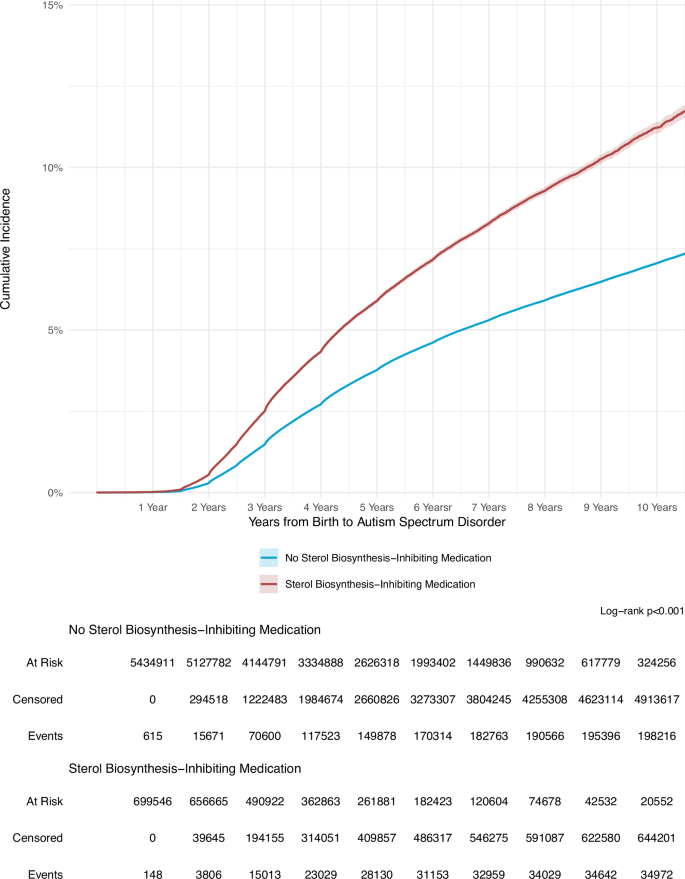
Study Links Antidepressants, Beta-blockers and Statins To Increased Autism Risk

An analysis of 6.14 million maternal-child health records  has linked prescription medications...

Pilot Study: Fibromyalgia Fatigue Improved By TENS Therapy

Fibromyalgia is the term for a poorly-understood condition where people experience pain and fatigue...

User picture.
News StaffRSS Feed of this column.

News Releases From All Over The World, Right To You... Read More »

Blogroll

Economics messes everything up.  Just about the time we figure out a new way to make all boats rise, the boats don't play along.

So it goes with the Mediterranean diet, which went from food fad to inclusion in the UNESCO Olympus of the World heritage list and saw lots and lots of research grant money dumped into extolling its virtues, as kind of a cure-all for obesity.  And people listened.

Chemists have been using
the SPring-8 synchrotron at the Japan Synchrotron Radiation Research Institute
to get a detailed look at enzymes that could help power the green economy. 

One option for powering clean, environment friendly vehicles is to run them on hydrogen fuel rather than carbon-based fuels. Cheap catalysts to prepare hydrogen gas (H2) are a necessity if this future "hydrogen economy" is to become a reality.

Current man-made catalysts are based on platinum, a rare and precious metal. However, living cells contain enzymes called hydrogenases, based on the abundant metals nickel and iron, which can do the same job. Chemists are very interested in figuring out how these natural catalysts work and trying to mimic them.

If we will need climate-resistant corn and other food production plants sooner rather than later, applying a genetic-analysis method used to study and prioritize the genes in humans could improved the likelihood of finding critical genes in food production plants.

These genes control quantitate traits in plants, such as how the plants grow and when they flower. This method can be used to study how food production plants respond to drought, heat and other factors, giving scientists a greater chance at improving crops' resistances to harsh weather and environments.

The combined power of ESA's Herschel space observatory and the ground-based Keck telescopes mean hundreds of previously unseen starburst galaxies have been characterized, revealing extraordinary high star-formation rates across the history of the Universe. Starburst galaxies give birth to hundreds of solar masses' worth of stars each year in short-lived but intense events. By comparison, our own Milky Way Galaxy produces the equivalent of only one Sun-like star per year, on average.

Even in deep space, atoms feel the the cosmic microwave background left over by the Big Bang. The cosmos is filled with electromagnetic interactions that show atoms they are not alone. Stray electric fields, like from a nearby electronic device, will also slightly adjust the internal energy levels of atoms, a process called the Stark effect.

Even the universal vacuum, presumably empty of any energy or particles, can very briefly muster virtual particles that buffet electrons inside atoms, further shifting their energies; this form of self-interaction is known as the Lamb shift.  

Physicists have found elusive Dirac electrons in a superconducting material called copper-doped bismuth selenide - and say it could serve as the silicon of the quantum era. 

Quantum computers use atoms to perform processing and memory tasks and for a generation have been promising dramatic increases in computing power because of their ability to carry out scores of calculations at once.  

Superconductors can, at cold enough temperatures, conduct electricity indefinitely from one kickstart of energy because they have no electrical resistance. Dirac electrons, named after the English physicist whose equation describes their behavior, are particles with such high energy that they straddle the realms of classical and quantum physics.