

Banner
Synchrotron Could Shed Light On Exotic Dark Photons

There are many hypothetical particles proposed to explain dark matter and one idea to explore how...

The Pain Scale Is Broken But This May Fix It

Chronic pain is reported by over 20 percent of the global population but there is no scientific...
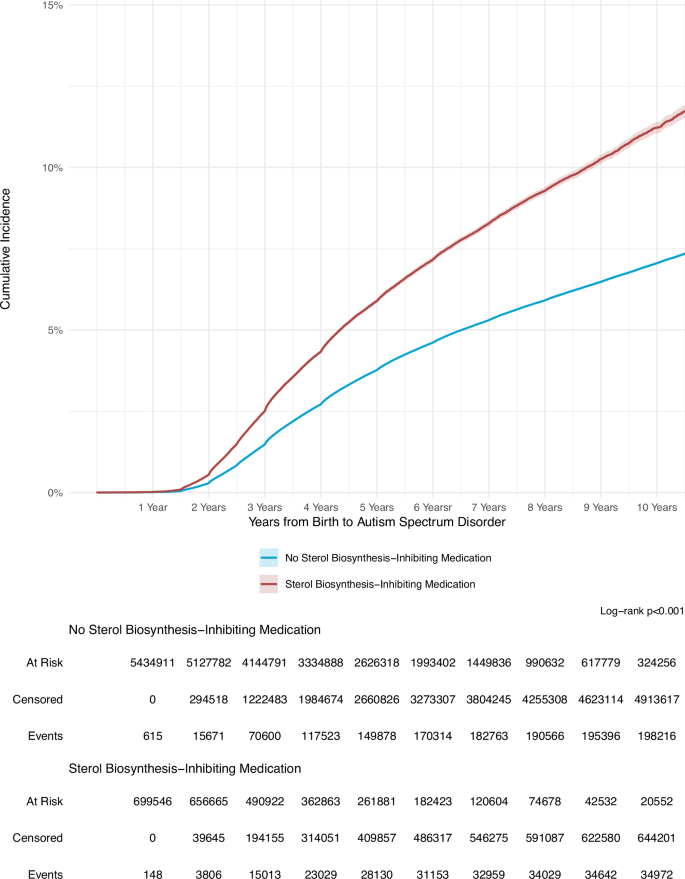
Study Links Antidepressants, Beta-blockers and Statins To Increased Autism Risk

An analysis of 6.14 million maternal-child health records  has linked prescription medications...

Pilot Study: Fibromyalgia Fatigue Improved By TENS Therapy

Fibromyalgia is the term for a poorly-understood condition where people experience pain and fatigue...

User picture.
News StaffRSS Feed of this column.

News Releases From All Over The World, Right To You... Read More »

Blogroll

Global carbon dioxide emission reductions that would be needed to limit global warming to 2°C aren't happening, according to new figures produced by the Global Carbon Project (GCP).

Global CO2 emissions have increased by 58% since 1990, they estimate, rising 3% in 2011, and 2.6% in 2012. The most recent figure is estimated from a 3.3% growth in global gross domestic product and a 0.7% improvement in the carbon intensity of the economy. They say the latest carbon dioxide emission estimates are at the high end of a range of emission scenarios, expanding the gap between current trends and the course of mitigation needed to keep global warming below 2°C.
 

Organophosphate pesticides were once commonly used in roach control and other applications but organiphosphates were originally developed as nerve-gas agents for chemical warfare. The human body converts organophosphate pesticides into altered forms called metabolites, and  organophosphates are toxic to the nervous system, known to cause memory and vision problems.

Neuroscientists think they have some insight for evolutionary biologists into how humans, and other mammals, have evolved to have intelligence. They say they have identified the moment in history when the genes that enabled us to think and reason evolved.

This point 500 million years ago provided our ability to learn complex skills, analyze situations and have flexibility in the way in which we think, says Professor Seth Grant of the University of Edinburgh, who led the research -  "One of the greatest scientific problems is to explain how intelligence and complex behaviours arose during evolution." 

Kerosene is the the primary source of light for more than a billion people in developing nations and it is churning out black carbon previously overlooked in greenhouse gas estimates, says a new study. 

Results from field and lab tests found that 7 to 9 percent of the kerosene in wick lamps — used for light in 250-300 million households without electricity — is converted to black carbon when burned. In comparison, only half of 1 percent of the emissions from burning wood is converted to black carbon.

A previously invincible mutation in chronic myeloid leukemia (CML) has been thwarted by an investigational drug in a phase I clinical trial.

12 patients in a trial with chronic phase CML and the T315I mutation had a complete hematologic response (absence of CML cells in the blood) after treatment with ponatinib. Eleven had a major reduction in CML cells in the bone marrow and nine achieved a complete cytogenetic response – no cells in the marrow. 
Twelve patients with acute myeloid leukemia also participated in the trial. A separate paper will address those results.

T315I is present in up to 20 percent of patients and blocks the docking station where three other successful CML drugs normally connect to the mutant protein.

An online calculator says it can predict at birth a baby's likelihood of becoming obese in childhood, according to a paper in PLOS ONE.

They estimate the child's obesity risk based on its birth weight, the body mass index of the parents, the number of people in the household, the mother's professional status and whether she smoked during pregnancy.

Yes, that determines if your child is going to be fat.  But it's PLoS One and the credit card cleared.

The researchers think their prediction method will be used to identify infants at high risk and help families take steps to prevent their children from putting on too much weight. Like what, getting mom a better job land quitting smoking before pregnancy?







