

Banner
Synchrotron Could Shed Light On Exotic Dark Photons

There are many hypothetical particles proposed to explain dark matter and one idea to explore how...

The Pain Scale Is Broken But This May Fix It

Chronic pain is reported by over 20 percent of the global population but there is no scientific...
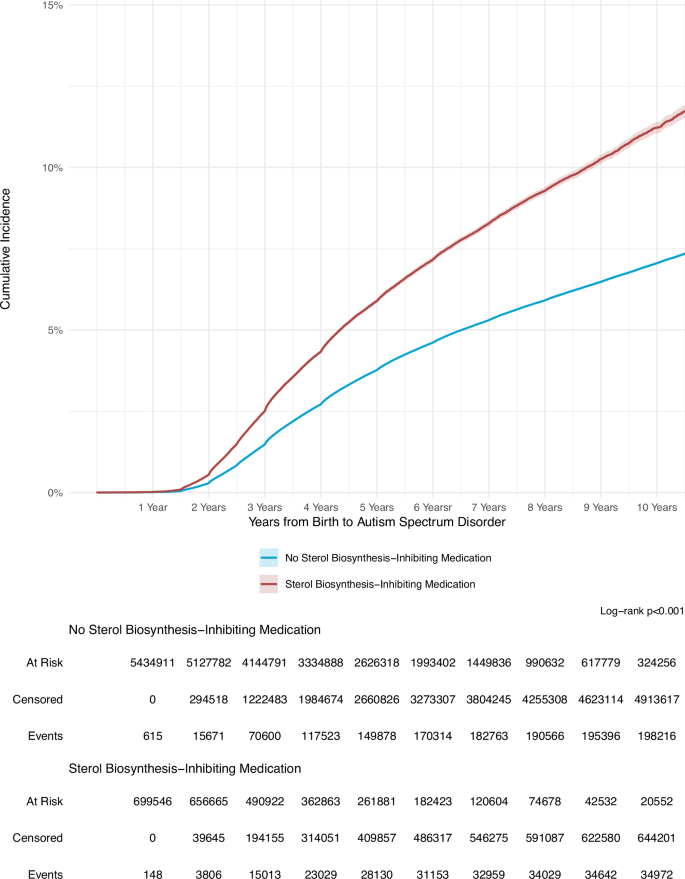
Study Links Antidepressants, Beta-blockers and Statins To Increased Autism Risk

An analysis of 6.14 million maternal-child health records  has linked prescription medications...

Pilot Study: Fibromyalgia Fatigue Improved By TENS Therapy

Fibromyalgia is the term for a poorly-understood condition where people experience pain and fatigue...

User picture.
News StaffRSS Feed of this column.

News Releases From All Over The World, Right To You... Read More »

Blogroll

Search News Media has created an infographic which captures the evolution of publishing since the early 1400s. Starting from 1440 when Johannes Gutenberg invented the first printing press, on through the ages, highlighting greater innovation in publishing and the advent of newspapers, right up to today's digital age where online content is created and distributed globally in a matter of minutes, the unique infographic offers a fantastic snapshot of how publishing has changed over the centuries. 

The infographic also illustrates how publishing, thanks to the advent of digital publishing, has removed the traditional barriers to entry, making it possible for anyone to become a publisher in the modern day.

Seven species of vulnerable sharks and manta rays have now been submitted by 35 countries for consideration for protection next year under an international treaty concerned with regulating wildlife trade.

Governments met the deadline today and formally submitted their proposals for the meeting of the Convention on International Trade in Endangered Species of Wild Fauna and Flora (CITES) in March 2013. The recommendations include porbeagle and oceanic whitetip sharks, three species of hammerhead sharks, and two types of manta rays. For nearly 40 years, CITES has shielded thousands of plants and animals from overexploitation through international trade, and the treaty is widely considered one of the best-enforced international conservation agreements.

Online fundraisers taking part in organized events use social media to reach close to 600 people and inspire others to take on challenges for charity, according to new data from JustGiving.com

 Speaking at Making every step count: How to maximize participation and fundraising at your event, Howard Bell, Director of Partnerships at JustGiving revealed new data showing that each individual fundraising campaign is seen by an average of 562 people on Facebook.

 What's more, the event fundraising 'network effect' means fundraisers encourage others to follow their lead. One in four fundraisers will choose either to take part in the same event for charity the next year or will inspire a friend or family member to take part instead. 

The U.S. Food and Drug Administration has granted Boston Scientific Corporation regulatory approval for its S-ICD(R) System, the world's first and only commercially available subcutaneous implantable defibrillator (S-ICD) for the treatment of patients at risk for sudden cardiac arrest (SCA).

Sudden cardiac arrest is an abrupt loss of heart function. Most episodes are caused by the rapid and/or chaotic activity of the heart known as ventricular tachycardia or ventricular fibrillation. Recent estimates show that approximately 850,000 people in the United States are at risk of SCA and indicated for an ICD device, but remain unprotected

 Apollo Hospitals performed a complex spinal surgery on a 10-year-old child, the 12th successful surgery done within 10 days of the launch of Renaissance Robotic Technology, the only technology specifically designed for spine surgery. Apollo Hospitals Group is the first in the Asia-Pacific to offer this surgical guidance system, which is a minimally-invasive robotic-guided spine surgery. 

A 10-year-old girl from Gujarat, Heema was born with congenital anomalies that left her with a severely deformed spine. Before being admitted to Apollo Hospitals, the child had already undergone multiple procedures that had failed and left her with rods placed in her back, broken at multiple places, and a spine that was grotesquely deformed.

For over a year, Google has been the target of U.S. and European antitrust investigations, but now the search company has fired back. In a report commissioned by Google and released today, two acclaimed antitrust experts dismiss Google's critics' claims as lacking any compelling legal or economic argument for a government antitrust case.

What Does the Chicago School Teach About Internet Search and the Antitrust Treatment of Google? the work of Judge Robert Bork and Professor Gregory Sidak. The report examines the legal theories of Google's critics and compares those conjectures to the real-world search experience.





