Banner
Synchrotron Could Shed Light On Exotic Dark Photons

There are many hypothetical particles proposed to explain dark matter and one idea to explore how...

The Pain Scale Is Broken But This May Fix It

Chronic pain is reported by over 20 percent of the global population but there is no scientific...
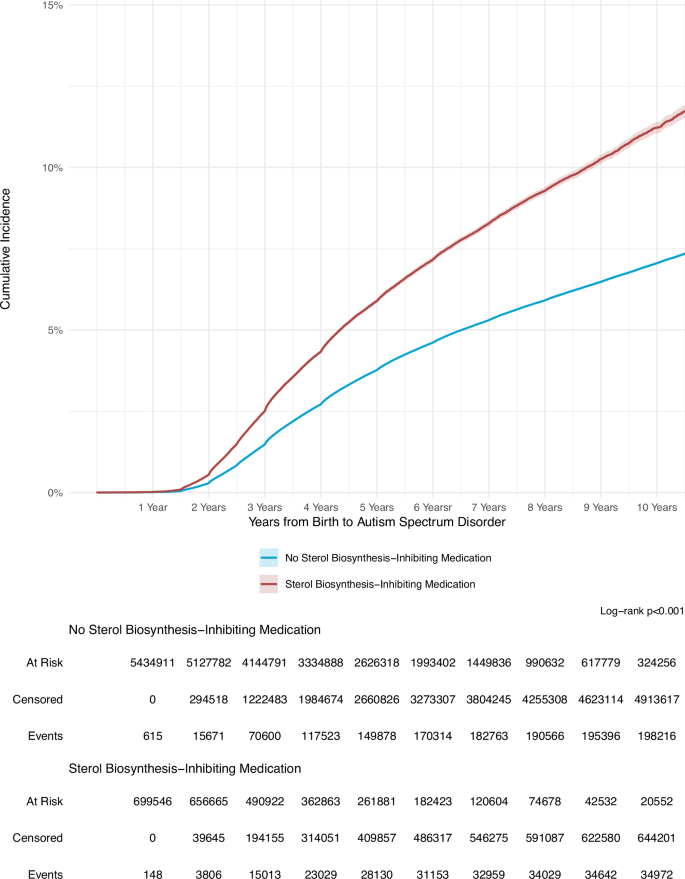
Study Links Antidepressants, Beta-blockers and Statins To Increased Autism Risk

An analysis of 6.14 million maternal-child health records  has linked prescription medications...

Pilot Study: Fibromyalgia Fatigue Improved By TENS Therapy

Fibromyalgia is the term for a poorly-understood condition where people experience pain and fatigue...

User picture.
News StaffRSS Feed of this column.

News Releases From All Over The World, Right To You... Read More »

Blogroll
Spend too much time on Facebook?  Can't get enough LOLcat videos?

You no longer need to be ashamed.  You may have a disease. Psychologists interviewed a total of 843 people about their Internet habits and an analysis of the questionnaires showed that 132 men and women in the group exhibit problematic behavior in how they handle being online; all their thoughts revolve around the Internet during the day, and they feel their wellbeing is severely impacted if they have to go without it.
New research on Pelargoniums ('Geraniums' and 'Storkbills'), which have been cultivated in Europe since the 17th century and are now one of the most popular garden and house plants around the world, shows targeting two bacterial genes can produce long-lived and pollen-free plants.

Pelargoniums have been selectively bred to produce a wide range of leaf shapes, flowers and scents, and have commercial traits such as early and continuous flowering, pest and disease resistance and consistent quality and now they are getting some modern science engineering to allow people to enjoy them with less medicine. 
Instead of unwinding into a flat ribbon when stretched, like an untwisted coil normally would, a cucumber’s tendrils actually coil further - which has led to discovery of a biological mechanism for coiling and an unusual type of spring that is soft when pulled gently and stiff when pulled strongly.

Understanding this counterintuitive behavior required a combination of head scratching, physical modeling, mathematical modeling, and cell biology—not to mention a large quantity of silicone. A new study describes the mechanism by which coiling occurs in the cucumber plant and suggests a new type of bio-inspired twistless spring.

Cutting carbon dioxide emissions is not easy; it requires a buy-in from developing nations who have coal and want a better life also, or a greater implementation of natural gas. One alternative idea is to transport materials into the stratosphere to reduce the amount of sunlight hitting Earth and therefore reduce the effects of global climate change.

A new paper says that the basic technology currently exists and could be assembled and implemented in a number of different forms for less than $5 billion a year - a tiny fraction of the amount that cutting emissions costs. Put into context, the cost of reducing carbon dioxide emissions is currently estimated to be between 0.2 and 2.5 per cent of GDP in the year 2030, which is equivalent to $200 billion to $2 trillion.

Women who have breast cancer and are treated with two chemotherapy drugs, anthracycline and trastuzumab, may experience more cardiac problems like heart failure than shown in previous studies, according to a new Cancer Research Network study by Group Health researchers and others in the Journal of the National Cancer Institute.

Researchers have found that a human monoclonal antibody developed by MassBiologics of the University of Massachusetts Medical School (UMMS) protected chimpanzees from hepatitis C virus (HCV) infection in a dose-dependent manner.

The study was conducted at Texas Biomed's Southwest National Primate Research Center.  Chimpanzees are the only species other than humans that can be infected by HCV and therefore the results from this study were critical in the development of the monoclonal antibody.