Scientists have combined the power of two kinds of microscope to produce a 3-dimensional movie of how cells ‘swallow’ nutrients and other molecules by engulfing them - the first to follow changes in the shape of the cell’s membrane and track proteins thought to influence those changes.
This ‘swallowing’, called endocytosis, is involved in a variety of crucial tasks. It is used by brain cells relaying information to each other and is also hijacked by many viruses, which use it to invade their host’s cells. When a cell is about to swallow some molecules, a dent appears in the cell’s membrane, and gradually expands inwards, pinching off to form a little pouch, or vesicle, that transports molecules into the cell.
Viscous materials do not follow standard laws - below a sub-melting point threshold, anyway.
Glass-formers are a class of highly viscous liquid materials that have the consistency of honey and turn into brittle glass once cooled to sufficiently low temperatures. Researchers have examined the behavior of these materials as they are on the verge of turning into glass. Although science does not yet thoroughly understand their behavior when approaching the glassy state, the new study relies on an additional type of dynamic measurements and clearly shows that they do not behave like more simple fluids, referred to as "activated" fluids. This is contrary to recent reports.
Banks and brokerage houses employ a lot of physicists - it was a big fad of the last decade because the industry discovered that physicists knew how to make models and economists did not.
But physicists don't understand economics and the behavior of people any more than economists do and it hasn't worked. No rational model predicts that some trader will just go crazy and lose billions and automated schemes have been a disaster. Yet there is hope.
An experiment using single particles of light, photons, have produced and implemented them intoa quantum key distribution (QKD) link. The single photons were produced using two devices made of semiconductor nano-structures that emitted a photon each time they were excited by an electrical pulse. The two devices were made up of different semiconductor materials so they emitted photons with different colors.
QKD is a process that enables two parties, ‘Alice’ and ‘Bob’, to share a secret key that can then be used to protect data they want to send to each other. The secret key is made up of a stream of photons that ‘spin’ in different directions – vertically, horizontally or diagonally – according to the sender’s preferences.
Collisions between heavy ions at machines like the Relativistic Heavy Ion Collider (RHIC) at Brookhaven National Laboratory, and more recently the LHC, may help enlighten our understanding of the hot nuclear matter that permeated the early universe and make this hidden realm accessible by recreating the extreme conditions of the early universe on a microscopic scale.
The temperatures achieved in these collisions, more than 4 trillion degrees Celsius, the hottest ever created in a laboratory, briefly liberate the subatomic quarks and gluons that make up protons and neutrons of ordinary atomic nuclei so scientists can study their properties and interactions.
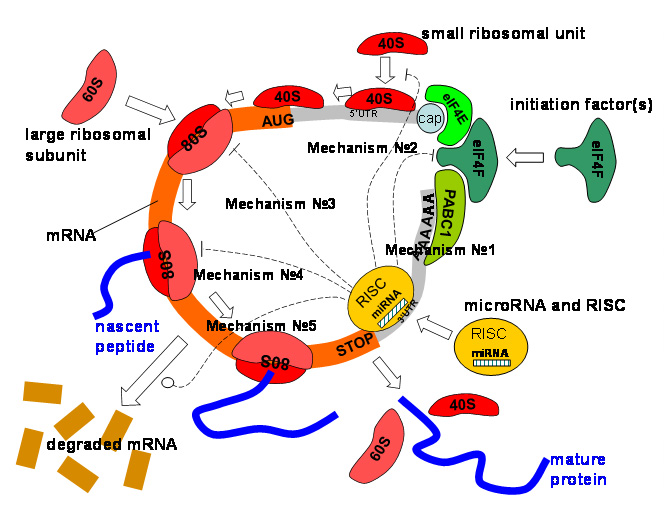
Mathematicians have proposed a new solution to understanding a MicroRNA puzzle; different and sometimes conflicting theories about ways in which microRNAs regulate protein production, since the results varied depending on only slightly changed experimental conditions.
The problem to date has been that scientists have differed over interpretations of how the production of the major building blocks of a cell, proteins, is controlled by microRNAs.


 Synchrotron Could Shed Light On Exotic Dark Photons
 The Pain Scale Is Broken But This May Fix It
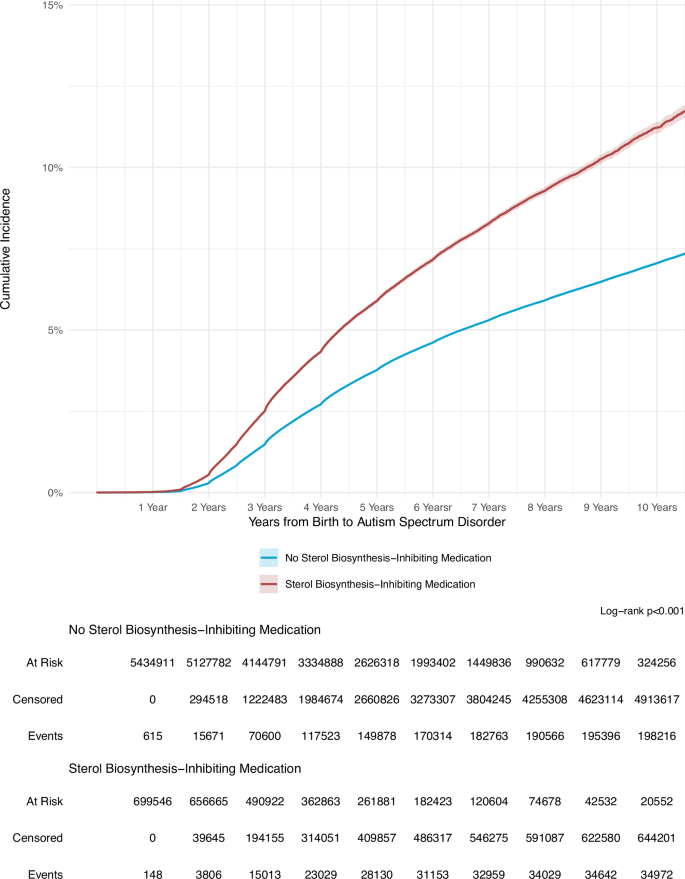 Study Links Antidepressants, Beta-blockers and Statins To Increased Autism Risk
 Pilot Study: Fibromyalgia Fatigue Improved By TENS Therapy