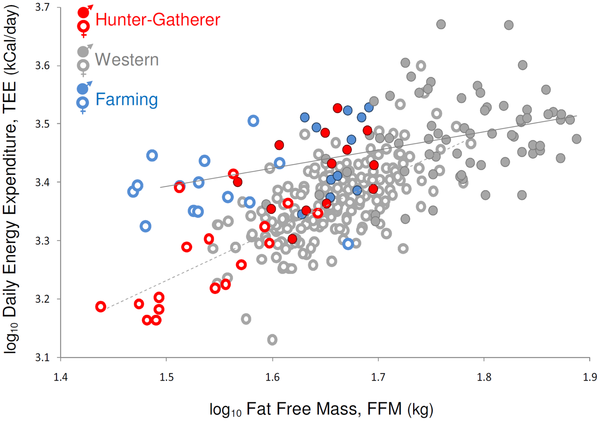
Modern lifestyles are quite different from those of our hunter-gatherer ancestors. That seems obvious. People looking to apply blame for the obesity rise focus on their own agendas, be it lobbying against GMOs, high fructose corn syrup or video games. Or contend it is because we don't spend our days picking berries.
But what does science say? There's no way to know but anthropologists are at least taking a shot at it. A new analysis, of modern hunter-gatherers anyway, found that there is no difference between their energy expenditure and Westerners, casting doubt on 'we don spend all day picking berries' hypothesis for obesity.
Want to get in a fight in Scotland?
Okay, just about anything will get you into a fight in Scotland but if you want a guaranteed way to get a headbutt and then kicked when you are on the ground, tell them they did not invent golf, the world's most frustrating pastime.
Man has been killing man and beast since whatever critter of common descent crawled out of the primordial ooze. And likely before, there's just no way to know it.
But some things can be known and one of them is this; you don't manufacture poison unless you intend to kill something with it. And ancient man was interested in using the best applied science they could find.
A contaminated river and a polluted sky are proof that environmentalism isn't just for the rich any more, say sociologists.
Obviously it never was, in many countries. In the developed world, people in the country actually care more about the environment than rich urbanites, but in the developing world the practical takes precedence over policy. The poor can't afford to protect the environment.
A new survey says that may be true in the country but in the city it is another matter. People living in China's cities who say they've been exposed to environmental harm are more likely to be green, recycling or reusing grocery bag. It also says the poor would sacrifice economic gain to protect their environment.
With the Supreme Court decision to uphold mandatory health insurance purchasing under the Affordable Care Act, it's going to get more expensive. But for thousands of years people were able to go into the woods and get health care for free, so all is not lost. Maybe they can even get a rebate for using nature.
Natural remedies may not be as effective as their synthetic pharmacological cousins but a Harvard post-doc says there may be economic benefits people could receive by relying on such traditional cures. If that feels like 'ketchup is a vegetable' sweet lemons rationalization, you are not alone.
The brain is like a muscle; it can get into a routine. But mixing up the workout a little is healthy in both cases. In the brain, however, it isn't without difficulties.
Learning a new task when rules change can be a surprisingly difficult process and entail repeated mistakes, according to a new study. Take a US driver and put them in England where they suddenly have to drive on the left side of the road. The brain, trained for right-side driving, becomes overburdened trying to suppress the old rules while simultaneously focusing on the new rules - putting them on a moped if they are used to driving a car would make it even worse.


 Synchrotron Could Shed Light On Exotic Dark Photons
 The Pain Scale Is Broken But This May Fix It
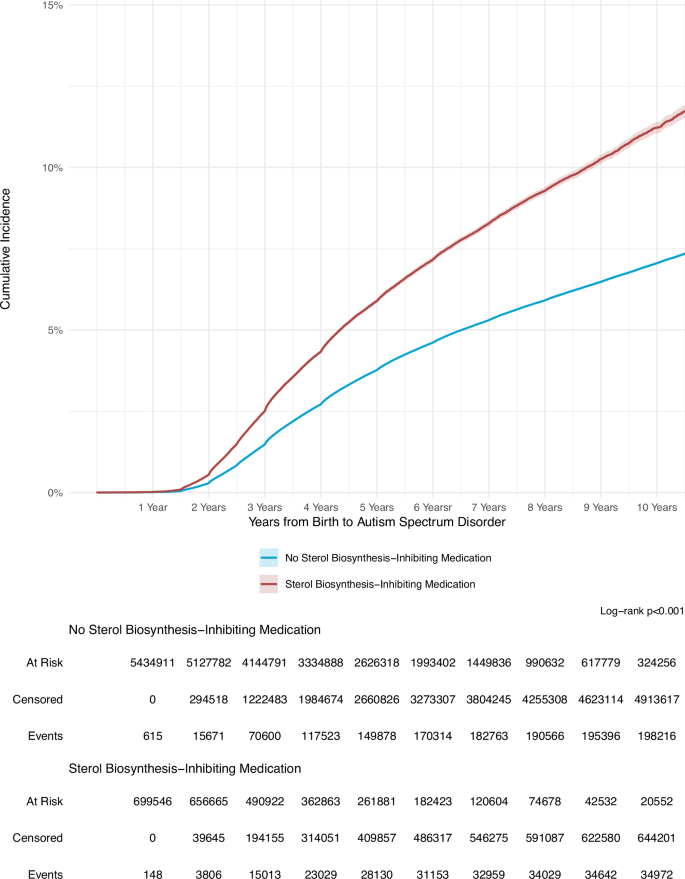 Study Links Antidepressants, Beta-blockers and Statins To Increased Autism Risk
 Pilot Study: Fibromyalgia Fatigue Improved By TENS Therapy