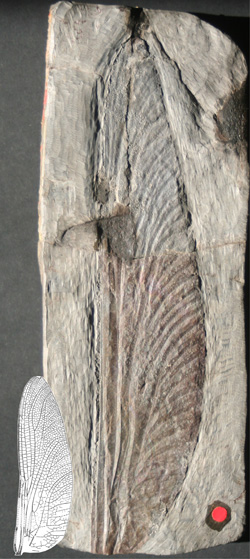
There was a time when giant insects ruled the skies and it corresponded to high oxygen levels.
After the evolution of birds, about 150 million years ago, insects got smaller - despite rising oxygen levels. What gives?
Insects reached their biggest sizes about 300 million years ago during the late Carboniferous and early Permian periods. This was the reign of the predatory griffinflies, giant dragonfly-like insects with wingspans of up to 28 inches - creepy. The leading theory attributed their large size to high oxygen concentrations in the atmosphere (over 30 percent, compared to 21 percent today), which allowed giant insects to get enough oxygen through the tiny breathing tubes that insects use instead of lungs.
Michael Richmond of Rochester Institute of Technology created a simple example for how to determine the astronomical unit - the distance from Earth to the Sun and therefore the basis for all modern measurements in space for the CLEA workshop in 2004, the last time we had a transit of Venus - and it won't happen again in our lifetimes so tomorrow is the last chance to see it.
A new durable, environmentally-benign (we all hope) blue pigment has also been found to have unusual characteristics in reflecting heat - it's much better at it than most blue pigments in use. The compound just received patent approval and was discovered by Oregon State University scientists who were instead studying some materials for their electrical properties.
Very different complex networks, like global air traffic and neural networks, share very similar 'backbones', say a group of mathematicians, and by stripping each network down to their essential nodes and links, they found each network possesses a skeleton which shares common features, much like vertebrates do.
Mammals have evolved to look very different despite a common underlying structure and now it appears real-world complex networks have common descent in a similar way.
Tuesday, June 5th, 2012 at 3:03 PM PDT (California), Venus will do something we on Earth will have witnessed for only the eighth since the invention of the telescope - it will cross in front of the sun. This transit is among the rarest of planetary alignments and it has an interesting cycle. Two Venus transits always occur within eight years of each other and then there is a break of either 105 or 121 years before it happens again.
What evolutionary reason would tiny insects 100 million years ago have for collecting and transporting Gingko pollen? They had highly specialized hairs with a ringed structure to increase their ability to collect pollen grains. Their ringed hairs cannot have grown due to an evolutionary selection benefiting the trees so ancient thysanopterans, so-called thrips (a group of minute insects of less than 2 mm in length) must have fed their larvae with pollen. This suggests that this species formed colonies with larvae living in the ovules of some kind of gingko for shelter and protection, and female insects transporting pollen from the male Gingko cones to the female ovules to feed the larvae and at the same time pollinate the trees.


 Synchrotron Could Shed Light On Exotic Dark Photons
 The Pain Scale Is Broken But This May Fix It
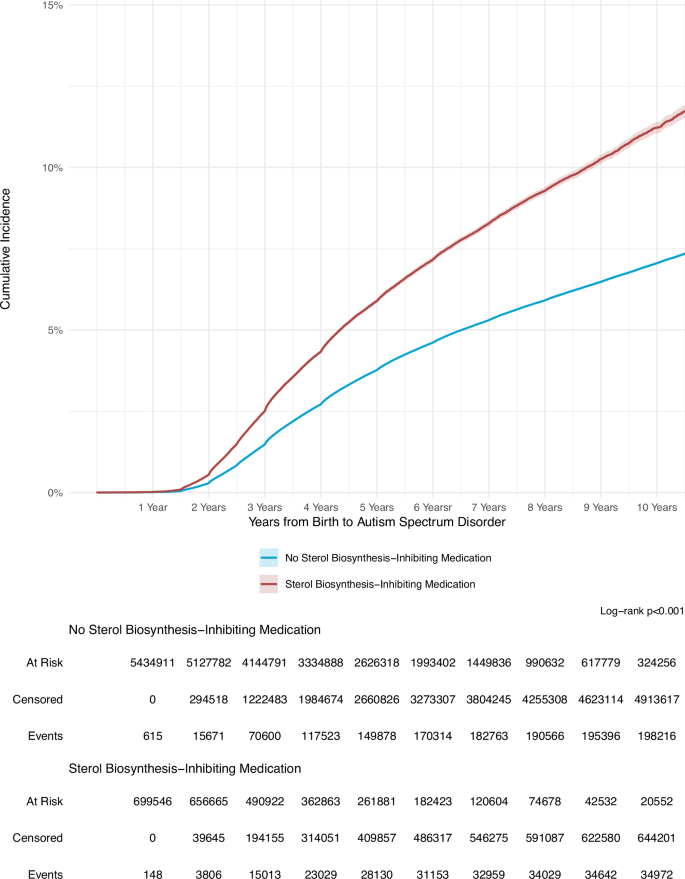 Study Links Antidepressants, Beta-blockers and Statins To Increased Autism Risk
 Pilot Study: Fibromyalgia Fatigue Improved By TENS Therapy