Where would we be without fungi and microbes to break down dead trees and leaf litter in nature? Up to our eyeballs in arborial garbage, that's where.
Christopher Sommerfield, associate professor of oceanography at the University of Delaware, has found a new way to study local waterways: radioactive iodine.
That's bad, right? Maybe not. Radioactive iodine is used in medical treatments and trace amounts are entering waterways via wastewater treatment systems. That means it provides a new way to track where and how substances travel through rivers to the ocean.
Supersonic passenger jets are so 1970s. The Concorde has been gone for almost 10 years and most people don't miss it. But its fundamental concept - people want to get places faster - has not gone away.
Now an MIT researcher says he has come up with a concept that may solve many of the problems that grounded the Concorde, like expensive tickets, high fuel costs, limited seating and noise disruption from the jet’s sonic boom. Qiqi Wang, an assistant professor of aeronautics and astronautics, says the solution, in principle, is simple, going back to the earliest days of flight: Instead of flying with one wing to a side, why not two?
A new imaging system uses walls, doors or floors as 'mirrors' to gather information about scenes that it can't see, even though those objects are not reflective.
Yes, it could ultimately lead to imaging systems that allow emergency responders to evaluate dangerous environments or vehicle navigation systems that can negotiate blind turns, among other applications, but spying on people sounds like more fun.
Mus musculus, the common mouse, can happily live wherever there are humans. When populations of humans migrate the mice often travel with them and apparently that has long been the case. New research used evolutionary techniques on modern day and ancestral mouse mitochondrial DNA to show that the timeline of mouse colonization even matches that of the Viking invasions.
During the Viking age (late 8th to mid 10th century) Vikings from Norway established colonies across Scotland, the Scottish islands, Ireland, and Isle of Man. They also explored the north Atlantic, settling in the Faroe Islands, Iceland, Newfoundland and Greenland. They intentionally brought horses, sheep, goats and chickens but also unknowingly carried pest species, including mice.
Rice and wheat take a lot of water to grow and no one eats more than China. That also means no one contributes more to global warming from irrigation than China - a whopping 30 million tons of CO2 per year just from the pumping systems China uses.
Like everywhere, water usage has gone up in China with the surge in population. Groundwater used for crop irrigation in China has grown from 10 billion cubic meters in 1950 to more than 100 billion today. The pumping systems which support this immense irrigation network annually produce 33.1 MtCO2e (33.1 mega tonnes of carbon dioxide equivalent), claims a new study.


 Synchrotron Could Shed Light On Exotic Dark Photons
 The Pain Scale Is Broken But This May Fix It
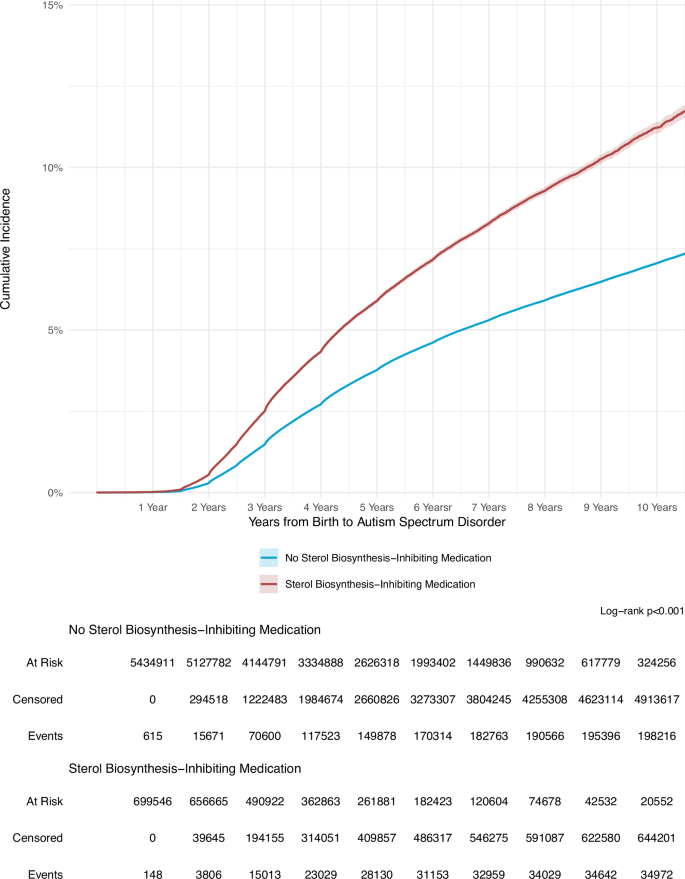 Study Links Antidepressants, Beta-blockers and Statins To Increased Autism Risk
 Pilot Study: Fibromyalgia Fatigue Improved By TENS Therapy