Banner
Synchrotron Could Shed Light On Exotic Dark Photons

There are many hypothetical particles proposed to explain dark matter and one idea to explore how...

The Pain Scale Is Broken But This May Fix It

Chronic pain is reported by over 20 percent of the global population but there is no scientific...
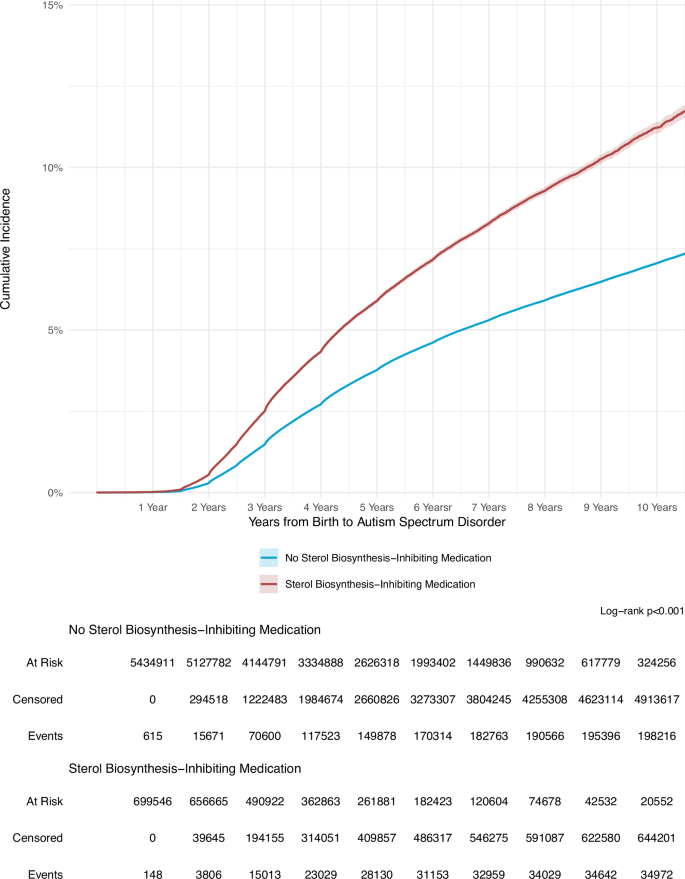
Study Links Antidepressants, Beta-blockers and Statins To Increased Autism Risk

An analysis of 6.14 million maternal-child health records  has linked prescription medications...

Pilot Study: Fibromyalgia Fatigue Improved By TENS Therapy

Fibromyalgia is the term for a poorly-understood condition where people experience pain and fatigue...

User picture.
News StaffRSS Feed of this column.

News Releases From All Over The World, Right To You... Read More »

Blogroll
Global warming is bad but at least we have a chance to control it.  Simple life hundreds of millions of years ago had to just go with the flow so when global glaciation put a chill on things back then, the only way even simple life in the form of photosynthetic algae could have survived was in a narrow body of water with characteristics similar to today's Red Sea, according to a new study in Geophysical Research Letters.

A particular kind of sugar molecule had a big impact on human evolution and may have directed the evolutionary emergence of our ancestors, according to a new study in  Proceedings of the National Academy of Sciences, the first evidence of a link between cell surface sugars, Darwinian sexual selection, and immune function in the context of human origins

8,000 years ago, which is basically yesterday in geological time, a now-vanished glacial lake covered a huge expanse of today's Canadian prairie and the rich farmland in the Red River Valley. As big as Hudson Bay, the lake was fed by melting glaciers as they receded at the end of the last ice age. At its largest, Glacial Lake Agassiz, as it is known, covered most of the Canadian province of Manitoba, plus a good part of western Ontario and the Minnesota-North Dakota border.

You can thank the stretching of continents and the oceans that filled those newly created basins for the Earth we know today.  Rifting is one of the fundamental geological forces that have shaped our planet. But rifting involves areas deep below the Earth's surface so scientists have been unable to understand fully how it occurs.

Using one of the most sensitive neutrino detectors on the planet, the Borexino instrument, an international team are measuring the flow of solar neutrinos reaching Earth more precisely than ever before. 

Canola, a specific edible type of rapeseed developed in the 1970s, contains about 40 percent oil and became popular as a substitute for traditional cooking oils. The name is derived as “Can” (for Canada) and “ola” (for oil low acid) and Canola oil is the lowest in saturated fats of all commonly used oils.  While much is imported, North Dakota leads the U.S. in canola, approximately 92 percent of domestic production.