Where would we be without relativity? Observations in astronomy are based on light emitted from stars and galaxies and the light will be affected by gravity, according to the General Theory of Relativity, which is actually quite special, despite its name.
Observations are one thing, but interpretations in astronomy are based on the correctness of the theory of relatively, yet it has never been possible to test Einstein's theory of gravity on scales larger than the solar system.
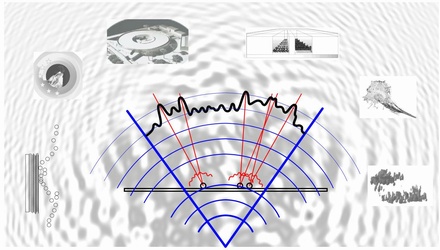
Astrophysicists at the Dark Cosmology Centre at the Niels Bohr Institute say they have managed to get much bigger - 'grotesquely' bigger in their terms - and measure how the light is affected by gravity on its way out of galaxy clusters.
The first video of tool use by a fish has been published in the journal Coral Reefs by Giacomo Bernardi, professor of ecology and evolutionary biology at the University of California, Santa Cruz.
In the video, an orange-dotted tuskfish digs a clam out of the sand, carries it over to a rock, and repeatedly throws the clam against the rock to crush it.
Tool use was once considered an exclusively human trait, but Jane Goodall's reports of tool use in chimpanzees in the 1960s changed that. Since then, many other animals have been observed using tools, including various primates, several kinds of birds, dolphins, elephants, and other animals.
Ice cream is big business in America. Sales of ice cream and frozen desserts top $20 billion annually, according to the International Dairy Food Association, which is about 1.6 billion gallons per year or 23 quarts per person per year. It's consumed by nearly 90 percent of households (vegans - bah). According to the National Ice Cream Retailers Association, ice cream consumption grew nearly 25 percent from a year ago and nearly 10 percent of American milk goes into frozen treats.
It's too late for this summer, but some time soon you could be enjoying an experimental ice cream that starts as one flavor then shifts to another before being swallowed.
It's not vanilla and chocolate mixed, it's vanilla transformed.
Women who increase consumption of caffeinated coffee have lower risk of depression, according to a report in Archives of Internal Medicine.
If health care is free, more people will go to the doctor and that means longer waiting for people who truly need it. An overburdened health care system would then have to hire less-qualified people to meet the needs, and that is bad. If the president suddenly says every family will get a three star-chef, for example, they won't actually get a three-star chef, they'll get a McDonald's fry cook dressed like a chef.
Yet we spend a lot for great care. Some contend Americans get too much health care under the current system, meaning rationing under a nationalized system would not really hurt anyone. Who is making that claim? Economists in favor of government health care, mostly.
Are students inspired to go into physics because of a television show like "The Big Bang Theory"? Probably not, or else 60% of America would be cops and lawyers.
But chemistry has a bad reputation, argues a recent editorial in
Nature Chemistry, and "Breaking Bad" gets some of the blame for keeping its reputation bad. It's a cable show on AMC, so not exactly on the minds of all that many people, but it chronicles the transformation of Walter White from suburban high school chemistry teacher to crystal meth dealer and criminal mastermind who uses his chemistry expertise (poisons, noxious gases, and acid) to eliminate rival meth dealers.


 Synchrotron Could Shed Light On Exotic Dark Photons
 The Pain Scale Is Broken But This May Fix It
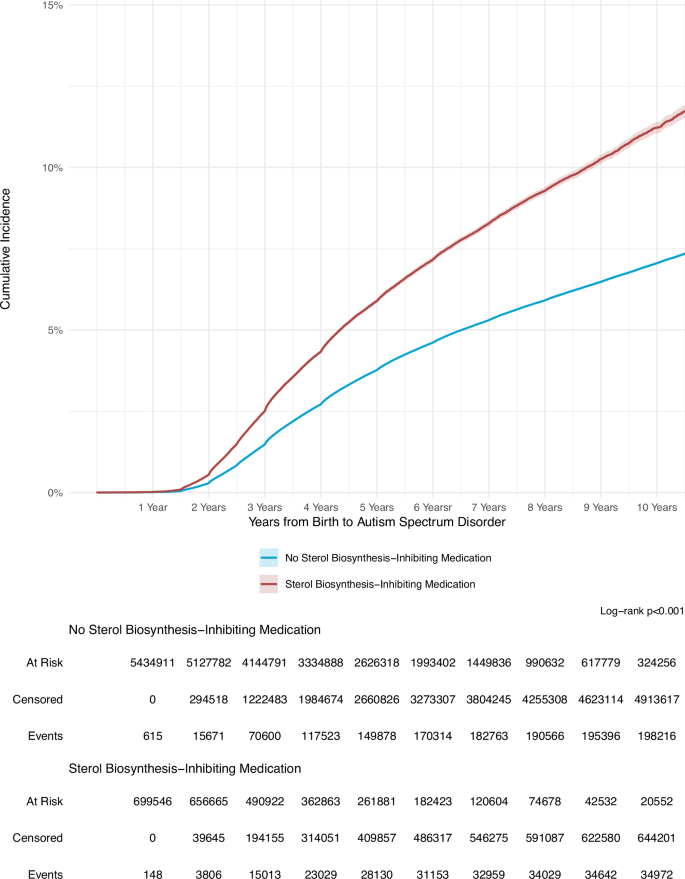 Study Links Antidepressants, Beta-blockers and Statins To Increased Autism Risk
 Pilot Study: Fibromyalgia Fatigue Improved By TENS Therapy