Banner
Synchrotron Could Shed Light On Exotic Dark Photons

There are many hypothetical particles proposed to explain dark matter and one idea to explore how...

The Pain Scale Is Broken But This May Fix It

Chronic pain is reported by over 20 percent of the global population but there is no scientific...
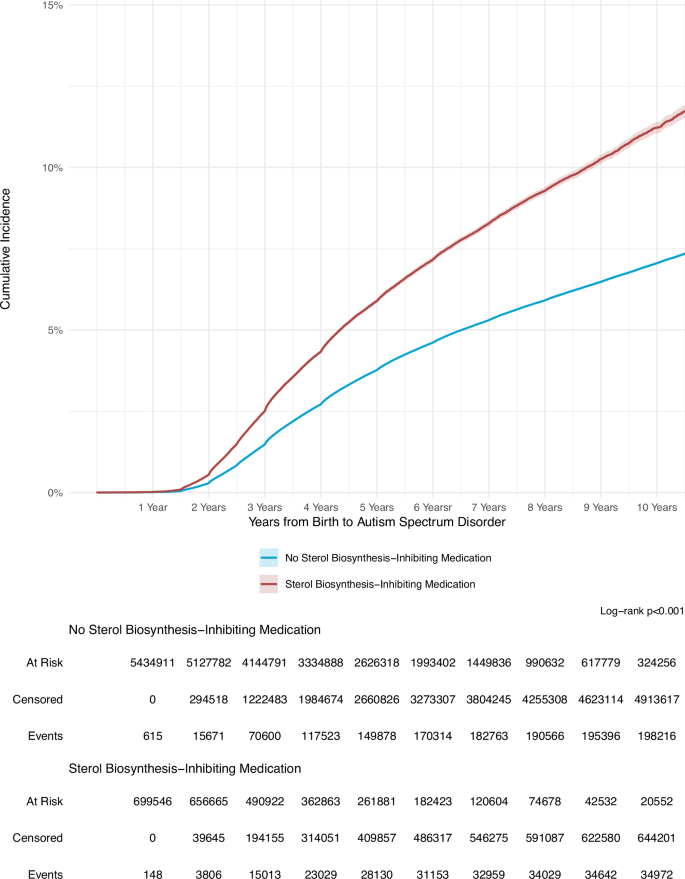
Study Links Antidepressants, Beta-blockers and Statins To Increased Autism Risk

An analysis of 6.14 million maternal-child health records  has linked prescription medications...

Pilot Study: Fibromyalgia Fatigue Improved By TENS Therapy

Fibromyalgia is the term for a poorly-understood condition where people experience pain and fatigue...

User picture.
News StaffRSS Feed of this column.

News Releases From All Over The World, Right To You... Read More »

Blogroll

Cancer patients quickly find themselves learning a new language and, keen to trust in science and medicine, they sometimes don't take time to fully understand their treatment options, and the risks and benefits of each choice, because they know doctors are busy. 

A commentary in the Journal of the National Cancer Institute outlines 10 things health care professionals can do to improve the way they communicate information about treatment risks to patients and that means patients can keep these in mind when talking with their doctors.

We like to think some things are constant, like temperature, and they are as long as everyone agrees.  That does not mean they are accurate.  The metric system is a famous example of a flawed measurement that nonetheless became popular.

Temperature is based on a chemico-physical material property, not on an unchangeable fundamental constant. Some physicists would like to change that.  They call themselves  metrologists - measurement artists who want to be as precise and change the field of worldwide temperature measurement.

Devices that monitor the human body's processes are being researched and tested for biological sensing or for prosthetics but materials scientists at the University of Washington have taken that a step farther.  They have built a transistor that uses protons and could communicate directly with living things. But the current prototype has a silicon base and could not be used in a human body, so don't get prepared to cyberpunk yourself just yet.

Currently sensing technology typically uses electrons, negatively charged particles, rather than protons, which are positively charged hydrogen atoms, or ions, which are atoms with positive or negative charge. 

Think someone is bored if they yawn? Perhaps their brain is just overheating.

A study led by Andrew Gallup, a postdoc in Princeton University's Department of Ecology and Evolutionary Biology, says yawning frequency varies with the seasons and that people are less likely to yawn when the heat outdoors exceeds body temperature.  Conclusion: yawning could serve as a method for regulating brain temperature.

$65 billion is is the increase in net farm income, the farm level benefit after paying for the seed and its biotech traits, that the biotech industry has provided across the globe during the period 1996 to 2009, according to an analysis published in the International Journal of Biotechnology.

The study's authors estimate that almost half of that money was derived by farmers in the developing world.

Should the least-proven medical treatments have fewer guidelines than evidence-based medicine?