Extreme brightness changes on a nearby brown dwarf dubbed 2MASS J21392676+0220226, or 2MASS 2139 for short, may indicate a storm grander than any seen yet on a planet. Because old brown dwarfs and giant planets have similar atmospheres, this finding could shed new light on weather phenomena of extra-solar planets.
As part of a large survey of nearby brown dwarfs, which occupy the mass gap between dwarf stars and giant planets, scientists used an infrared camera on the 2.5m telescope at Las Campanas Observatory in Chile to capture repeated images of 2MASS 2139 over several hours. In that short time span, they recorded the largest variations in brightness ever seen on a cool brown dwarf.
A new species of large predatory fish named Laccognathus embryi that prowled ancient North American waterways during the Devonian Period, before backboned animals existed on land, has been announced.
The Devonian Period (415 to 360 million years ago) is often described as the Age of Fishes because of the rich variety of aquatic forms that populated the ancient seas, lagoons and streams. Laccognathus embryi is a lobe-finned fish whose closest living relative is the lungfish. The creature probably grew to about 5 or 6 feet long and had a wide head with small eyes and robust jaws lined with large piercing teeth.
With a ban on incandescent bulbs looming in the US, the race is on to try and replace them - unfortunately the ban was used to artificially force innovation, which isn't how things work in science and technology, and CFL bulbs have mercury risk while concerns linger about LEDs and melatonin.
A genome-based immunization strategy may 'illuminate' ways to combat AIDS and other diseases.
Feline immunodeficiency virus (FIV) causes AIDS in cats as the human immunodeficiency virus (HIV) does in people, by depleting the body's infection-fighting T-cells. The feline and human versions of key proteins that potently defend mammals against virus invasion, termed restriction factors, are ineffective against FIV and HIV respectively. A Mayo Clinic team along with collaborators in Japan write in Nature Methods of their efforts to mimic the way evolution normally gives rise over vast time spans to protective protein versions. They devised a way to insert effective monkey versions of them into the cat genome.
Optofluidic solar lighting systems could mean a real boost in solar energy - they capture sunlight from a roof using a light concentrating system that follows the sun's path by changing the angle of the water's refraction, and then distribute the sunlight throughout the building through light pipes or fiber optic cables to the ceilings of office spaces, indoor solar panels, or even microfluidic air filters.
Every three hours, NASA's Fermi Gamma-ray Space Telescope scans the entire sky. Every year, the satellite's scientists reanalyze all of the data it has collected about the high energy universe.


 Synchrotron Could Shed Light On Exotic Dark Photons
 The Pain Scale Is Broken But This May Fix It
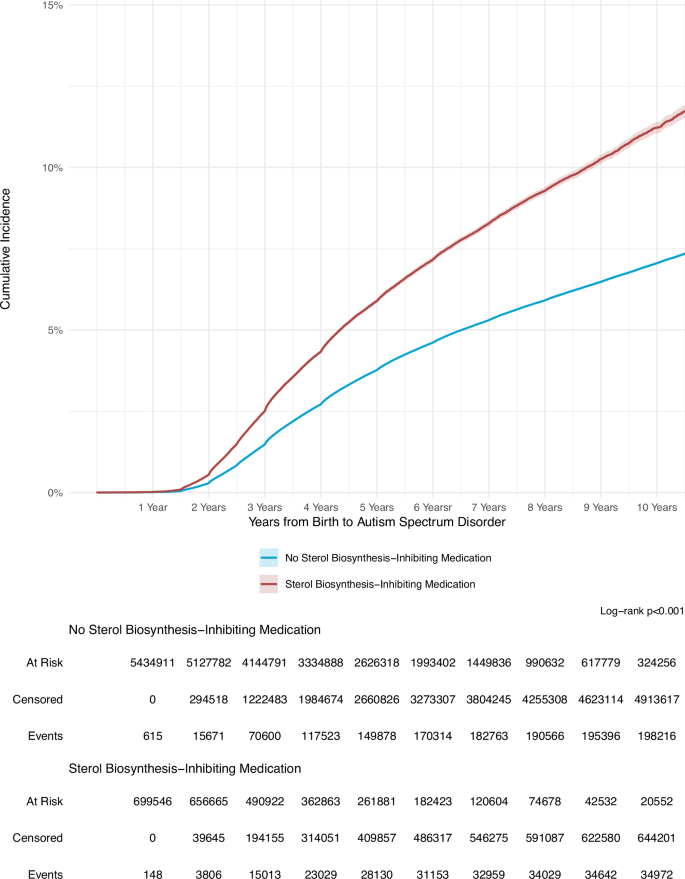 Study Links Antidepressants, Beta-blockers and Statins To Increased Autism Risk
 Pilot Study: Fibromyalgia Fatigue Improved By TENS Therapy






