While any individual action in a zero-tolerance culture will be evidence of endemic racism, the plain fact is actual racism is below any level in history and dropping fast. That makes it possible to again discuss variations in skin color to provide one of the best examples of evolution by natural selection acting on the human body.
Scientists have understood for years that evolutionary selection of skin pigmentation was caused by the sun. As human ancestors gradually lost their pelts to allow evaporative cooling through sweating, their naked skin was directly exposed to sunlight. In the tropics, natural selection created darkly pigmented individuals to protect against the sun.
What do the Ansei-Nankai and Ansei-Tokai earthquakes of 1854 have in common with the 1944-1946 Tononkai and Nankai earthquakes in Japan? They each suffered massive aftershocks shortly thereafter. The Ansei-Nankai and Ansei-Tokai earthquakes were 8.4 magnitude and only 31 hours apart. Worse, the aftershocks were nearly as bad.
And the same scenario could apply this time, says UC Davis seismologist John Rundle, and Tokyo is at the most risk. Friday's magnitude 9.0 temblor has been followed by hundreds of
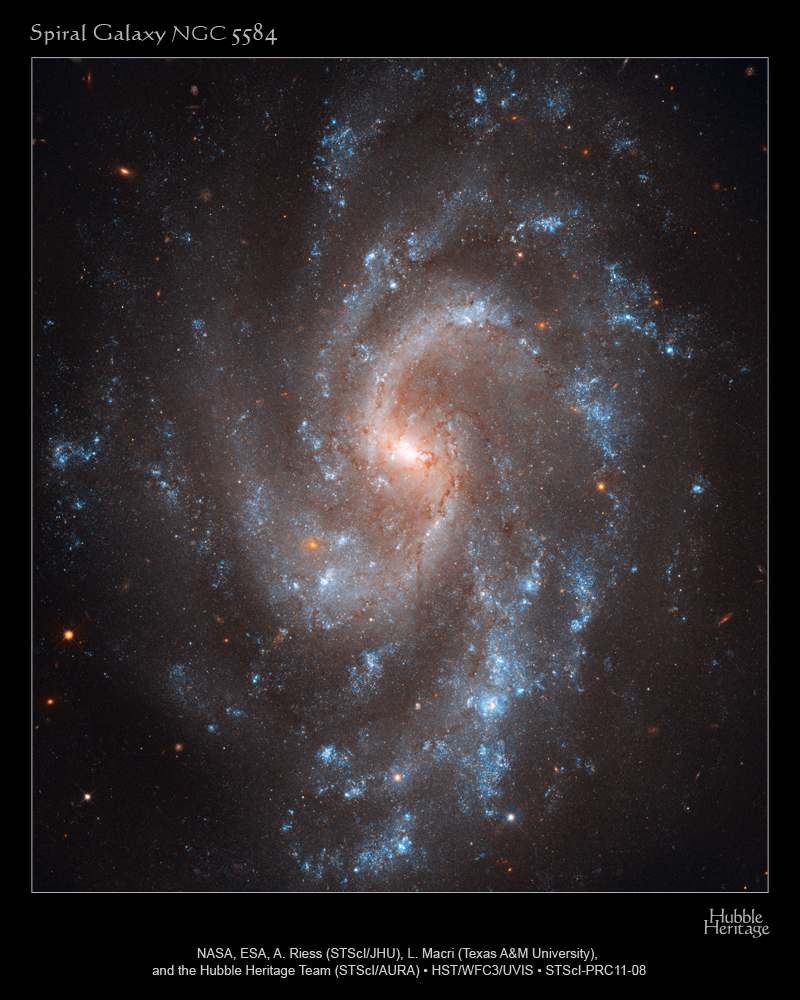
Researchers say they have ruled the cosmic bubble theory, an alternate theory on the nature of dark energy, after recalculating the expansion rate of the universe to unprecedented accuracy.
The universe appears to be expanding at an increasing rate and some believe that is because the universe is filled with a dark energy that works in the opposite way of gravity. One alternative to that hypothesis is that an enormous bubble of relatively empty space eight billion light-years across surrounds our galactic neighborhood. If we lived near the center of this void, observations of galaxies being pushed away from each other at accelerating speeds would be an illusion.
Bananas in their natural state have up to a hundred seeds but all commercial varieties that you see in stores are seedless. Making seedless varieties made bananas wildly popular, which was good for the people who grow them and good for the people who eat them. That is a science win.
Researchers have now discovered a way to make "the most delicious fruit known to man", as Mark Twain called it, more popular with the public also. The cherimoya, or custard apple, has lots of big, awkward seeds but a group of researchers studied the seedless variety of sugar apple, a relative of the cherimoya, and noted that the ovules, which would normally form seeds, lacked an outer coat.
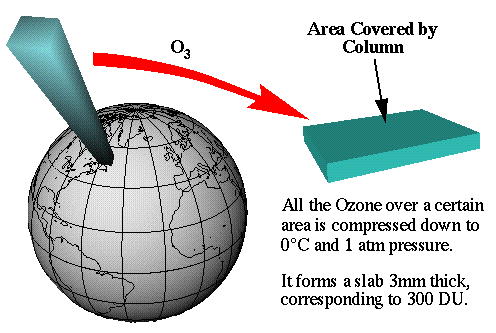
Low temperatures in the Arctic 'ozone layer' have recently initiated massive ozone depletion, which means the Arctic could experience a record loss of this trace gas that protects the Earth's surface against ultraviolet radiation from the sun. The result has been found by a measurement network of over 30 ozone sounding stations spread all over the Arctic and Subarctic.
In the long term the ozone layer will recover thanks to extensive environmental policy measures enacted decades ago for its protection. This winter's likely record-breaking ozone loss does not alter this expectation.
Earthquakes are big news due to the devastating 8.9 magnitude earthquake that struck Japan on Friday. As a result, some are curious about the worst earthquakes and resulting tsunamis we know about. Prior to the 20th century, methods for measuring were unreliable.
Researchers say a new tool may more about earthquakes of the ancient past and even help predict earthquakes of the future.
Prof. Shmuel Marco of Tel Aviv University's Department of Geophysics and Planetary Sciences in the Raymond and Beverly Sackler Faculty of Exact Sciences and his colleagues have created a new tool which they have described as a "fossil seismograph," to help geophysicists and other researchers understand patterns of seismic activity in the past.


 Here's Where Your Backyard Was 300 Million Years Ago
 Convergent Evolution Cheat Sheet Now 120 Million Years Old
 Synchrotron Could Shed Light On Exotic Dark Photons
 The Pain Scale Is Broken But This May Fix It