Banner
Here's Where Your Backyard Was 300 Million Years Ago

We may use terms like "grounded" and terra firma to mean stability and consistency but geology...

Convergent Evolution Cheat Sheet Now 120 Million Years Old

One tenet of natural selection is a random walk of genes but nature may be more predictable than...

Synchrotron Could Shed Light On Exotic Dark Photons

There are many hypothetical particles proposed to explain dark matter and one idea to explore how...

The Pain Scale Is Broken But This May Fix It

Chronic pain is reported by over 20 percent of the global population but there is no scientific...

User picture.
News StaffRSS Feed of this column.

News Releases From All Over The World, Right To You... Read More »

Blogroll
Fish in a wind tunnel?   How else will you learn how they fly?

It turns out flying fish can remain airborne for over 40 seconds and cover distances of up to a quarter mile hitting a top speed up to 40 miles an hours, says Haecheon Choi, a mechanical engineer from Seoul National University, Korea.

Choi said a children's science book inspired him to look into the aerodynamics of flying fish, and a paper of his results appear in The Journal of Experimental Biology.  Choi and colleague Hyungmin Park posted similar results in a poster for the American Physical Society meeting in 2006.

22 scientists have published a study they say provides clear evidence about the effectiveness of Non-pharmacological Therapies in Alzheimer's disease and are calling on governments to make these useful treatments readily available.

 A cure for Alzheimer's is not in sight and available drugs have worthwhile but limited benefits the study says scientifically developed and rigorously tested Non-pharmacological Therapies can significantly improve the lives of people with dementia and their caregivers. 

They say he strongest evidence is for individualized intervention packages for family caregivers which can improve the well-being of caregivers and help delay admissions to care homes.

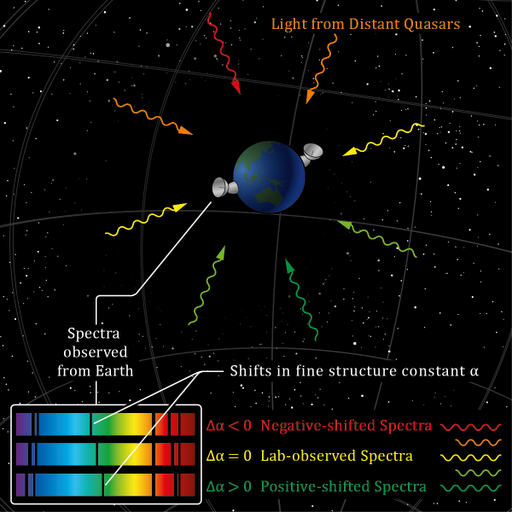
What happens to the laws of physics if a fundamental constant turns out to be not a constant after all?   The 'magic number' known as the fine-structure constant, called 'alpha' by physicists,  appears to vary throughout the universe, according to a team of astrophysicists.

That means the laws of physics would vary throughout the universe also.

The arXiv preprint describes how they determined that the fine-structure constant 'alpha' varies by measuring light from a quasar as it red-shifted due to universal expansion.
Remembering numbers is one of the most basic things we do from a young age - early on, a combination lock or a phone number and later any number of things such as ATM codes, social security numbers, and more.

In Western cultures, children learn to place numbers on a mental number line - smaller numbers to the left and spaced further apart than the larger numbers on the right. Then the number line changes to become more linear, with small and large numbers the same distance apart. Children whose number line has made this change are better at remembering numbers, according to a new study published in Psychological Science.
To physicists, nothing is really a coincidence.   Even cats in quantum boxes can be explained in mathematical terms, not to mention roulette or the success or failure of an attack in Dungeons&Dragons, but researchers at the Max Planck Institute for the Physics of Light in Erlangen say they have constructed a device that is truly random and generates random numbers that cannot be predicted in advance.

The researchers exploit the fact that measurements based on quantum physics can only produce a special result with a certain degree of probability, that is, randomly. True random numbers are needed for the secure encryption of data and to enable the reliable simulation of economic processes and changes in the climate. 
Paleontologists have released details about Concavenator corcovatus, a carnivorous humpbacked dinosaur discovered in Spain - and it oddly had both feathers and scales.

Concavenator corcovatus was a theropod dinosaur that lived during the Cretaceous period, about 130 million years ago.   Concavenator corcovatus translates to 'hump-backed predator from Cuenca', where it was discovered.