As the effort continues to find new treatments for Alzheimer's Disease (AD), researchers have found that music may have a role to play. A study from Boston University School of Medicine (BUSM) has shown that patients with the disease are better able to remember new verbal information when it is provided in the context of music even when compared to healthy, older adults.
Results of the study appear in Neuropsychologia.
Researches at the Max Planck Institute for Astrophysics have carried out the first fully three-dimensional computer simulations of a core collapse supernova over a timescale of hours after the initiation of the blast. The model will explain how initial asymmetries, which emerge deep in the dense core during the very early stages of the explosion, fold themselves into inhomogeneities observable during the supernova blast, researchers say.
Our daily lives are filled with changes that force us to abandon old behavioral strategies and develop new, more appropriate responses. While it is clear that new rules are often deduced through trial-and-error learning, the neural dynamics that underlie the change are not well understood.
A study in Neuron has uncovered new information about the neural dynamics of developing new problem solving strategies. The research supports the idea of "a-ha" moments in the brain that are associated with sudden insight, the authors say.
Since Darwin proposed universal common ancestry (UCA) More than 150 years ago, the theory, though well supported, has remained beyond the scope of formal testing. But the author of a new letter in Nature says that the famous theory that underpins modern evolutionary biology has finally passed the first large scale quantitative hurdle.
Darwin proposed that, "all the organic beings which have ever lived on this earth have descended from some one primordial form." Over the last century and a half, qualitative evidence for this theory has steadily grown, in the numerous, surprising transitional forms found in the fossil record, for example, and in the identification of sweeping fundamental biological similarities at the molecular level.
Scientists from the Technische Universitaet Muenchen (TUM) and the University of Bayreuth say they have discovered how spiders form long, highly stable and elastic fibers from the proteins stored in the silk gland. The results of their study are published in Nature.
Spider silk consists of protein molecules, long chains comprising thousands of amino-acid elements. X-ray structure analyses show that the finished fiber has areas in which several protein chains are interlinked via stable physical connections. These connections provide the high stability. Between these connections are unlinked areas that give the fibers their great elasticity.
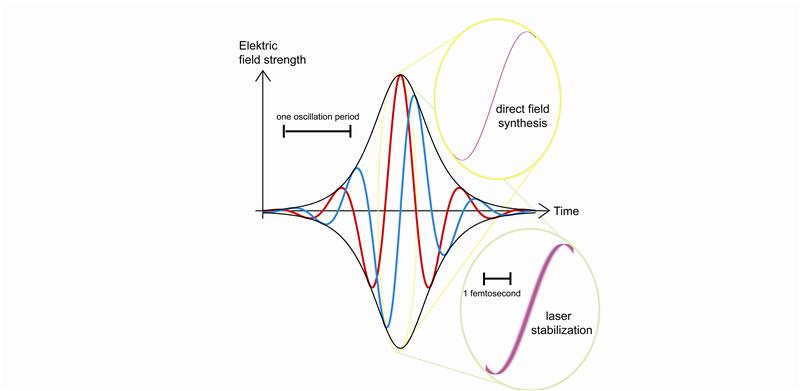
Lasers can now generate light pulses down to 100 attoseconds thereby enabling real-time measurements on ultrashort time scales that are inaccessible by any other methods. Scientists at the Max Born Institute for Nonlinear Optics and Short Time Spectroscopy (MBI) in Berlin have now demonstrated timing control with a residual uncertainty of 12 attoseconds - a new world record for the shortest controllable time scale.


 Here's Where Your Backyard Was 300 Million Years Ago
 Convergent Evolution Cheat Sheet Now 120 Million Years Old
 Synchrotron Could Shed Light On Exotic Dark Photons
 The Pain Scale Is Broken But This May Fix It