Banner
Here's Where Your Backyard Was 300 Million Years Ago

We may use terms like "grounded" and terra firma to mean stability and consistency but geology...

Convergent Evolution Cheat Sheet Now 120 Million Years Old

One tenet of natural selection is a random walk of genes but nature may be more predictable than...

Synchrotron Could Shed Light On Exotic Dark Photons

There are many hypothetical particles proposed to explain dark matter and one idea to explore how...

The Pain Scale Is Broken But This May Fix It

Chronic pain is reported by over 20 percent of the global population but there is no scientific...

User picture.
News StaffRSS Feed of this column.

News Releases From All Over The World, Right To You... Read More »

Blogroll

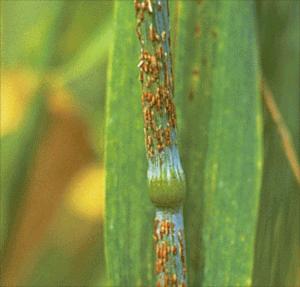
A deadly new airborne wheat rust disease threatens wheat production and food security throughout Afghanistan. The disease also threatens the region that stretches east across neighboring Pakistan and into India.

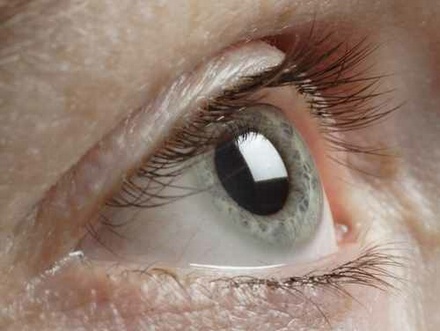
Often the topic of controversy, stem cells research has once again proved itself necessary. University of Florida researchers were able to program bone marrow stem cells to repair damaged retinas in mice.

The success in repairing a damaged layer of retinal cells in mice implies that blood stem cells taken from bone marrow can be programmed to restore a variety of cells and tissues, including ones involved in cardiovascular disorders such as atherosclerosis and coronary artery disease.

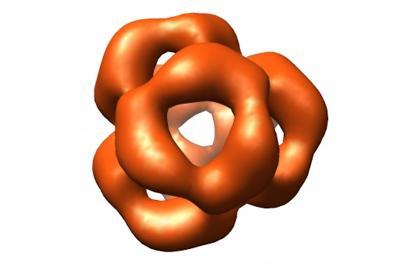
The human eye lens consists of a highly concentrated mix of several proteins. Protective proteins keep them from aggregating and clumping. If this protection fails, the lens blurs and the patient develops cataracts. Two research groups at the Department of Chemistry of the Technische Universitaet Muenchen (TUM) have succeeded in explaining the molecular architecture of this kind of protective protein. Their findings, which are published in PNAS (Proceedings of the National Academy of Sciences).

The effects of amphetamines on gene expression in zebrafish have been discovered. This new study, published in BioMed Central's open access journal Genome Biology, provides clues to the genetics that underlie susceptibility to addiction by describing the nad zebrafish mutant, which does not feel the rewarding effects of the drugs.

Ever since graphene was discovered in 2004, this one-atom thick, super strong, carbon-based electrical conductor has been billed as a "wonder material" that some physicists think could one day replace silicon in computer chips.

But graphene, which consists of carbon atoms arranged in a honeycomb lattice, has a major drawback when it comes to applications in electronics: it conducts electricity almost too well, making it hard to create graphene-based transistors that are suitable for integrated circuits.

In Physics World, Kostya Novoselov--a condensed-matter physicist from Manchester University--explains how their discovery of graphane, an insulating equivalent of graphene, may prove more versatile.

Stem cell researchers trying to understand the mechanisms that determine whether stem cells divide or differentiate, and what types of cells they become and how to control them to develop new treatments, may have gotten some much needed help.

Investigators at the Burnham Institute for Medical Research (Burnham) and The Scripps Research Institute (TSRI) have made a comparative, large-scale phosphoproteomic analysis of human embryonic stem cells (hESCs) and their differentiated derivatives. The study was published in the journal Cell Stem Cell.