Banner
Here's Where Your Backyard Was 300 Million Years Ago

We may use terms like "grounded" and terra firma to mean stability and consistency but geology...

Convergent Evolution Cheat Sheet Now 120 Million Years Old

One tenet of natural selection is a random walk of genes but nature may be more predictable than...

Synchrotron Could Shed Light On Exotic Dark Photons

There are many hypothetical particles proposed to explain dark matter and one idea to explore how...

The Pain Scale Is Broken But This May Fix It

Chronic pain is reported by over 20 percent of the global population but there is no scientific...

User picture.
News StaffRSS Feed of this column.

News Releases From All Over The World, Right To You... Read More »

Blogroll
Comets contained vast oceans of liquid water in their interiors during the first million years of their formation, argue Professor Chandra Wickramasinghe and colleagues at the Cardiff Centre for Astrobiology in a paper published in the International Journal of Astrobiology

The watery environment of early comets, together with the vast quantity of organics already discovered in comets, would have provided ideal conditions for primitive bacteria to grow and multiply, they say. 
Previously thought to be indivisible, with negative charge for all, the electron is one of the fundamental building blocks of nature. A new experiment, however, has shown that electrons, if crowded into narrow wires, are seen to split apart.

The electron is responsible for carrying electricity in wires and for making magnets. These two properties of magnetism and electric charge are carried by electrons which seem to have no size or shape and are impossible to break apart.

There has long been an on-again, off-again debate about the health effects of red wine. Is it killing our liver or is it preventing the next pandemic? It appears scientists from Scotland and Singapore have answered this question.

Red wine is healthy because the resveratrol it contains controls inflammation. But how? New research published in the August 2009 print issue of The FASEB Journal (http://www.fasebj.org), not only explains resveratrol's one-two punch on inflammation, but also show how it—or a derivative—can be used to treat potentially deadly inflammatory disease, such as appendicitis, peritonitis, and systemic sepsis.

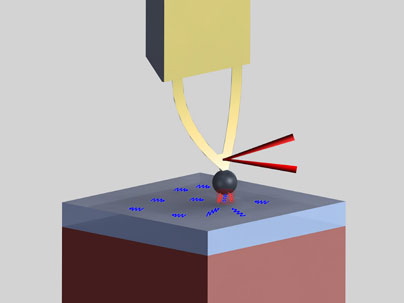
Plancks Law is a well-established physical law describes the transfer of heat between two objects.

Some physicists have predicted that the law should break down when the objects are very close together but scientists had never been able to confirm, or measure, this breakdown in practice.


MIT researchers say they have now done it but that the heat transfer can be 1,000 times greater than the law predicts.  The new findings could lead to better design of recording heads of the hard disks used for computer data storage,and new kinds of devices for harvesting energy from heat that would otherwise be wasted. 
A University of Exeter research team recently tested squirrels' ability to learn to choose between two pots of food after watching another squirrel remove a nut from one of the pots.

One group was rewarded for choosing the same pot as the previous squirrel, the second group was rewarded for targeting the other pot. Those that were rewarded for choosing food from the other pot learned more quickly than those that were rewarded for choosing the same pot. This suggests that grey squirrels learn more quickly to recognize the absence of food.
Future biology may rely more heavily on ancient math - namely algebra - according to researchers at Sweet Briar College and the Virginia Bioinformatics Institute (VBI) at Virginia Tech.

Future generations of biologists will routinely use mathematical and computational approaches to develop and frame hypotheses, design experiments, and analyze results. Sound mathematical models are essential for this purpose and are currently used in the field of systems biology to understand complex biological networks.