Banner
Here's Where Your Backyard Was 300 Million Years Ago

We may use terms like "grounded" and terra firma to mean stability and consistency but geology...

Convergent Evolution Cheat Sheet Now 120 Million Years Old

One tenet of natural selection is a random walk of genes but nature may be more predictable than...

Synchrotron Could Shed Light On Exotic Dark Photons

There are many hypothetical particles proposed to explain dark matter and one idea to explore how...

The Pain Scale Is Broken But This May Fix It

Chronic pain is reported by over 20 percent of the global population but there is no scientific...

User picture.
News StaffRSS Feed of this column.

News Releases From All Over The World, Right To You... Read More »

Blogroll
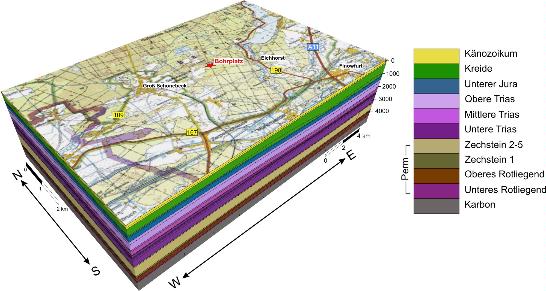
Geothermal energy is increasingly contributing to the power supply where it is affordable and efficient. Iceland is world-leader in expanding development of geothermal utilization: in recent years the annual power supply there doubled to more than 500 MW in the supply of electricity.  Even in Germany, over 100 MW of heat are currently being provided through geothermal energy.  
We hear a lot from various advocacy groups that modern lifestyle is the worst thing that can happen to us.    Indeed, some won't be happy until we get back to the sustainable, renewable period of 1300AD.   But modern lifestyle has at least one friend; our teeth. 

A review of studies published in a Supplement to Obesity Review examined evidence over the past 150 years and says that the effects of fluoride toothpaste, good oral hygiene and health education has overriden the effects of food on tooth decay.

The American Institute of Physics (AIP) announced the winners of its 2008 Science Writing Awards today. The winners -- two scientists, a journalist, a children's book author, and a public television producer -- will receive four prizes of $3,000, engraved Windsor chairs, and certificates of recognition.

"These outstanding science communicators have each improved the general public's appreciation of physics, astronomy, and related sciences through their wonderfully creative endeavors," says Catherine O'Riordan, AIP Vice President, Physics Resources.

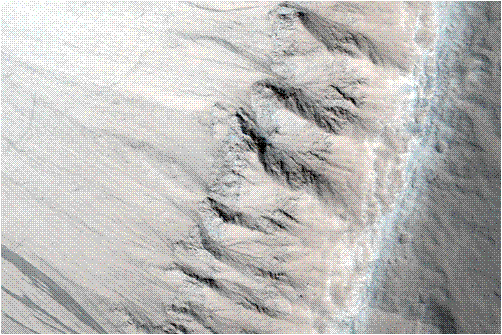
Unique fractures in lavas on ancient Mars suggest water occasionally flooded portions of the planet's surface.   The fractures, known as "columnar joints," are the first that have been observed on a planet other than Earth. 

The characteristics of the column-like fractures can help scientists understand the role of water in geologic processes on Mars, said Moses Milazzo, a geophysicist with the U. S. Geological Survey Astrogeology Team in Flagstaff and lead author on a paper on the discovery recently published in the journal Geology.

"Columnar joints form as cooling lava contracts," said Milazzo. 

Teams of scientists from Australia and the United States have used yeast and mammalian cells to discover a connection between genetic and environmental causes of Parkinson's disease. 

Yeasts are single cell organisms, used widely in biological research because their structure resembles that of cells found in animals and humans. Yeasts share many genes, or their functional equivalents, with humans and offer the ability to screen or test thousands of genes and analysing their effects. 
The detailed structure of a protective 'jacket' that surrounds cells of the Clostridium difficile superbug, and which helps the dangerous pathogen stick to human host cells and tissues, is revealed in part in the 1 March issue of Molecular Microbiology

Scientists hope that unravelling the secrets of this protective layer's molecular structure might reveal possible targets for new drugs to treat C. difficile infections.

The 'jacket' is a surface layer, or 'S-layer', made of two different proteins, with half a million of each covering every C. difficile cell. The S-layer is believed to help C. difficile cells colonise the human gut, where they release sickness-causing toxins.