Banner
Here's Where Your Backyard Was 300 Million Years Ago

We may use terms like "grounded" and terra firma to mean stability and consistency but geology...

Convergent Evolution Cheat Sheet Now 120 Million Years Old

One tenet of natural selection is a random walk of genes but nature may be more predictable than...

Synchrotron Could Shed Light On Exotic Dark Photons

There are many hypothetical particles proposed to explain dark matter and one idea to explore how...

The Pain Scale Is Broken But This May Fix It

Chronic pain is reported by over 20 percent of the global population but there is no scientific...

User picture.
News StaffRSS Feed of this column.

News Releases From All Over The World, Right To You... Read More »

Blogroll
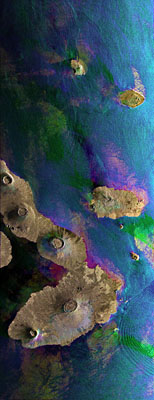
The Galapagos Islands are an archipelago situated some 1 000 km to the west of Ecuador in the Pacific Ocean.  They were formed by volcanic activity around 10 million years ago. Out of the 19 islands, two are still active volcanoes.   Due to the isolation of the islands, a very unique ecosystem developed and many of the species found there exist nowhere else on Earth. All reptiles, half of the plants and some 40% of the birds are endemic. 
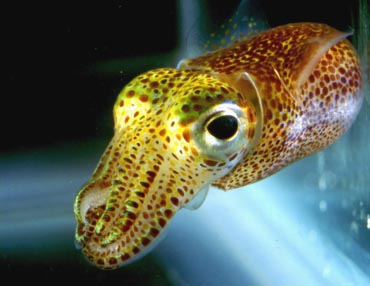
All life  depends on peaceful coexistence with a swarm of microbial life inside us that performs vital services from helping to convert food to energy to protection from disease.  With the help of a squid that uses a luminescent bacterium to create a predator-fooling light organ and a fish that uses a different strain of the same species of bacteria like a flashlight to illuminate the dark nooks of the reefs where it lives, scientists have found that gaining a single gene is enough for the microbe to switch host animals.
Monash Institute of Medical Research (MIMR) scientists have created Australia's first induced pluripotent stem (iPS) cell lines.   They have derived the cells from skin cells, and reprogrammed them to behave as embryonic stem cells; a breakthrough that will allow Australian scientists unlimited access to study a range of diseases.

Until now, Australian scientists have had to import human iPS cells from America or Japan.

Program leader, Dr Paul Verma, said the significance of developing iPS cells 'in-house' cannot be underestimated. "We now have the capability to investigate any human disease we wish, rather than relying on iPS cells from specific diseases that have been generated elsewhere."
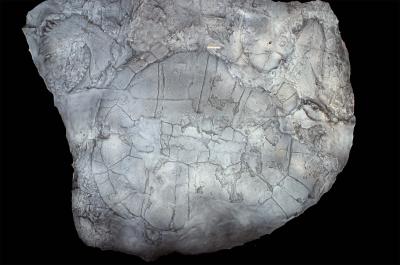
A new find in Arctic Canada strongly suggests that animals migrated from Asia to North America not around Alaska, as once thought, but directly across a freshwater sea floating atop the warm, salty Arctic Ocean.  

In 2006, John Tarduno, professor of geophysics at the University of Rochester and leader of the Arctic expedition, led an expedition to the Arctic to study paleomagnetism—the Earth's magnetic field in the distant past. Knowing from previous expeditions to the area that the rocks were rich with fossils, Tarduno kept an eye out for them and was rewarded when one of his undergraduate students uncovered the amazingly well preserved shell of a turtle.
If you're a woman and need an excuse not to clean the carpet, it's your lucky day.   The bad news is, whatever you may already have done may have an impact on having kids.   Researchers at the UCLA School of Public Health have found the first evidence that perfluorinated chemicals, or PFCs — chemicals that are widely used in everyday items such as food packaging, pesticides, clothing, upholstery, carpets and personal care products — may be associated with infertility in women. 
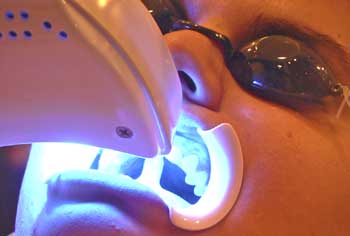
Want to know if you have an honest dentist?   Tell him you want to try UV tooth bleaching.   A study in Photochemical&Photobiological Sciences writes the lack of any enhanced bleaching effect is bad enough but it also damages skin and eyes up to four times as much as sunbathing.

And as with sunbathing, fair-skinned or light-sensitive people are at even greater risk, said lead author Ellen Bruzell of the Nordic Institute of Dental Materials.  

Bruzell also found that bleaching damaged teeth. She saw more exposed grooves on the enamel surface of bleached teeth than on unbleached teeth. These grooves make the teeth more vulnerable to mechanical stress.


Want skin damage?