Banner
How To Overcome Leadership Battles

In times of social rancor and strife, most will fight each other, but societies are saved by those...
Thousands Of Unpublished Studies Show Why Conservation Efforts Miss The Mark

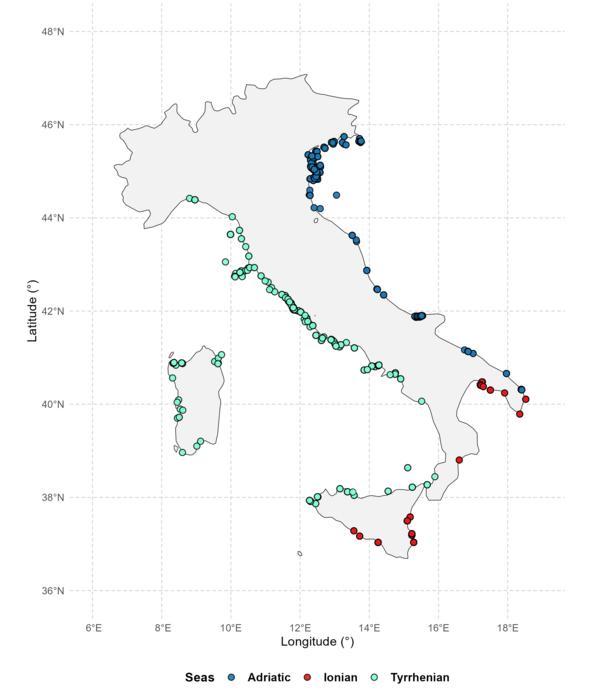
Europe alone has so much unpublished, un-catalogued biological data that it is challenging to take...

Why Antarctic Sea Ice Stopped Growing In 2015

Though numerical models and popular films like An Inconvenient Truth projected Arctic ice...

Wealth Correlated To Loneliness

You may have read that Asian cultures respect the elderly more than Europe but Asian senior citizens...

User picture.
News StaffRSS Feed of this column.

News Releases From All Over The World, Right To You... Read More »

Blogroll
Shrubs are more widespread than trees in nature and on Earth. A new study explains their global success. It turns out that the multiple stems of shrubs are of key importance. This feature contributes to both better growth and better survival than in trees of similar size, according to the research team behind the study.

Shrubs with flowers and berries are popular in parks and gardens, and in nature they are far more widespread than trees: shrubs grow on at least 40 per cent of the world’s land surface while for trees the figure is only 28 per cent. Still, relatively few efforts have been made to fully understand them.

The group known as Islamic State (IS) reportedly used a sulpur-mustard gas against US troops in Iraq.

In nuclear reactors, energetic neutrons slam into metal atoms that are ordered in a lattice, displacing them with enough force to trigger a cascade of collisions. Laurent Béland,Yuri Osetsky and Roger Stoller, of the Energy Dissipation to Defect Evolution Energy Frontier Research Center at the Department of Energy's Oak Ridge National Laboratory, modeled radiation damage and discovered that the number of defects ultimately created in a material correlates with atomic displacements that high-pressure shock waves generate early in the collision cascade.

Researchers produced the first molecular map of the genes that are active in the various cells of the human pancreas. They have also revealed differences in genetic activity between people with type 2 diabetes and healthy controls. 

For at least a billion years of the distant past, planet Earth should have been frozen over but wasn’t, and one popular notion was that methane, with 23-34 times (yes, it is unclear) the heat-trapping capacity of carbon dioxide, could have reigned supreme for most of the first 3.5 billion years of Earth history, when oxygen was absent initially. 

Environmentalists today are in a panic about greenhouse gases, but between 1.8 billion and 800 million years ago, microscopic ocean dwellers really needed them. The sun was 10 to 15 percent dimmer than it is today—too weak to warm the planet on its own. Earth required a potent mix of heat-trapping gases to keep the oceans liquid and livable.
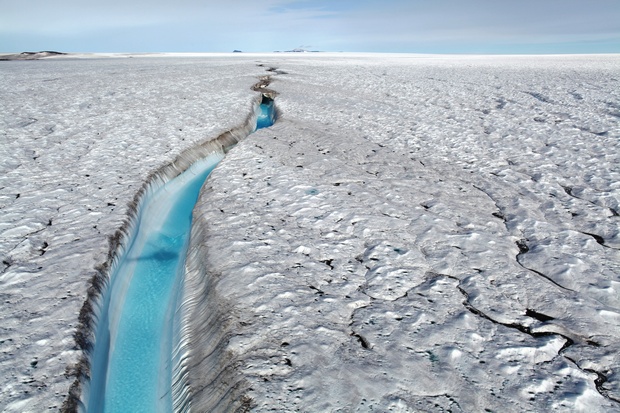
Postglacial rebound, uplift in Greenland blamed on global warming, has actually made it harder to measure ice loss due to global warming, according to a new paper in Science Advances.