Banner
Synchrotron Could Shed Light On Exotic Dark Photons

There are many hypothetical particles proposed to explain dark matter and one idea to explore how...

The Pain Scale Is Broken But This May Fix It

Chronic pain is reported by over 20 percent of the global population but there is no scientific...
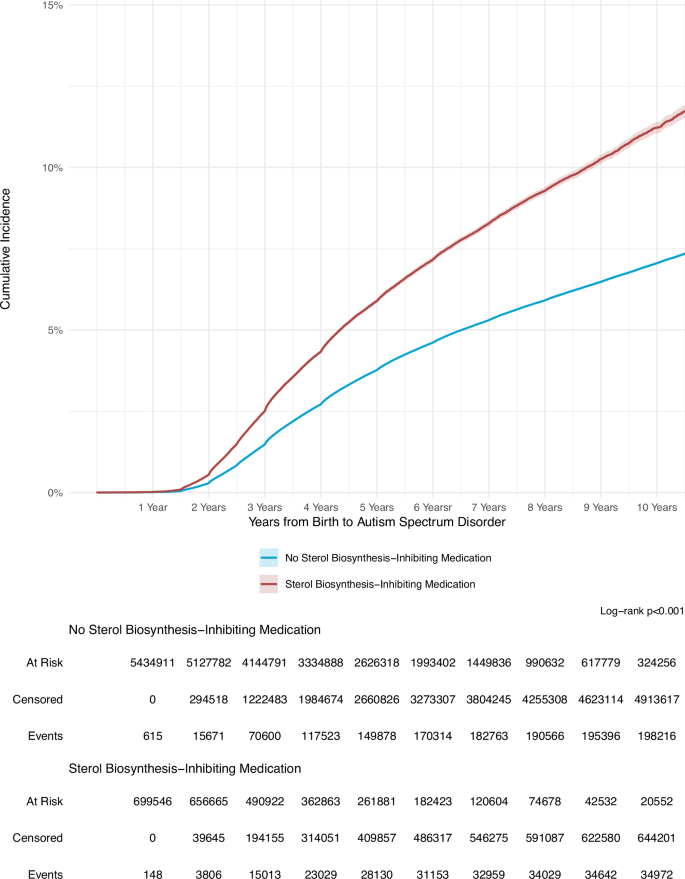
Study Links Antidepressants, Beta-blockers and Statins To Increased Autism Risk

An analysis of 6.14 million maternal-child health records  has linked prescription medications...

Pilot Study: Fibromyalgia Fatigue Improved By TENS Therapy

Fibromyalgia is the term for a poorly-understood condition where people experience pain and fatigue...

User picture.
News StaffRSS Feed of this column.

News Releases From All Over The World, Right To You... Read More »

Blogroll

Keep Britain Tidy today has named McDonald's as the most littered fast food brand in the country, meaning the people who litter are more likely to be throwing their wrappers on the streets than any other fast food brand.  It's no surprise, given McDonalds is the top fast food brand.

It's super-sized shame for the residents of ten city centers and suburbs/out-of-town locations across England.  But McDonalds isn't alone.   They made up more than a quarter of all fast food litter (29%), mostly burger wrappers, condiment packets and plastic straws.

In second place, as a group, were local chippie or kebab shops: Keep Britain Tidy found a huge amount of unbranded chip wrappings and packaging in all locations (21%).

The term 'invasive species' itself connotes very bad things but conservationists recently got an expensive lesson in the one thing they claim to understand; ecology is a system and making too many changes can have devastating repercussions.

Removing an invasive species from sub-Antarctic Macquarie Island, a World Heritage Site, has caused environmental devastation that will cost more than A$24 million to remedy, ecologists have revealed. Writing in the new issue of the British Ecological Society's Journal of Applied Ecology, they warn that conservation agencies worldwide must learn important lessons from what happened on Macquarie Island.
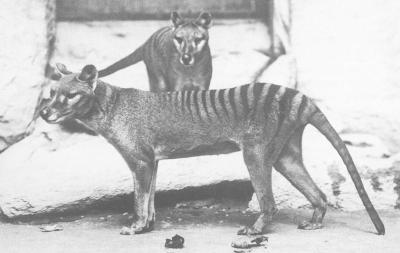
"Tasmanian Tiger" is a common name of the extinct thylacine species (Thylacinus cynocephalus), which is more closely related to kangaroos and koalas than to dogs or tigers.   In 1902, the National Zoo brought the endangered animal. By the mid-1930s, the thylacine was extinct, leaving behind only preserved museum specimens. In a new study, researchers used DNA sequencing to analyze preserved thylacines, including one brought to the National Zoo, making novel discoveries in thylacine genomics and the burgeoning field of "museomics."  Thylacines have played a central role in discussions about the possibility of bringing extinct species back to life, but despite the availability of many bones and other remains, previous attempts to read thylacine DNA had been unsuccessful.
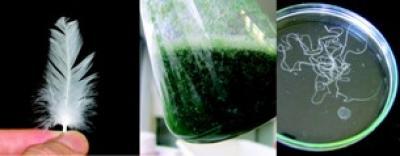
It's hard to imagine a future where people are nostalgic for polyester but it may be just a thing of the past.   38 million tons of synthetic fibers are made each year and some new advancements in regenerated protein make it possible to use environmentally sustainable clothing fiber instead. 

So one day you may snuggle up in warm, cozy sweats made of chicken feathers or pants made of wheat - your blue jeans could be "green."
In Current Biology, Instituto Gubenkian de Ciencia researchers say they have provided insight into an old mystery in cell biology- and maybe it will offer up new clues to understanding cancer. Inês Cunha Ferreira and Mónica Bettencourt Dias, working with researchers at the universities of Cambridge, UK, and Siena, Italy, say they have unravelled the mystery of how cells count the number of centrosomes, the structure that regulates the cell's skeleton and controls the multiplication of cells, and is often transformed in cancer.

This research addresses an ancient question: how does a cell know how many centrosomes it has? It is equally an important question, since both an excess or absence of centrosomes are associated with disease, from infertility to cancer.
If you're sick of an all chocolate diet and its miracle cure claims of 2007-2008 and you can't find blueberries or other flavonoid foods that appeal to you, take heart that vitamin D is quickly becoming the "it" nutrient with claimed health benefits for diseases, including cancer, osteoporosis, heart disease and now diabetes.   Like a Prius, it may not help but it can't hurt as long as you don't overdo it, like making people angry driving it in the HOV lane, so it's worth considering.