Banner
Synchrotron Could Shed Light On Exotic Dark Photons

There are many hypothetical particles proposed to explain dark matter and one idea to explore how...

The Pain Scale Is Broken But This May Fix It

Chronic pain is reported by over 20 percent of the global population but there is no scientific...
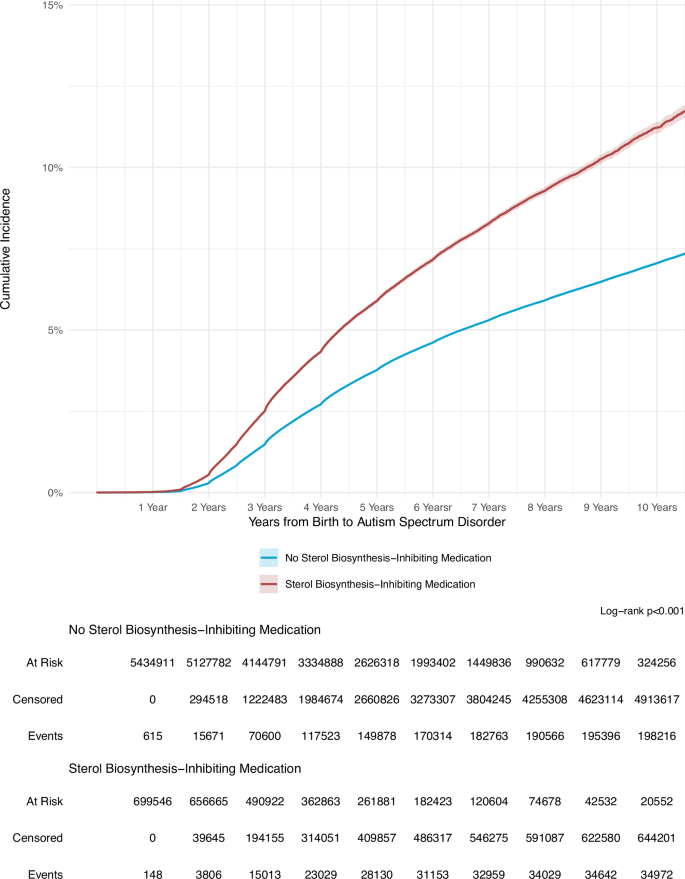
Study Links Antidepressants, Beta-blockers and Statins To Increased Autism Risk

An analysis of 6.14 million maternal-child health records  has linked prescription medications...

Pilot Study: Fibromyalgia Fatigue Improved By TENS Therapy

Fibromyalgia is the term for a poorly-understood condition where people experience pain and fatigue...

User picture.
News StaffRSS Feed of this column.

News Releases From All Over The World, Right To You... Read More »

Blogroll
If you've made a New Year's resolution but you keep putting it off, you may not just be unclear on what the word 'resolute' means, you may have an issue putting tasks in concrete terms that make them feel like they need to be completed.

Procrastination is a curse, and a costly one. Putting things off leads not only to lost productivity but also to all sorts of hand wringing and regrets and damaged self-esteem. For all these reasons, psychologists would love to figure out what's going on in the mind that makes it so hard to actually do what we set out to do. Are we programmed for postponement and delay?
In his book, Wonderful Life: The Burgess Shale and the Nature of History, Stephen Jay Gould speculated about an experiment of ‘replaying life’s tape’, wherein one would go back in time, let the tape of life play again and see if ‘the repetition looks at all like the original.’ Evolutionary biology tells us that it wouldn’t look the same; the outcome of evolution is contingent on everything that came before.   Scientists at the Instituto Gulbenkian de Ciência (IGC) in Portugal, New York University and the University of California Irvine say they have provided the first quantitative genetic evidence of why this is so.
If you're a mouse and you like fatty foods, we have good news for you.   Researchers at the University of California, Berkeley have identified a new enzyme that helps control the breakdown of fat and the mice that have had this enzyme disabled remained lean despite eating a high-fat diet and losing a hormone that suppresses appetite.

The enzyme in the spotlight, adipose-specific phospholipase A2 (AdPLA), is found in abundance only in fat tissue. AdPLA sets off a chain of events that increases levels of a signaling molecule called prostaglandin E2 (PGE2), which suppresses the breakdown of fat. Mice that have no AdPLA have lower PGE2 levels and a higher rate of fat metabolism.
How did life begin?   A pair of Scripps Research Institute scientists say they have taken a significant step toward answering that question because they have synthesized RNA enzymes that can replicate themselves without the help of any proteins or other cellular components - and the process proceeds indefinitely. 

Is gardening one of your interests? If so and you live in central or northern Europe the 'killer slug' is probably one of your personal enemies. The slug, which attacks your herbs and vegetables relentlessly, seems immune to control measures.

The killer slug, suffocating lobster, globe trotting televisions and dangerous air particles are just some of the topics featured in EEA Signals 2009, a new annual publication from the European Environment Agency, launched today in Prague by Czech Environment Minister Bursik and Executive Director of the EEA, Professor Jacqueline McGlade.

The EEA, in partnership with its network of 32 member countries, monitors the environment across Europe.

No one can draw a connection between meteorite impacts and massive volcanic activity but the one certain instance where it has been confirmed, at the Cretaceous-Tertiary boundary, was the catastrophic event thought to be responsible for the extinction of the dinosaurs 65 million years ago.